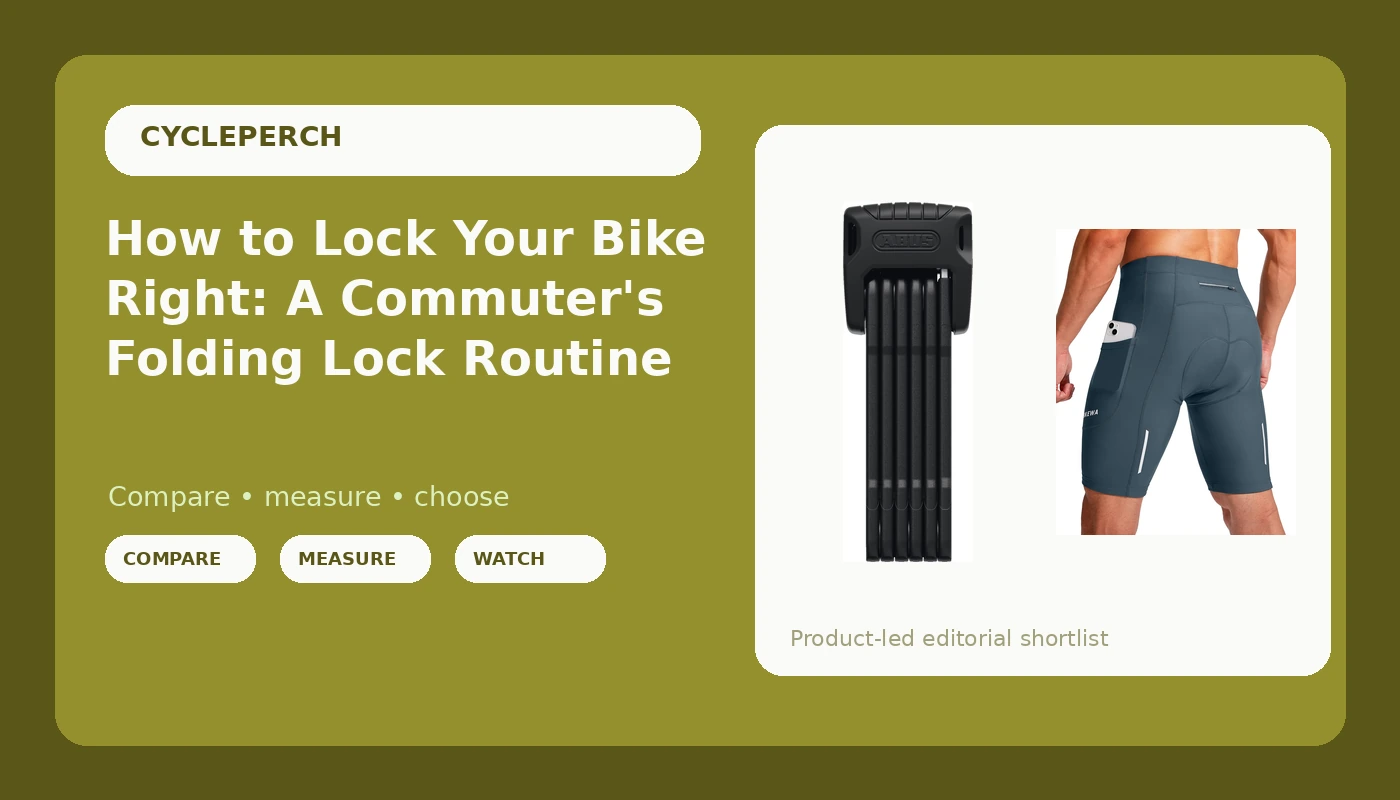
Most bike theft is not a defeated lock. It is a lock used wrong: through the front wheel only, looped around a signpost that lifts out of the ground, or hanging so loose that a thief has room to work. A folding bike lock will not save you from that, and neither will a chain. I have watched this play out from a shop doorway more times than I want to count, and the story is almost always the same.
A folding lock is the shape most commuters settle on, and for good reason. It carries flat against the frame in a holder, it covers more of the bike than a U-lock of similar weight, and it folds into something you will actually take with you. The ABUS Bordo Granit 6500K is the one I point at when a customer asks for a lock that leaves the house every day.
The lock is half the job. The other half is the routine: where you lock, what you lock, how much slack you leave, and how long you leave it there. There is a third piece nobody writes about, which is what you are wearing while you ride, because a commuter who is miserable in the saddle stops commuting, and a bike that stays home never needed a lock in the first place.
Why you should trust me
I spent twelve years turning wrenches and five of those as a service manager before I opened a one-bay shop of my own. Locks arrive in two conditions: new in the box, or defeated with the story attached. I have cut more of them in a parking lot than most riders will ever own, and the lesson never changes. The lock is rarely what fails first. The placement fails first.
What I care about is boring and measurable. Hinge play after a winter of road salt. Whether a cylinder still turns smoothly after a hundred open and close cycles. Whether a bracket rattles at speed. Every bolt on a lock holder gets torqued to spec, because a holder that comes loose mid-ride is a lock left on the road, and a lock left on the road is a bike left unlocked.
How I picked and how I tested
Here is the standard anything has to pass before I hand it to a customer.
For a lock: a hardened body that resists cutting rather than just claiming to, a cylinder that is a real mechanism, a mounting bracket that grips a round tube without a shim made from an old inner tube, enough length to reach a rack and a frame in one pass, and honest marketing about what the lock does not stop.
For shorts: a chamois that stays where it was sewn, flat seams where your weight sits, fabric that does not turn into a sponge, and pockets that close.
Neither product below needs an hour of shop-rate labor to make it work. That is the first test anything has to pass, and most gear that fails at kilometer 300 fails it on day one.
The lock you'll need before you start
You cannot lock a bike well with the wrong lock, and you cannot lock a bike well with the right lock used badly. Start with hardware that resists a cutter, then read the routine below before you park anywhere.
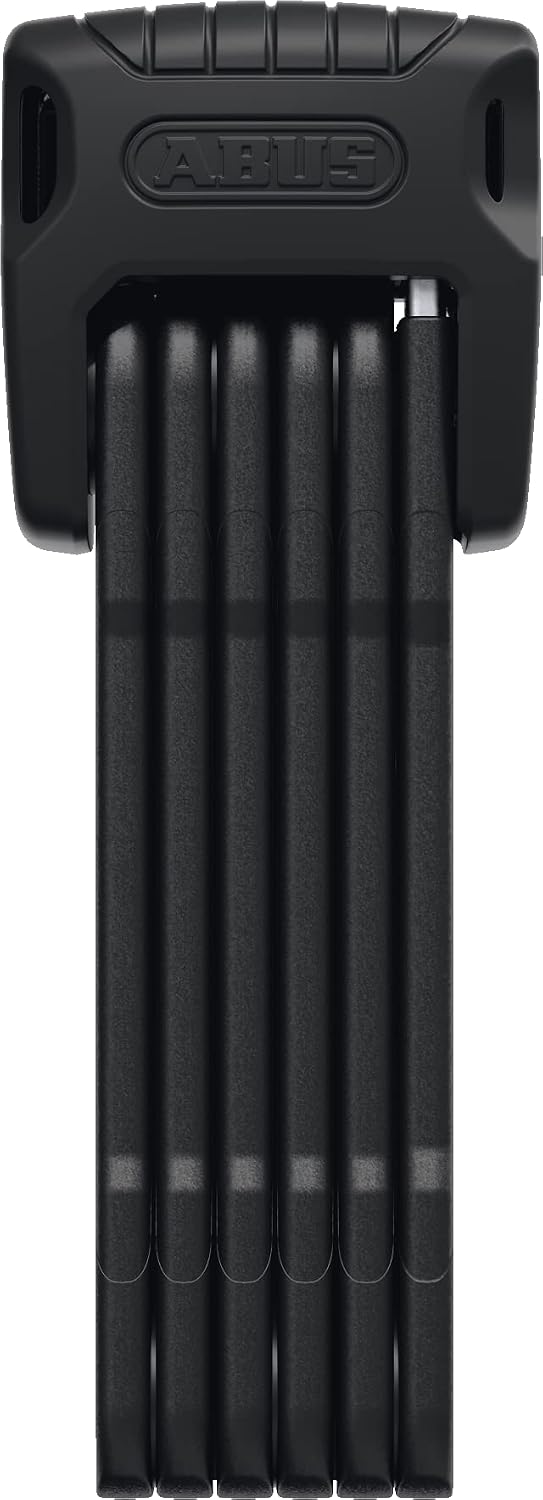
Our pick: ABUS Bordo Granit 6500K Folding Lock with SH Lock Holder - Bike Lock with XPlus Cylinder for high Tamper Protection - Security Level 15 - Length 90 cm
 Visit on Amazon →
This is a folding lock: hardened bars pinned at the hinges, folding into a package that rides in the SH lock holder on your frame. The maker rates it security level 15, and the XPlus cylinder is the part that matters when someone attacks the mechanism instead of the body. Ninety centimeters of length is enough to catch a rack, the frame, and the rear wheel in a single pass on most bikes, which is the whole point of carrying a folding lock instead of a short U-lock.
The reason I recommend this one for commuting is the carry. A lock you leave at home protects nothing, and this one bolts to the frame and stays there, so the decision to lock the bike is already made before you leave the driveway.
Flaws but not dealbreakers: A folding lock is a compromise and I will say it plainly. The hinge pins are the weak point in any folding design, and bolt cutters aimed at the hinges are how these get beaten. That makes this a lock for errands, daylight, and stops you can watch from a window. For overnight street parking in a city, you want a heavy chain or a grinder-resistant U-lock, and ideally two different lock types at once, because the second lock changes the thief's tool list.
Anyone who needs a lock that actually leaves the house, and who parks where people walk by, is the right buyer.
The gear on your body
A lock keeps the bike. It does not keep you riding it. The other half of a commute is seat time, and the difference between a 20-minute ride you look forward to and one you dread is usually the pad under you and the pockets you did not have.
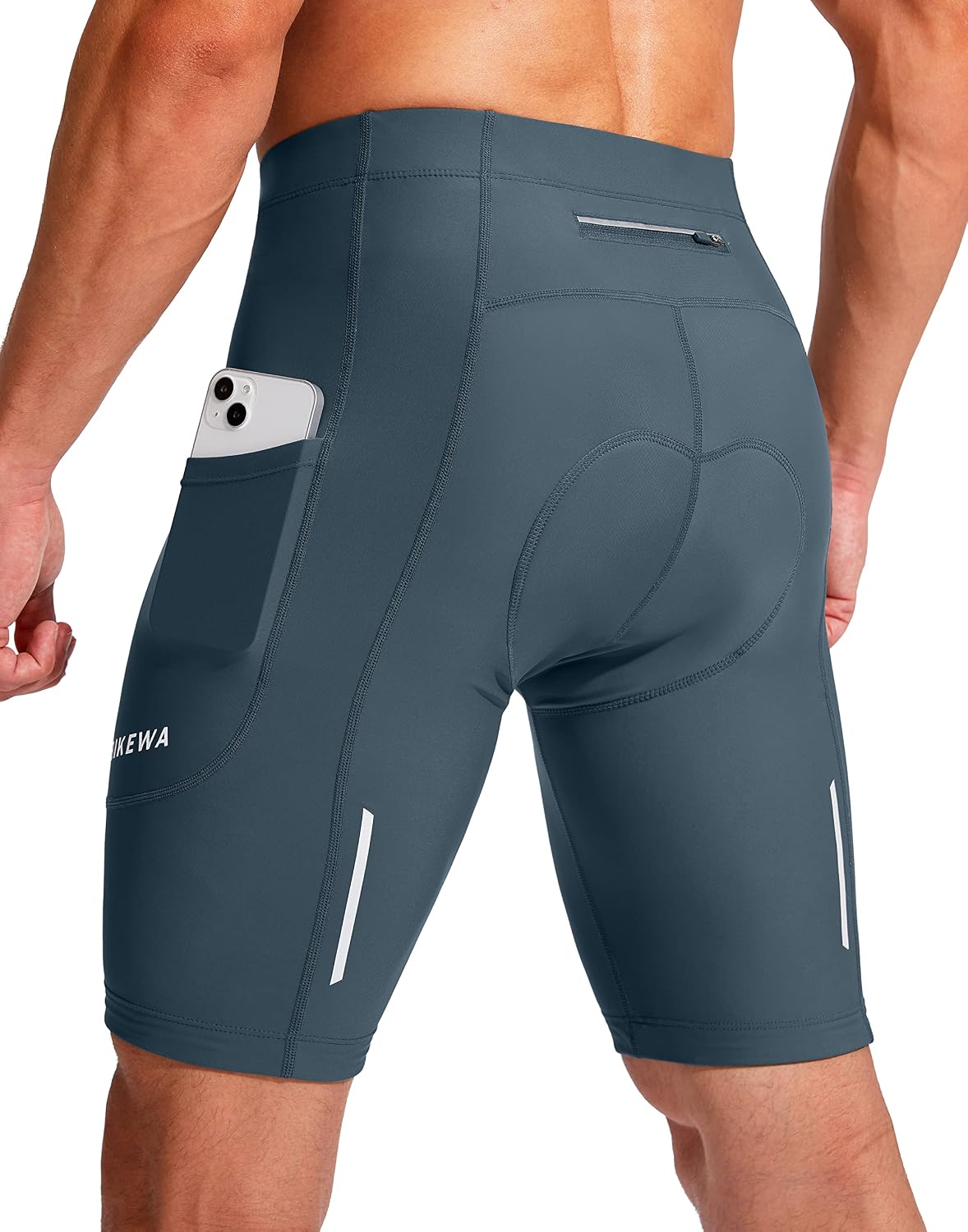
Budget pick: Bikewa Men's Bike Shorts 3D Padded Cycling Road Biking Mountain Riding Biker Bicycle UPF 50+ Cycle Shorts Zipper Pockets
 Visit on Amazon →
The Bikewa shorts are the pair I hand to riders who are new to padded gear, or who want padding without committing to the full kit look. The 3D padded chamois is the piece that does the work: it sits between you and the saddle and takes pressure off the contact points that complain first. UPF 50+ matters more than people think on a commute that runs into the evening, and the zipper pockets are the feature that earns these a place on the list, because a key, a card, and a phone need somewhere to live that is not a jersey you are not wearing.
They are shorts, not bibs, and that is a real trade. A bib holds the chamois in place with shoulder straps and no waistband, which is why riders doing long distance live in them. Shorts are easier to get in and out of, easier to wear under regular clothes on a short ride, and easier to live with at the office.
Flaws but not dealbreakers: Pad density is personal. Some riders want a thicker chamois, some want a thinner one that moves with them, and no review can decide that for you. If your rides run well past an hour and a half and your sit bones are complaining, a bib with a denser pad is usually the better tool. Also, zip the zippers. A pocket that is closed is a phone that survives the ride.
Anyone commuting under an hour, riding a mountain bike on weekends, or just starting out will get their money's worth here.
The actual locking routine
This is the part that keeps the bike. Hardware sets the ceiling. Technique decides whether you hit it.
Step one: Choose the anchor, not the parking spot. Look for something bolted down, solid, and too thick for bolt cutters. Skip signposts that lift out of the ground, skip the wheel-bender rack that only holds a wheel, and skip anything you can lift the lock up and over the top of.
Step two: Lock the frame first. The frame is the expensive part. A lock through the front wheel alone is a donation with paperwork.
Step three: Fit the rear wheel inside the lock when you can. With 90 centimeters of folding lock you can usually run it through the rear wheel, the frame triangle, and around the post in one pass. That is the classic setup, and it protects the two things a thief wants most.
Step four: Take up the slack. A loose lock gives a thief room for a pry bar, a jack, or a clean cut. Keep the lock body as tight to the anchor as the shape allows, and keep it off the ground, because a lock lying on pavement is a lock you can hit with a hammer.
Step five: Deal with the front wheel honestly. A quick-release wheel walks away in seconds. Either take it with you or accept that it might not be there when you get back. A cable wrapped around it is a suggestion box, not a lock, and I will not pretend otherwise.
Step six: Strip the bike before you walk away. Lights, computer, bag, bottle, anything removable that costs more than a tube.
Step seven: Park where people are. Visibility beats hardware every time. A decent lock in a busy doorway at two in the afternoon is safer than a better lock in an alley at two in the morning.
Step eight: Vary the spot. Same rack, same time, every day is not a habit, it is a schedule, and thieves read schedules.
Step nine: Photograph the bike and write down the serial number. If the bike goes, the serial number is the only thing that gets it back. Register it, and keep the photo somewhere you can find without the bike.
Step ten: Match the lock to the stop. A five-minute coffee is one risk category. A full workday is another. If the bike is out of sight for hours, in a city, overnight, or every single day, one folding lock is not the answer, and no honest article will tell you it is.
The whole routine takes less time to do than to read.
The competition and why it lost
A U-lock has fewer moving parts and no hinges, which is why a short, thick one is still the standard for high-risk parking. It also covers less of the bike and carries worse, and the lock you leave at home is the worst lock in the world.
A heavy chain is the answer for overnight street parking, and it weighs like a gym plate. That is the honest trade: the chain that survives a grinder is the chain you leave at the office.
A cable is not in the competition. A cable is a suggestion box with a combination dial.
For the shorts, the alternatives are bibs, liner shorts under regular clothes, and plain shorts with no pad at all. Bibs win for distance and lose on convenience. Liners are the right answer if you want to change at the office. Plain shorts are fine until the ride gets long enough that you start shifting in the saddle, and then they are not fine at all.
What this all costs
Two purchases, both one-time, and neither one is the expensive part of cycling. Check the current Amazon price on the lock and on the shorts before you decide anything, then do the math that actually matters.
A lock is priced against the bike it protects, not against other locks. Divide its price by the number of days you will carry it and the number gets small. Divide the price of the bike by the number of locks you should have bought and the number gets ugly fast.
The shorts are priced against the number of rides you will take. A pair that keeps you comfortable is cheap at any reasonable price. A pair that keeps you off the bike is expensive at any price.
That is the job. Lock the frame, take up the slack, park where people are, and dress for the seat time. Then ride.