Related: How to Clean a Bike Chain Without Pulling the Drivetrain Apart
Most riders don't need a faster bike. They need a chain that isn't dry, a flat kit that isn't a mystery, and somewhere to hang the bike while they work on it. That's the entire case for keeping a short list of bike maintenance essentials instead of buying upgrades and hoping.
I spent twelve years turning wrenches in a shop and now I run a one-bay bench of my own, which means I see the same four failures over and over. A drivetrain chewed up at 3,000 km because nobody lubed it. A ride ended on the shoulder because the patch kit in the saddle bag had glue that went solid two summers ago. A repair that should take twenty minutes taking an hour because the bike is upside down on a kitchen floor. And a rider whose bibs gave out long before the saddle did.
None of that is a component problem. It's a maintenance problem, and it's the cheapest one to fix. Here's what I'd put on the list, in the order I'd buy it.
Start With the Chain: Muc-Off Bio Dry Bike Chain Lube
Lube is the cheapest insurance in cycling. The right bottle is the difference between a cassette that lasts and one that's skipping shifts long before it should. This Muc-Off Bio Dry is a dry-weather formula with a biodegradable base, and it's the bottle I'd hand a rider who commutes and does weekend loops in fair weather.
Dry lube runs clean. It doesn't collect grit the way a wet lube does, and it doesn't turn the outside of the chain into black paste that transfers to your calf the first time you brush it. The tradeoff is honest: dry lube washes off, so you reapply more often. Figure every 150 to 200 km in dry conditions, and after every wet ride. If you live somewhere it rains four days a week, run a wet lube instead. The weather decides, not the marketing.
Application is where most people get it wrong, and it has nothing to do with the brand. Degrease first. Dry the chain. One drop per roller, not a river down the whole length. Backpedal twenty turns, let it set, then wipe the outer plates until they're dry to the touch. Lube sitting on the outside of a chain does nothing except attract dirt. And if you apply anything to a dirty chain, you haven't lubricated it. You've made grinding paste.
Carry a Flat Kit That Works at Night: Bike Tire Repair Kit
Patches beat spare tubes for one reason: you can carry several flats' worth of repair in a case the size of a wallet. This kit ships with 18 patches, four tubes of vulcanizing glue, and two tire levers in a portable case, which is the right shape for a saddle bag or a jersey pocket.
The glue is the part that matters. Vulcanizing cement is what bonds the patch to the butyl, and it has a shelf life. A kit that's been in a saddle bag for three summers will have tubes that are dried solid, and you won't find out until you're standing on a shoulder in the dark with cold hands. Check the tubes before every season and replace the kit when they're gone. That's the entire maintenance schedule for a patch kit, and it's the step everyone skips.
The other thing is levers. Most kits ship with levers that flex and mar rims. Two are included here, which is one less thing to buy separately, but I still tell people to practice the whole repair at home once. Find the puncture, sand the area, apply glue, wait for it to go tacky, press the patch, hold it, then dust it with chalk or the backing film. Doing it for the first time at the roadside is how people end up walking home.
Bibs Are the Contact Point: CASTELLI Men's Free Aero Race S Bibshort
You can ride a mediocre bike for years. You cannot ride bad bibs for six hours. The chamois is the interface between you and everything else on the bike, and it's the one piece of kit where the cheap version is a false economy.
The Free Aero Race S is Castelli's race-day short: compression fabric, a streamlined strap design, and a chamois built for long days in an aggressive position. That last part matters more than people think. A chamois designed around an upright endurance posture puts padding where an upright rider needs it. Put that same short under a rider folded over the bars and the pressure lands somewhere it was never meant to.
Fit is the whole game, and fit is a measurement problem, not a brand-loyalty problem. Bibs should be snug with no wrinkles at the chamois, the leg gripper should sit flat without cutting in, and the straps shouldn't pull your shoulders down when you're in the drops. If it wrinkles, it will chafe, and it will chafe at kilometer 80, not kilometer 8.
Then wash them after every ride. No fabric softener, no dryer. Heat and softener both kill the elastic in the straps and the gripper, and bibs that lose their gripper become bibs you don't wear.
Get the Bike Off the Floor: Bike Repair Stand Wall Mount
A wall-mount stand is the biggest quality-of-life upgrade in a home workshop, and it costs less than a single shop visit. This one mounts to the wall and includes four metal expansion screws.
Before you buy, know your wall. Expansion screws are for solid masonry: brick, block, concrete. Drywall over studs wants lag bolts driven into the stud. If there's no stud where you want the stand, bolt a plywood backer plate across two studs first, then mount to the plate. A stand that pulls out of the wall at chest height takes the bike with it, and it takes a frame with it too.
Height matters more than people expect. Mount it so the bike's bottom bracket sits around hip height. That puts the drivetrain at eye level and saves your lower back on every adjustment. Then check your clamp torque. Carbon seatposts and frames have a torque spec printed on them for a reason, and a clamp that's over-tightened is a cracked tube waiting to happen. Torque to spec, always. Hand tight is how expensive things get loose.
How I judge gear in this category
Four questions decide whether a piece of maintenance gear earns drawer space.
Does it have a job I can't already do with something I own? A second patch kit is not a plan. A patch kit when you have none is.
Does it survive being ignored? Maintenance gear lives in a saddle bag or on a shelf for months at a time. Glue dries, lube separates, elastic goes slack. Anything that needs monthly attention just to stay usable has an expiration date, and I want to know that date before I buy it.
Can I get spare parts? A pump with a non-rebuildable head is a disposable product wearing a pump costume. Lezyne sells rebuild kits, and that alone keeps them in my recommendations. The same logic applies to anything with a wear surface.
Does installation cost me shop-rate hours? A product that needs an hour of fiddling to install isn't cheap. It's the sticker price plus an hour, and I say that out loud before anyone buys.
Analysis: what actually wears out
Chains wear from the inside. The pins and rollers grind against each other, the chain elongates, and then it eats the cassette and the chainrings with it. Lubricant is what stands between your drivetrain and that outcome, which is why it's first on this list. A dry lube in dry weather and a wet lube in the rain isn't brand loyalty, it's just matching the product to the condition.
Patch kits don't wear out, they expire. The patches are fine forever. The cement is not. That's a design reality of every vulcanizing kit on the market, and it means the maintenance schedule for a flat kit is checking the glue, not replacing the patches.
Bibs wear at the elastic and the chamois. The fabric outlasts both. Straps go slack, grippers lose their grip, and the chamois packs down into a flat pad that no longer does anything. Washing them properly is the only thing that meaningfully extends that clock.
Stands wear at the clamp and the pivot. A wall mount has almost no moving parts, which is exactly why it's a good buy for a home shop: fewer things to fail, and the wall does the heavy lifting.
The first 100 km tells you if a product works. The next 10,000 tells you if it was worth it. Nothing on this list needs 10,000 km to prove itself.
The maintenance gear reference table
This is the short version, in the order I'd buy it. Everything here has a job that nothing else on the list covers.
| Gear | What it solves | Where it lives | Price | Notes |
|---|---|---|---|---|
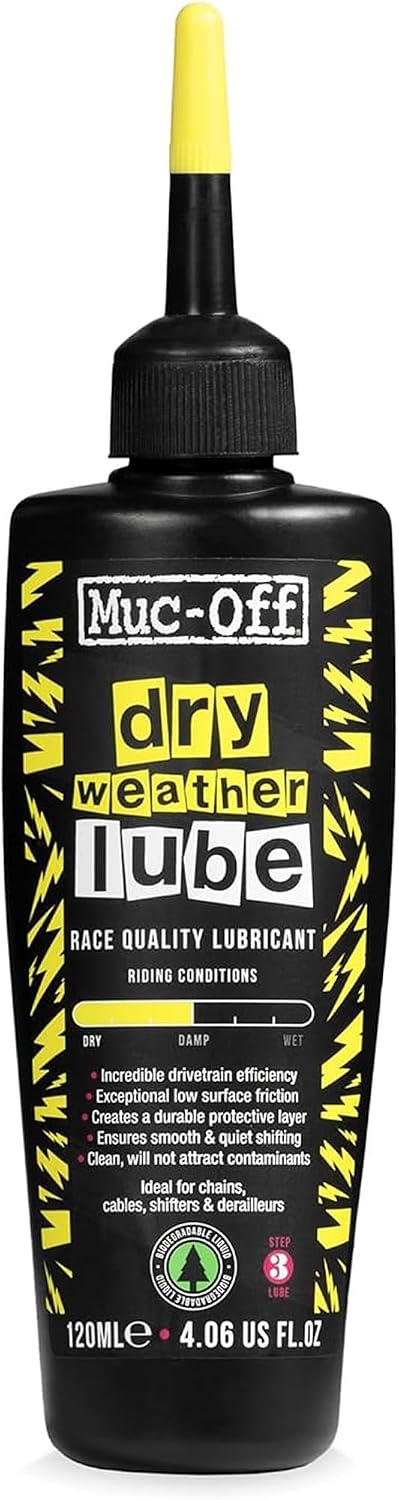 Visit on Amazon → Visit on Amazon →Muc-Off Bio Dry Bike Chain Lube |
Chain wear and rough shifting | Bench or saddle bag | $11.66 | Reapply every 150 to 200 km in dry weather |
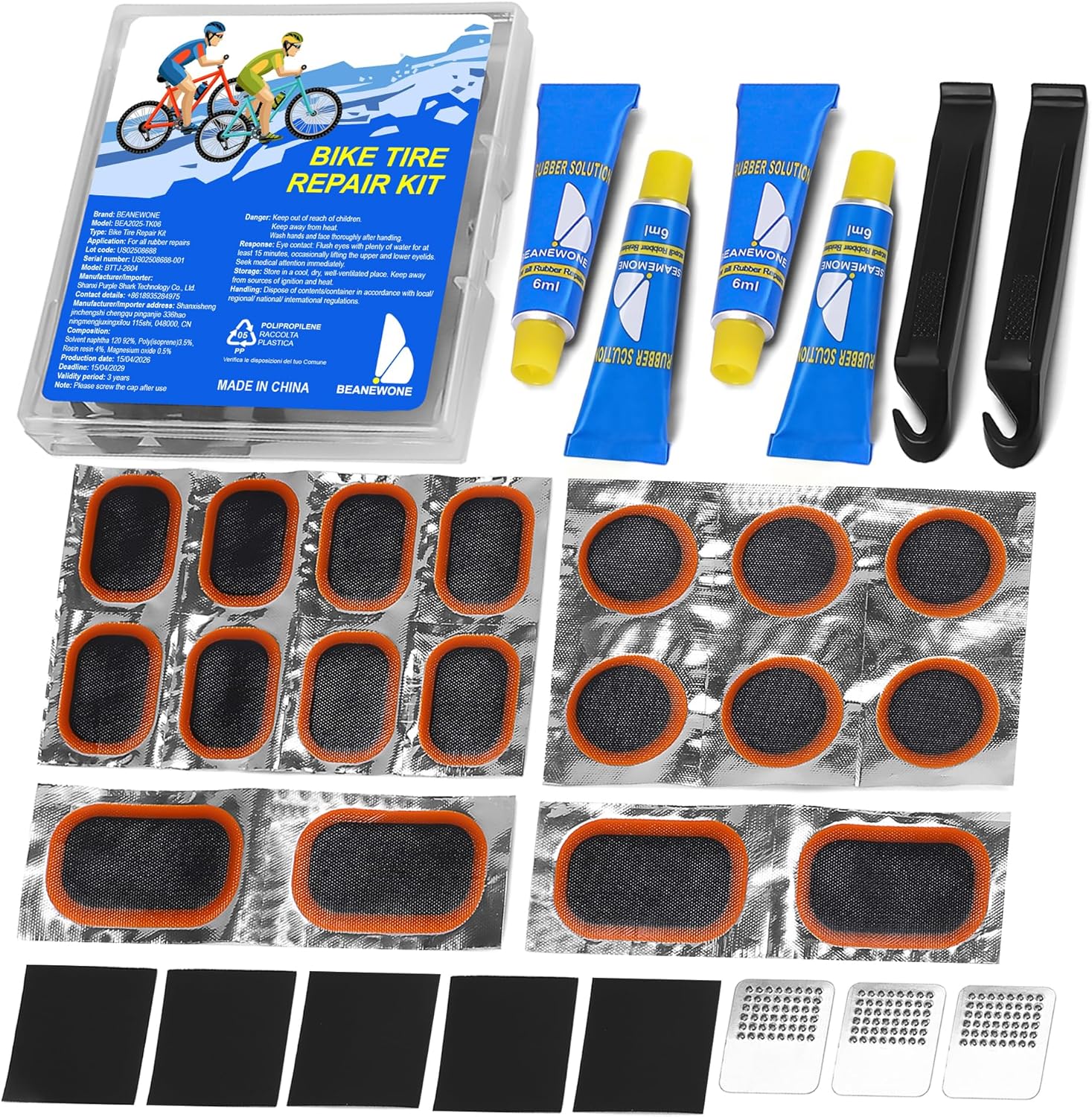 Visit on Amazon → Visit on Amazon →Bike Tire Repair Kit |
Flats without burning a spare tube | Saddle bag | $11.99 | Check the glue tubes every season |
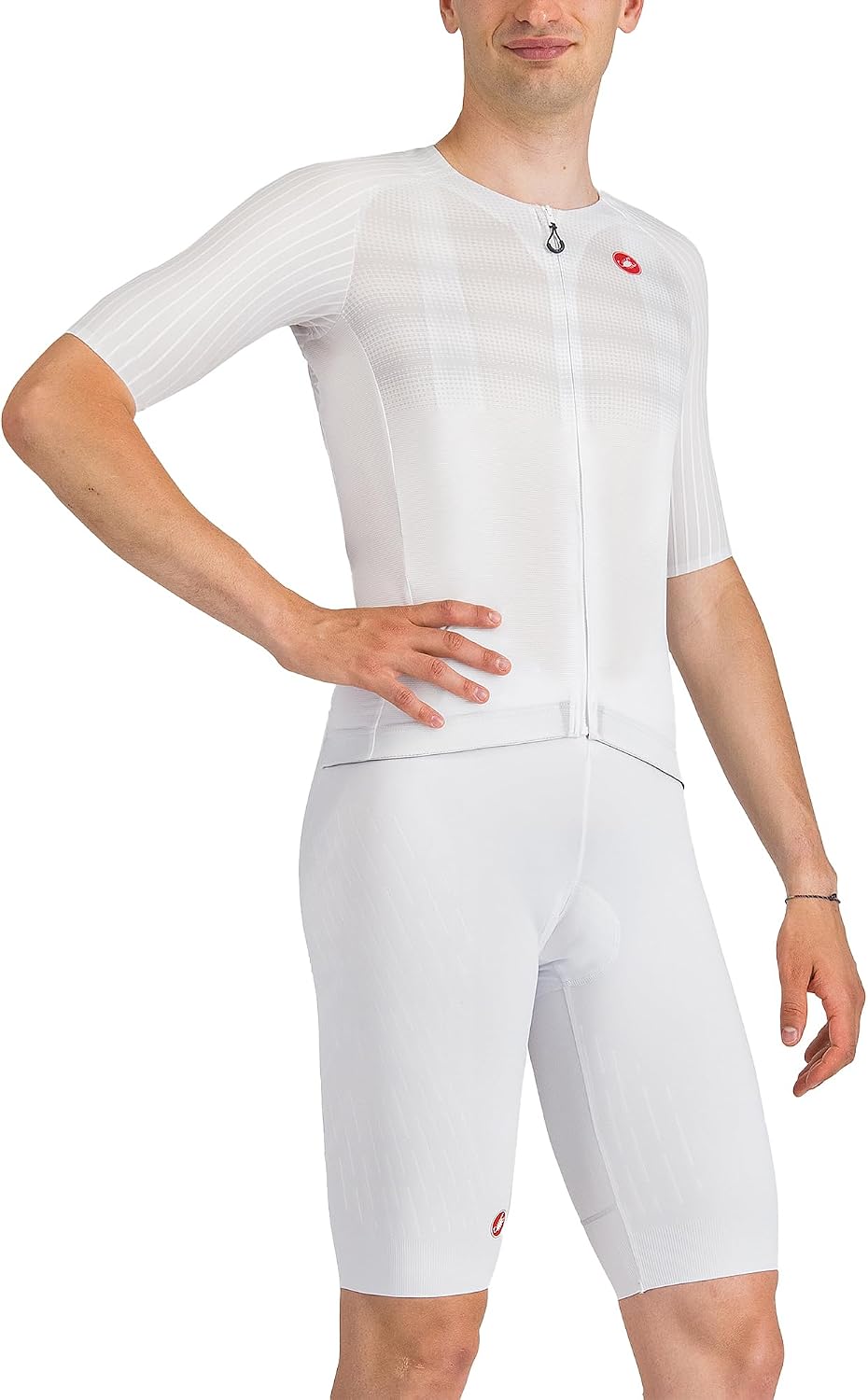 Visit on Amazon → Visit on Amazon →CASTELLI Men's Free Aero Race S Bibshort |
Chamois comfort on long days | On you | $187.50 | Wash after every ride, skip the dryer |
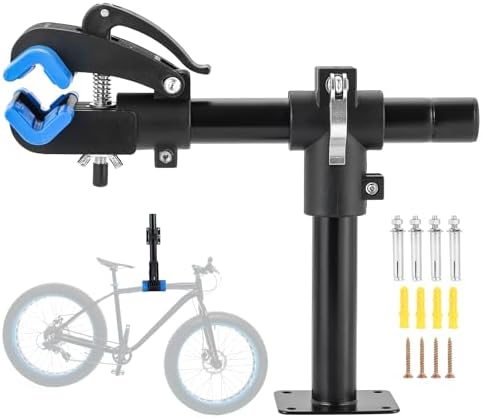 Visit on Amazon → Visit on Amazon →Bike Repair Stand Wall Mount |
Working height and a saved lower back | Wall, near an outlet | $20.99 | Expansion screws need a solid masonry wall |
What the cheap versions get wrong
The budget version of every item on this list fails in a specific, predictable way. Cheap lube is mostly carrier fluid that evaporates in a day. Cheap patch kits ship with cement that's already thickening in the tube. Cheap bibs use a chamois that flattens after a season and straps that stretch out by August. Cheap stands use a clamp that won't hold a seatpost without crushing it. None of these are mysterious failures. They're the cost of the material that got left out.
Should you buy the Muc-Off Bio Dry chain lube?
Yes, if you ride in dry conditions and you'll actually reapply it. It runs clean, it doesn't turn your chain into a grit magnet, and it's the least expensive way to make a drivetrain last. If you ride in the rain regularly, buy a wet lube instead and save this for summer. The bottle isn't the upgrade. The habit is.
Should you buy the bike tire repair kit?
Yes, as a saddle bag item, with one condition: check the glue tubes at the start of every season. The patches and the levers will outlast the cement by years, and the kit is only as good as the tube you didn't check. If you already carry two spare tubes everywhere, you can skip it. Everyone else should have one.
Should you buy the Castelli Free Aero Race S bibs?
Yes, if you ride long and you ride low. The race cut and the chamois are built for a folded-over position, and the compression fabric holds shape instead of going baggy. If you ride upright and short, a more relaxed short will suit you better for less money. Fit decides this one, and fit is a measurement, not a logo.
Should you buy the wall-mount repair stand?
Yes, if you have a solid wall and a bike you work on more than twice a year. It gets the drivetrain to eye level, it ends the upside-down-on-the-floor routine, and it has almost nothing to wear out. Check your wall construction first, and torque the clamp to the spec printed on your seatpost. Hand tight is how expensive things get loose.