Related: How to Measure Sit Bone Width Without a Shop Fitting
I fit saddles and mount computers in the same one-bay garage, and both jobs come down to measurement. The GPS bike computer and saddle fit decisions on this page are two ends of the same problem: get the contact points right, then get honest numbers about what you did. Everything below is what I check before a part goes on a customer's bike, and what I tell riders to measure at home before they spend anything.
People show up with a new saddle and a sore sit bone, or a new computer and a ride file that disagrees with their buddy's. Neither problem gets solved at the register. A saddle in the wrong width hurts at kilometer 40 no matter what the padding cost, and a computer that drops its satellite lock is an expensive stopwatch. So I measure, and I write the numbers down.
Here is the order I work in, the gear that survives it, and the checks you can run yourself with a tape measure, a kitchen scale, and a foam pad.
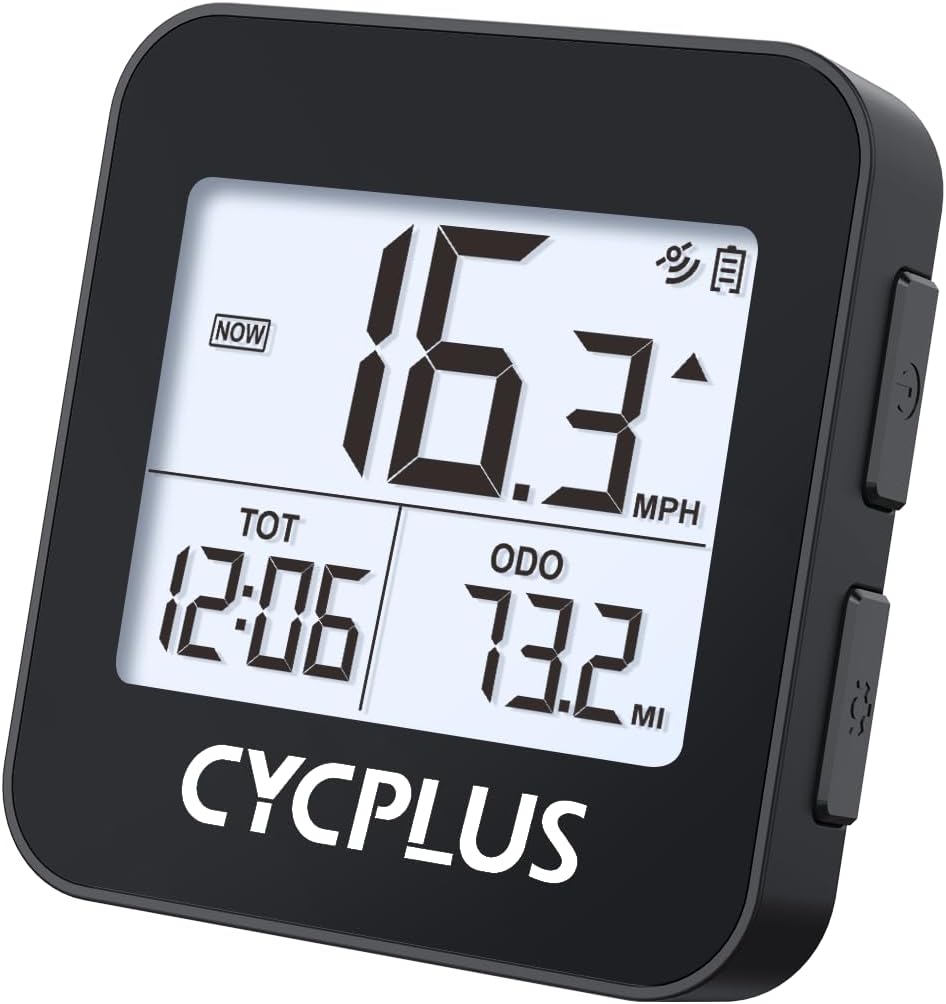
The Computer: CYCPLUS Wireless GPS Bike Computer G1
Seventy grams, a 2.0 inch screen, IPX6 sealing, and a 1200mAh battery. That combination tells you the job this head is built for: speed, distance, elevation, and a track you can upload, without a map you paid for and rarely read. Most riders overbuy navigation and underbuy reliability.
The first thing I look at on any computer is the mount, because a computer that rattles is a computer that eventually leaves. Check the quarter-turn interface and the tab on the back of the head. Plastic tabs go soft and wear; metal ones do not. Then torque the bar clamp bolt to the value printed on the mount, not to feel. Hand tight is how expensive things get loose, and a computer bouncing down a descent is an expensive thing to lose.
Screen legibility in rain matters more than screen size. A 2.0 inch display holds four data fields comfortably if the contrast survives water on the glass. IPX6 means it takes a hard spray, not a submersion, so do not treat it like a dive watch. On runtime, the honest way to read any claimed battery figure is to cut it by a third and ask whether that still covers your longest ride. Cold mornings take another bite.
The 1200mAh cell is the part I would ask about before buying. If the battery is not user replaceable, the computer has an expiration date, and the schedule is not yours. Check the manual, treat the answer as part of the price, and buy accordingly.
The Saddle Most Riders Should Start With: WTB Volt
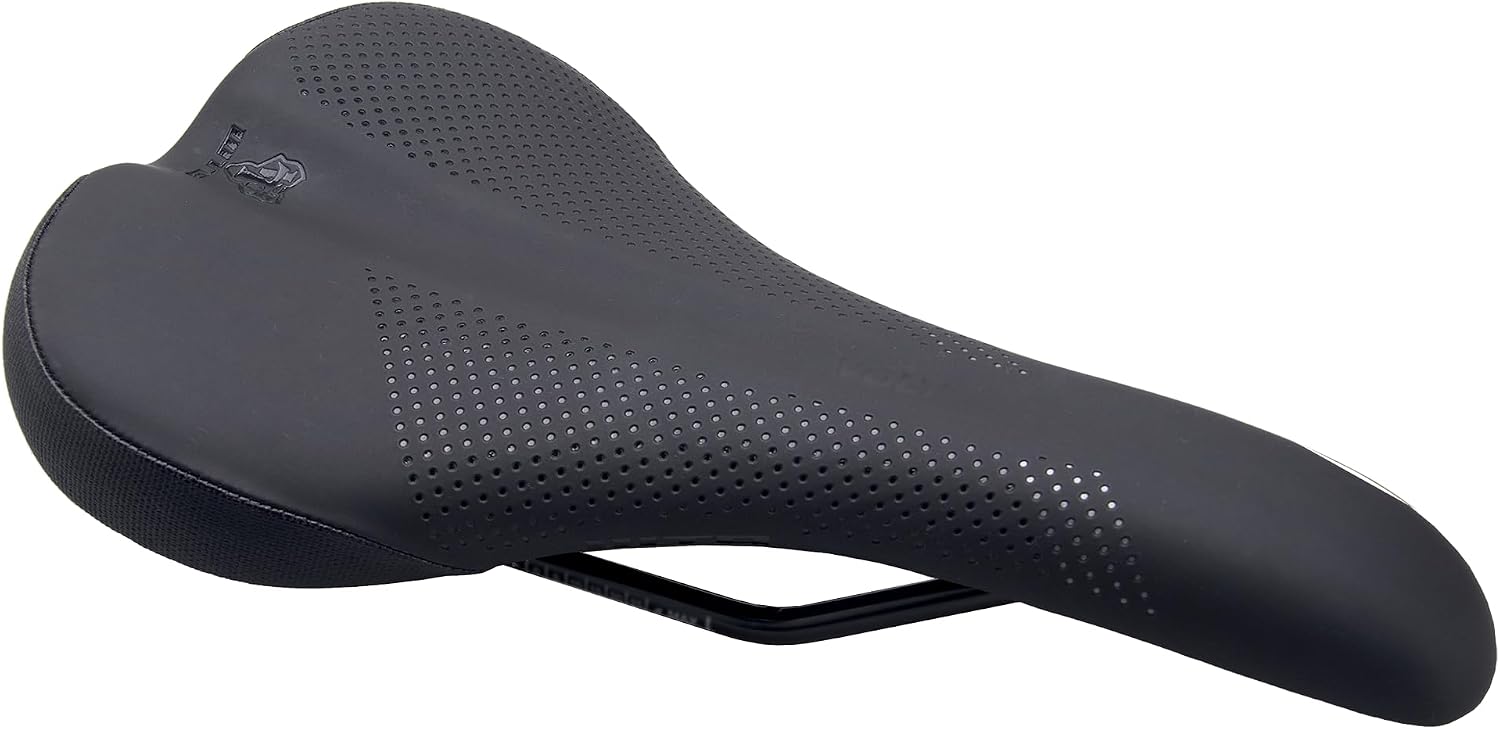
The Volt is the saddle I put under the widest range of riders, and the reason is not the padding. It is that WTB sells it in three sizes and three rail options, which means you can match the width to your sit bones instead of guessing at a brand name.
Medium thickness padding is the right call for most people. Thick gel feels wonderful in the parking lot and turns into a diaper at kilometer 60, because the padding compresses, your sit bones sink, and now you are sitting on soft tissue instead of bone. Firm and correctly sized beats soft and wrong every single time.
Measure first. Sit on a foam pad or a sheet of corrugated cardboard, lean forward into your actual riding position, and measure center to center between the two dents. That number picks your size. If you land between sizes and you ride leaned over, go narrower.
Rails are the second decision. Steel is cheap and heavy, and it works. Cromoly and titanium save grams and cost money. What matters more than the material is the rail diameter, whether your seatpost clamp is rated for it, and whether you torque the clamp bolts to spec. Slipped rails are almost always a clamp that was tightened by feel, and the customer always blames the seatpost.
The Saddle for Riders Who Move Around: Ergon SM Enduro Comp
This is a men's enduro saddle, and the shape says so before the spec sheet does. It runs shorter and wider at the back with a rise toward the tail, which is exactly what you want when you are standing on the descents and sitting on the climbs.
If your riding is mostly seated and steady, this is not your saddle. If your riding is up and then immediately down, with your weight moving fore and aft, the shape gives you something to push against when you climb and gets out of the way when you do not need it.
Ergon builds its saddles around a fit system, and that system is the entire point. Bring the sit bone number. The tail rise, the relief channel, and the width only work together when the width is right for you, and no amount of engineering rescues a saddle that is 20 millimeters too narrow.
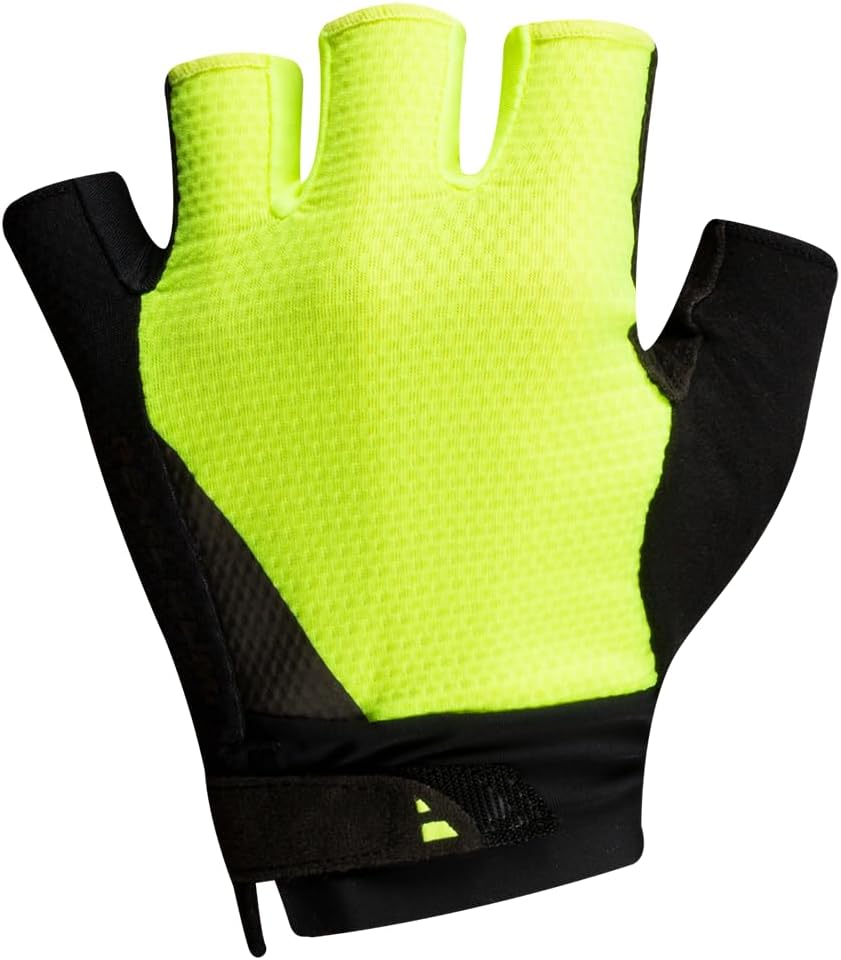
The Gloves: PEARL IZUMI Elite Gel
Gel padding in the palm is the cheapest fix for numb hands, and it is the fix most riders skip because they blame the saddle or the bar tape. If your hands go numb before your sit bones do, the pressure is usually on the ulnar nerve, and the usual causes are the palm of the glove and the position of your levers.
Check three things on any cycling glove. Does the gel sit where your hand actually contacts the bar? Is the palm stitched rather than glued? Does the closure stay put when your hands are sweaty? A glove that bunches at the base of the palm is worse than no glove at all, because the seam lands exactly where the nerve runs.
Fit matters more than padding. Gloves that are too loose rotate under load. Gloves that are too tight restrict your grip. Pull the glove on, make a fist, and check that the palm does not fold or wrinkle across the contact patch.
How I check gear before it goes on a customer's bike
Every saddle gets a sit bone measurement on the foam pad before I say a word about it, including mine. The loop, my 16.2 mile surveyed course, is how accuracy arguments get settled, and it is why I do not quote a GPS number I have not measured. The spec sheet is a suggestion. The measurement is the review.
The rest is wear. The first 100 km tells you whether a part works. The next 10,000 tells you whether it was worth the money. So the questions I ask before recommending anything are boring ones: what breaks at 5,000 km, can I buy the spare part, and does installation eat an hour of shop-rate time the buyer never budgeted for?
Mounts, clamps, and rail interfaces are where the failures live. Not the padding. Not the screen. The joint between the part and the bike.
What actually goes wrong, and what to check
Saddle rails slip when the clamp is not torqued to spec, and the customer blames the seatpost. Look up the torque value, use a torque wrench, and re-check after the first ride once the parts have seated.
Width is the most common saddle mistake I see, and it is not a preference. It is a measurement, and the foam pad answers it in about two minutes. Riders buy the width their friend rides, or the width that came on the bike, then spend a season chasing a fit problem a tape measure would have solved.
Computers fail at the mount and at the battery. Mounts crack, tabs wear, and a sealed cell turns a working computer into a paperweight on a schedule nobody chose. Ask about both before you buy, not after.
Gloves fail at the palm seam and the closure. Look at how the palm is assembled. If the gel is a loose pad floating between two layers of fabric, it will migrate out from under your hand.
The gear table
| Product | Role | What to check | Notes |
|---|---|---|---|
 Visit on Amazon → Visit on Amazon →CYCPLUS G1 |
GPS head unit | Mount tab material, battery replacement | 70g, 2.0" screen, IPX6, 1200mAh |
 Visit on Amazon → Visit on Amazon →WTB Volt |
All-round saddle | Sit bone width, rail diameter | 3 sizes, 3 rail options |
 Visit on Amazon → Visit on Amazon →Ergon SM Enduro Comp |
Enduro saddle | Sit bone width, tail rise | Men's shape, relief channel |
 Visit on Amazon → Visit on Amazon →PEARL IZUMI Elite Gel |
Cycling gloves | Palm seam, gel placement | Gel padding, closure |
Should you buy the CYCPLUS G1?
Yes, if you want honest numbers without paying for maps. It is light, the screen is big enough for the fields that matter, and IPX6 covers real weather. Confirm two things before you order: how the quarter-turn mount is built, and whether the battery can be replaced. Those two answers decide how long the thing stays useful, and no spec sheet will tell you.
Should you buy the WTB Volt or the Ergon SM Enduro Comp?
Measure first, then decide. The WTB Volt is the better first saddle for most riders, because three widths and three rail options let you match the saddle to your body and your budget at the same time. The Ergon SM Enduro Comp is the better saddle for riders who are up and down all day, and it rewards a correct sit bone measurement more than most shapes, because the tail rise only helps when the width is right.
Should you buy the PEARL IZUMI Elite Gel gloves?
If your hands go numb before your sit bones do, yes. Gel padding at the palm is a cheap experiment compared to a new saddle or a professional fit, and gloves are the part you can change in ten minutes. Check the palm seam and the fit before you commit, and do not buy them loose.
None of this is complicated, and none of it is expensive to get right. Measure the sit bones, torque the clamps, check the mount and the battery, and buy the width instead of the brand. That is the whole method, and it has kept a lot of bikes out of my stand.