I fit saddles for a living, and most conversations I have about cycling comfort gear follow the same arc. A rider comes in with a numb spot, a chafed seam, or a bag that rattles over every expansion joint, and we work backward from the symptom to a number. Sit-bone width on the foam pad. Saddle width and rail position. How far the bars sit below the saddle. How many hours a week they actually ride versus how many they plan to ride. Only then does a product get named, because comfort is not a brand and it is not a colorway.
That is the frame for this comparison. Four items, four different jobs: a padded short that manages contact with the saddle, a full finger glove that manages grip and weather, a small seat bag that moves weight off your back, and a 3D-printed saddle that changes the shape of the contact patch itself. They are not competitors in the usual sense. They are a stack, and the order you buy them in matters more than the brands on the labels.
The saddle is the only item here that changes how the bike feels underneath you, so if the budget is one item deep, that is where it goes, and only after someone measures your sit bones. Everything else in this list is a support act. A good short makes a mediocre saddle survivable. No short rescues a saddle that is the wrong width.
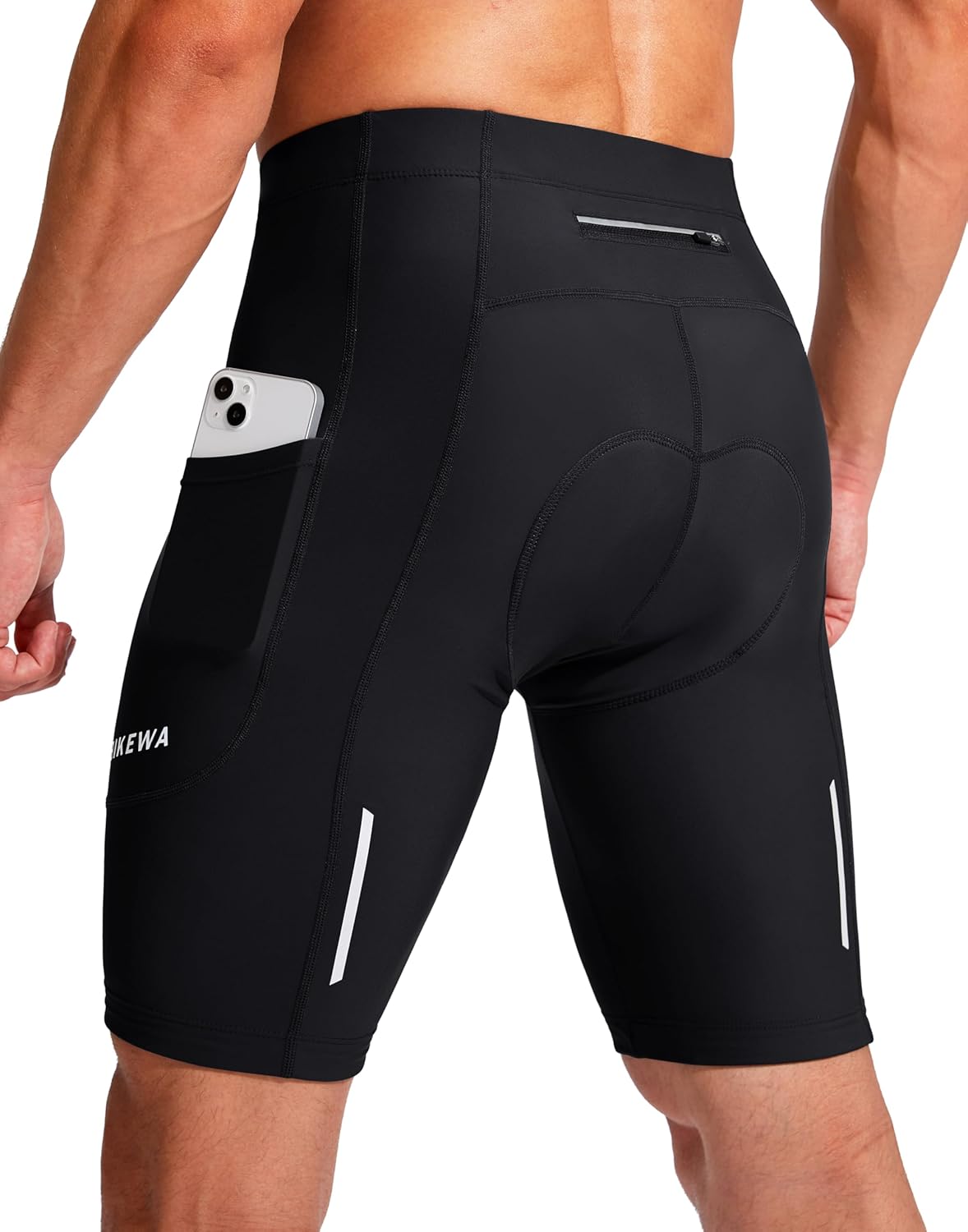
Bikewa Men's Bike Shorts 3D Padded Cycling Road Biking Mountain Riding Biker Bicycle UPF 50+ Cycle Shorts Zipper Pockets
3D padded chamois, UPF 50+ fabric, zipper pockets that actually close, and the lowest cost of entry in this group
Pad depth and density are not published, so the fit is a guess until you ride it; no bib option listed
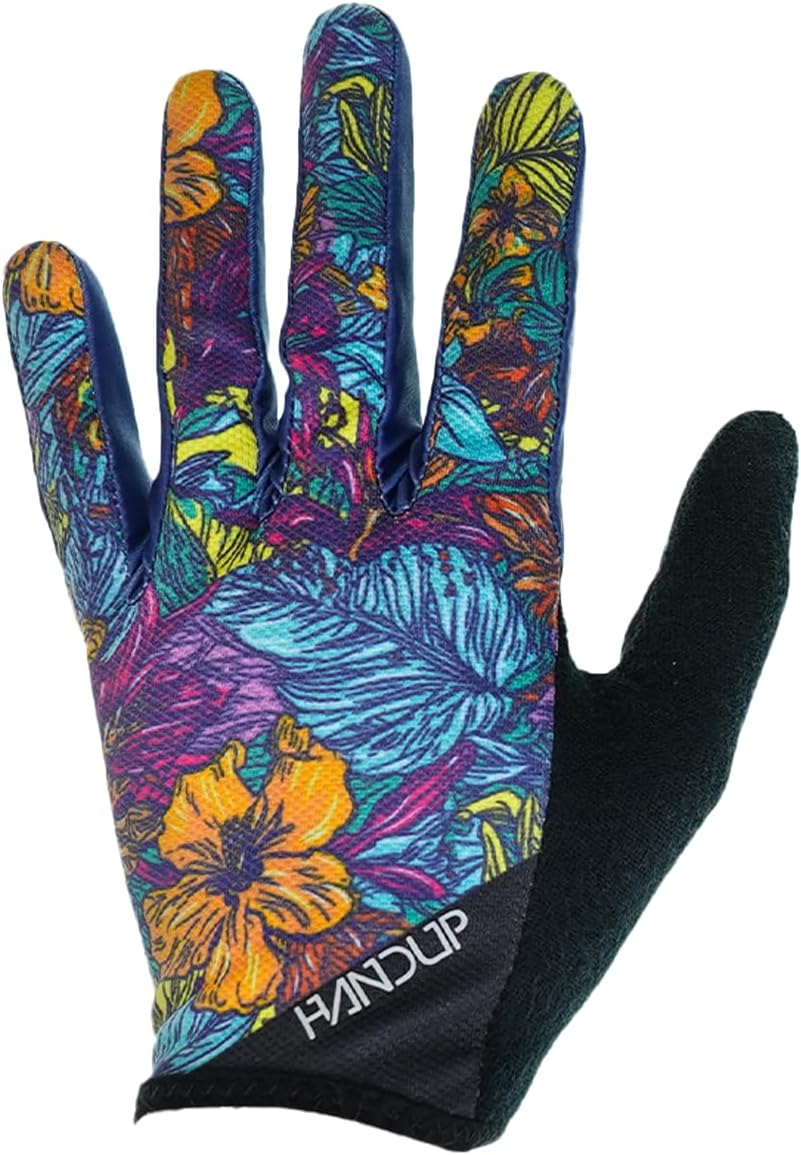
Handup Most Days Full Finger Lightweight Anti-Slip Breathable Mountain Bike MTB Bicycle Enduro Downhill XC Cycling Motocross Unisex Gloves
Full finger coverage, anti-slip palm, breathable build, and a use case that runs from XC to downhill to a cold commute
Unisex sizing is a range, not a measurement; full finger in July is a personal tolerance question
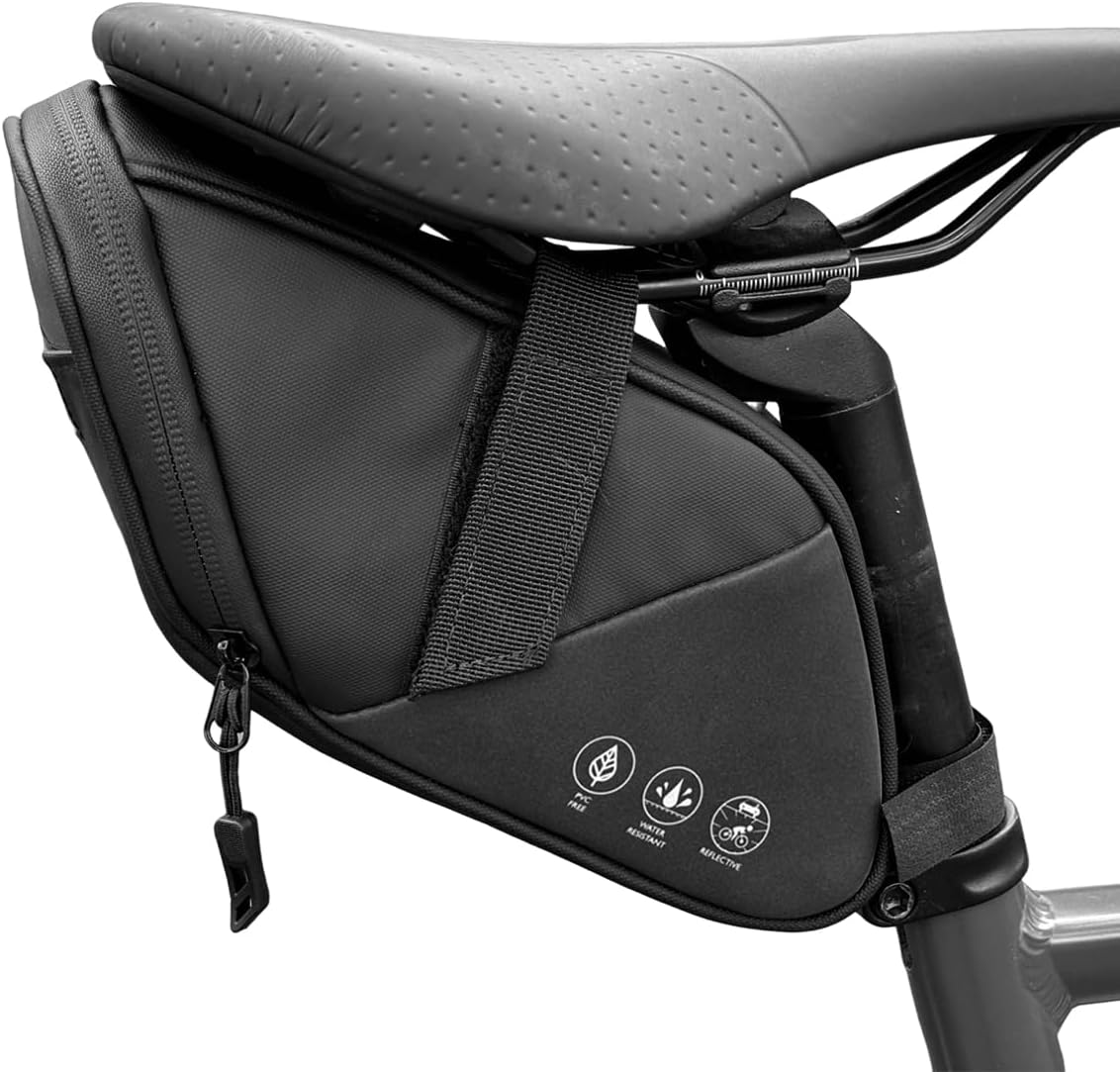
Bike Seat Bag, Water Resistant Bicycle Saddle Bag Under Seat, Cycling Seat Pack for Mountain Road Bikes and Commuter, 1L
Water resistant shell, under-seat mounting, 1L of volume, and it gets a tube and multitool off your spine
1L fills faster than people expect; strap-mounted bags can scuff a seatpost if you crank them down

Tempo Aliante Adaptive, 3D-Printed Endurance Road Cycling Saddle
3D-printed lattice construction, endurance road shape, and a design that addresses pressure distribution instead of adding foam
The most expensive item in this comparison by a wide margin, and it is still a width you have to match to your body
Prices and availability were captured from Amazon Creators API and may change.
What I check before anything gets recommended
There are four questions I ask about any comfort product, and none of them involve the marketing copy.
First, can I measure it? For a saddle, that means sit-bone width on the foam pad, then matching the saddle's published width to that number. For a short, it means pad depth and where the pad sits relative to the saddle's contact points. For a glove, it is palm circumference and finger length, because a glove that bunches at the palm is a blister generator. For a bag, it is volume and how the mount attaches, because a bag that sways is a bag you will stop using.
Second, does the claim survive the first hundred kilometers? That is the break-in window where stitching pulls, straps stretch, and pads pack down. The next ten thousand tell you whether it was worth buying in the first place.
Third, what breaks, and can I buy the part? Zippers, straps, glove seams, and saddle rails all fail on a schedule. If a product has no serviceable parts and a mount that strips, it has an expiration date, and the schedule is not yours.
Fourth, how many shop-rate hours does installation cost? A saddle swap is a five-minute job with a torque wrench and a note on the rail spec. A bag with a fiddly strap system can eat twenty minutes of your evening before you ever ride. That time is part of the price.
Bikewa Men's Bike Shorts: the cheapest way to fix saddle contact
Padded shorts are the most misunderstood item on this list. People buy them expecting the pad to be a cushion. It is not a cushion. It is a friction management system. The pad exists to sit between your skin and the saddle, absorb vibration, and keep the fabric moving instead of your skin.
The Bikewa short brings a 3D padded chamois, UPF 50+ fabric, and zipper pockets, which is a more useful feature list than it sounds. Zippered pockets are the difference between carrying a phone on a ride and losing a phone on a ride, and the UPF rating matters if you are the person who rides at midday in July with no sunscreen on the backs of your legs.
What the listing does not give you is pad depth or density. That matters, because pad thickness is a fit variable, not a comfort bonus. Too thick a pad on a narrow saddle creates pressure at the edges of the pad instead of under your sit bones, and riders blame the saddle. Too thin and the vibration comes through on chip seal.
My honest framing: this is the lowest cost way to test whether padded shorts help your particular discomfort. Ride it for a few hundred kilometers, and if the problem is contact, upgrade. If the problem is still there, the shorts were never the answer and you just saved yourself a lot of money finding out.
Handup Most Days Gloves: full finger coverage that earns its place
Gloves are the cheapest insurance on the bike, and the only piece of gear that protects you in the first half second of a crash. The Handup Most Days glove is a full finger, lightweight, breathable build with an anti-slip palm, and the listed use cases run from mountain and enduro to downhill, XC, and motocross. That range is the point. It is a generalist glove rather than a downhill-specific armored mitt.
Two things I look at in any glove. First, palm fit. A glove that slides on your palm makes you grip the bar harder than you should, and a hard grip is what puts pressure through the heel of your hand on long descents. Anti-slip palm material helps, but the fit is what keeps it in contact. Measure your palm circumference and compare it to the size chart instead of guessing, because unisex sizing is a range, not a measurement.
Second, finger length and seam placement. Full finger gloves bunch at the tips when the fingers run long, and a seam across the inside of the knuckle will find you at kilometer 80. The breathable build here is a real advantage in the heat, and the tradeoff is that a lightweight glove will not be your January glove in a place where January means 20 degrees and wind.
Where I would push back: full finger in July is a tolerance question, not a rule. Some riders run full finger year round because they would rather be hot than scraped, and they are not wrong. Others go half finger above 80 degrees. Neither group is buying the wrong glove, they are buying different rides.
The 1L seat bag: get the weight off your back
The least glamorous item here and the one I would put on almost every bike. A seat bag is about load placement. Weight in a jersey pocket sits on your lower back, moves with every pedal stroke, and gets sweaty. The same weight under the saddle is carried by the frame, which does not care.
This one is water resistant, mounts under the saddle, and holds a liter, which covers a tube, a multitool, tire levers, a patch kit, a quick link, and a phone or a small shell depending on how you pack it. The 1L figure is the number to pay attention to, because volume claims and usable volume are different things. A curved bag loses interior space at the corners, so a liter of rated capacity is not a liter of rectangular box.
The mounting detail is where seat bags win or lose. Strap-mounted bags can scuff a seatpost when they are over-tightened, and they can sway when they are under-tightened. My rule is snug, then check it after the first ten kilometers, because straps stretch once and then settle. If your saddle has very little exposed rail, measure before you buy. Some bag and saddle combinations simply do not have room, and no amount of strap tension fixes geometry.
Also worth saying plainly: a seat bag is not a place to store things you need every five minutes. It is a place to store things you hope you never need. Pack it once, check it every few months, and forget about it.
Tempo Aliante Adaptive: what 3D printing actually changes
A 3D-printed saddle is not a gimmick, and it is not magic either. Traditional saddles are foam over a shell, and foam has one stiffness at a given density. The pressure under your sit bones is highest at the contact points and drops off toward the edges. A 3D-printed lattice lets the manufacturer vary stiffness across the surface, softer where the sit bones land, firmer at the nose and the edges. That is a real engineering difference, and it shows up as pressure distribution rather than as a squishy feeling.
The Tempo Aliante Adaptive is an endurance road shape built that way, and endurance road is a specific brief: longer days, less aggressive position, more time in the saddle and less time shifting weight around. That is the shape most riders should be looking at, honestly. The race shapes get the attention and the endurance shapes get the miles.
Two cautions. First, cost. This is the most expensive product in this comparison, and it is not close. 3D-printed construction is expensive to make, and you are paying for that process. If you cannot put serious hours on the bike, you will not get the return.
Second, and this is the one that matters: a 3D-printed saddle still has a width, and the width still has to match your sit bones. Adaptive padding changes how pressure is distributed across a given surface. It does not change where your sit bones are. I have watched riders buy beautiful saddles in the wrong width and conclude that the whole category is hype. It is not hype, it is a measurement they skipped.
My rule for this one: measure first, ride the shape second, spend the money third. If you have a saddle you already like and the only complaint is pressure after three hours, the adaptive construction is worth the conversation. If you have never had your sit bones measured, do that before you spend anything, because the answer might be a different width, not a different technology.
Where each of these loses
Every product on this list has a failure mode, and knowing them is how you avoid buying twice.
The shorts lose on fit information. Pad depth is not published, so if you are between sizes or you have a saddle with a cutout that changes the contact pattern, you are guessing. Buy one pair, ride it, then decide. Do not buy three.
The gloves lose on seasonality and sizing. Full finger in a heat wave is a choice you make, not a rule. And unisex sizing means the size chart is your only measurement tool, so use it instead of assuming.
The seat bag loses on capacity expectations and mount geometry. One liter is a real limit once a tube and a multitool are inside. And if your saddle rails sit low or your seatpost is aero, check the clearance before ordering.
The saddle loses on price and on the fact that no amount of money substitutes for width. It also loses if you are not putting in long rides, because the benefit shows up in hours four, five, and six, and nowhere else.
Installation, torque, and the hours nobody counts
A short and a pair of gloves cost you zero installation time. Put them on, ride.
A seat bag costs you a few minutes and a re-check after the first ride. Snug the straps, ride ten kilometers, tighten what loosened, then leave it alone. If it sways after that, the mount is wrong for your saddle, not the bag.
A saddle costs you a real install. Saddle rail clamps have a torque spec, usually printed on the clamp or in the manual, and it is usually a low number. Under-torque and the saddle slips and you blame the seatpost. Over-torque and you crush the rails, and on a 3D-printed or carbon-railed saddle that is an expensive mistake. Use a torque wrench, set it to the spec, and check it again after the first ride, because clamps settle.
That is shop-rate thinking applied to your own garage. Ten minutes with a torque wrench now is cheaper than a replaced saddle later.
The order I would buy these in
Measure your sit bones first. That number decides your saddle width, and it also tells you whether your current saddle is the problem or whether the problem is contact and friction. If the width is right and the issue is chafing, buy the shorts. If the issue is grip, blisters, or cold hands, buy the gloves. If the issue is carrying a tube in your jersey pocket, buy the seat bag. If you are riding long days and the pressure builds after hour three, that is when the 3D-printed saddle conversation is worth having.
None of these four items is a mistake to own. They solve different problems, and the only way to waste money here is to buy them in the wrong order, or to buy a saddle without knowing your number. Measure first. Ride a hundred kilometers. Then decide whether the next ten thousand are worth it.