Related: Bike Lights That Survive a Drizzle
A bike that gets maintained is faster than a bike that gets upgraded. That one sentence is the whole reason a bike repair stand and lights sit at the top of my list for anyone who rides before sunrise or after the shop closes. The stand is what turns a repair from a chore you avoid into twenty minutes on a Tuesday evening. The lights are what keep the miles available when the daylight runs out on you at kilometer forty. And once you are doing both, a bar-mounted drink holder stops being a novelty and starts being the thing that keeps your hands on the bars on a hot afternoon.
I spent twelve years as a mechanic and five as a service manager, and I now run a one-bay shop where everything gets a torque wrench, not a guess. What follows is the same advice I give at the counter: three pieces of gear, what each one is actually for, and the specific checks I would run before any of them earns a spot in your garage.
Best overall for the bench: GOEHNER's Upgrade 2.0 Bike Repair Stand
The first thing a repair stand buys you is not convenience. It is consistency. When the bike is at eye level and locked in a clamp, you can spin a crank, watch the derailleur cage track across the cassette, and actually hear the chain line. On the floor, with the bike flipped onto its bars and saddle, you are guessing. Guessing is how shift cables get overtightened, how a rear derailleur hanger gets bent by a bike that rolled off a saddle, and how a hydraulic brake gets contaminated because you were working at a bad angle.
This stand is rated to 110 lbs and built around a 360 degree clamp head, and the clamp head matters more than the weight rating on paper. A head that rotates lets you index the bike to whatever angle the job needs: seat tube vertical for a derailleur adjustment, top tube level for a bottom bracket job, rear wheel up for a cassette swap. The aluminum frame and the folding portable design are what make it a stand you will pull out rather than one you leave in the corner gathering dust.
Two things to check before you commit. First, the clamp jaws. They need padding that grips a seatpost without scoring it, and they need to close evenly rather than cocking to one side. Second, know what you are allowed to clamp. Clamp the seatpost or the seat tube. Never clamp a carbon top tube, and avoid a carbon seatpost if the frame gives you another option. Then torque the clamp knob the way you would torque a stem bolt. Hand tight is how expensive things get loose, and on a workstand it is also how a frame gets crushed.
If you ride an e-bike, the 110 lb ceiling is the number that decides this. A loaded commuter with a battery, a rack, and a lock on board gets heavy faster than people expect, and a stand that sways under that load is a stand you stop using. That is the real failure mode: not breakage, abandonment.
Best for long days on the bar: Tackform Chrome Perch Drink Holder
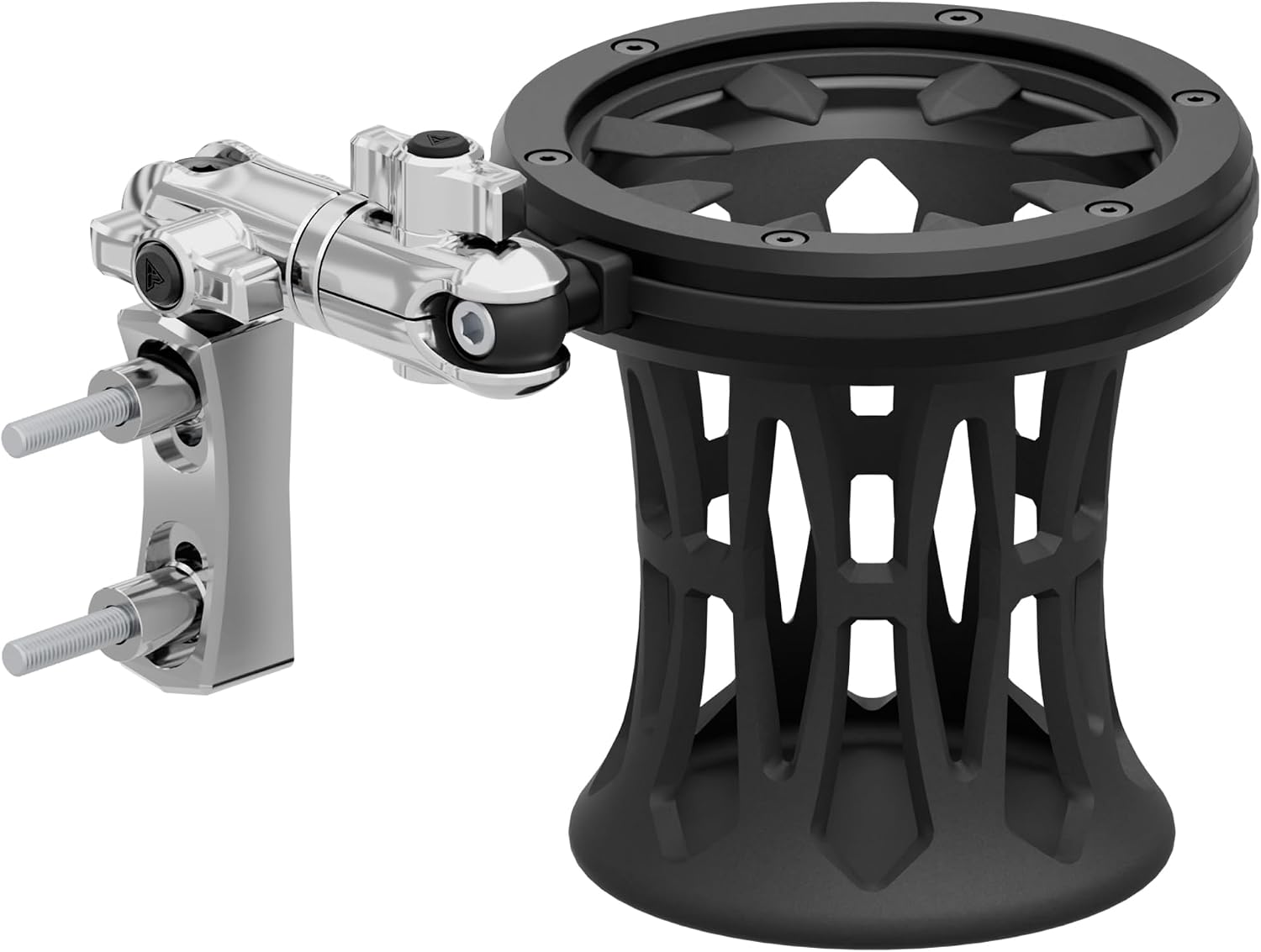
This one is sold for motorcycle perch, brake, and clutch reservoir mounting, and that origin story is exactly why it works on a bicycle bar. It is a metal enclosure with a rubber net and a long reach arm, sized for bottles and cans up to 3.25 inches in diameter. The long arm is the part that matters, because a holder that clamps flush to the bar will foul your cables, your brake lever, or a bar roll the moment you actually load it.
Most cycling bottles are narrower than 3.25 inches, so the opening has room to spare and the rubber net is what does the holding. That net is also the part to inspect. A net with slack tension is a bottle launcher on a washboard gravel descent, and you will find that out at the worst possible moment. Grab the net, pull it, and decide whether it snaps back like it means it.
Then measure your cockpit before you order. Hold a bottle where the arm would put it and check three things: does it clear the brake lever through its full travel, does it interfere with the cable housing when you turn the bars, and does it sit where you can reach it without letting go of the grip. On a long ride, the point of a bar-mounted bottle is one-handed access. If you have to stop to drink, the holder has failed its only job.
The chrome finish is a maintenance item, not a decoration. Chrome and road salt do not get along, so if you ride through a winter, wipe it down and keep the clamp bolt at spec. A loose accessory clamp is a rattle you will hear for a hundred kilometers and blame on your bottom bracket.
Best value: Cuvccn Bike Lights
This is a set: a rechargeable front and rear with multiple modes, a waterproof claim, and a long battery life claim, plus front and rear reflectors. If you are buying your first real light set, or you want a second set to live permanently on the commuter so you never again leave the house with a dead battery, this is the shape of purchase that makes sense.
The front light is for seeing and being seen, and those are different jobs. A wide, even beam with a clean cutoff lets you read pavement at speed without blinding every rider coming the other way. A narrow hot spot in the middle of the road looks impressive in a driveway and useless on a dark path. Judge the beam on the road, not in your hand.
The rear light is for being seen, full stop, and the spec that matters is side visibility. Drivers approach at angles, not straight on, and a rear light that disappears when you are quartering through an intersection is doing half its job.
Three checks before this earns a permanent spot. First, the bracket. I have replaced a lot of light brackets over the years, and a stripped or brittle mount is the failure that ends a light's life long before the electronics give up. Look at the material and the clamp design, and if it wobbles on the bar, fix that before you ride. Second, the charging port. A waterproof rating is a claim, and the port door is where water gets in. Look at the seal, not the badge. Third, understand what you are buying: a sealed battery means the light has an expiration date that someone else set. That is a tradeoff, not a defect, but it should be a decision rather than a surprise.
How I evaluate gear before it gets a recommendation
I have one rule that overrides everything else: no recommendation without either 500 km on the product or 100 cycles of the mechanism. The bucket, my five-gallon integrating sphere with a lux meter inside, the surveyed loop, and the foam pad for sit-bone width are not optional parts of that process. They are the process.
A number printed on a box is a suggestion. A lumen claim is a suggestion. A claimed runtime is a suggestion. What survives is what you can verify. Can I measure it? Does the claim hold up after the first 100 km? What breaks at 5,000 km, and can I buy the spare part? Is the battery replaceable, or does the product come with an expiration date? Does installation cost me an hour of shop-rate time I should have warned you about? Would I put it on my own bike and ride it at midnight?
The lights question is the one people skip. If a light's battery is not replaceable, the light has an expiration date, and the schedule is not yours. That does not make every sealed light a bad buy. It makes it a rental.
The reference table
This is the same table I keep taped inside the bench cabinet. Read the middle column before you read the price column.
| Gear | What it is | What to check first | Price |
|---|---|---|---|
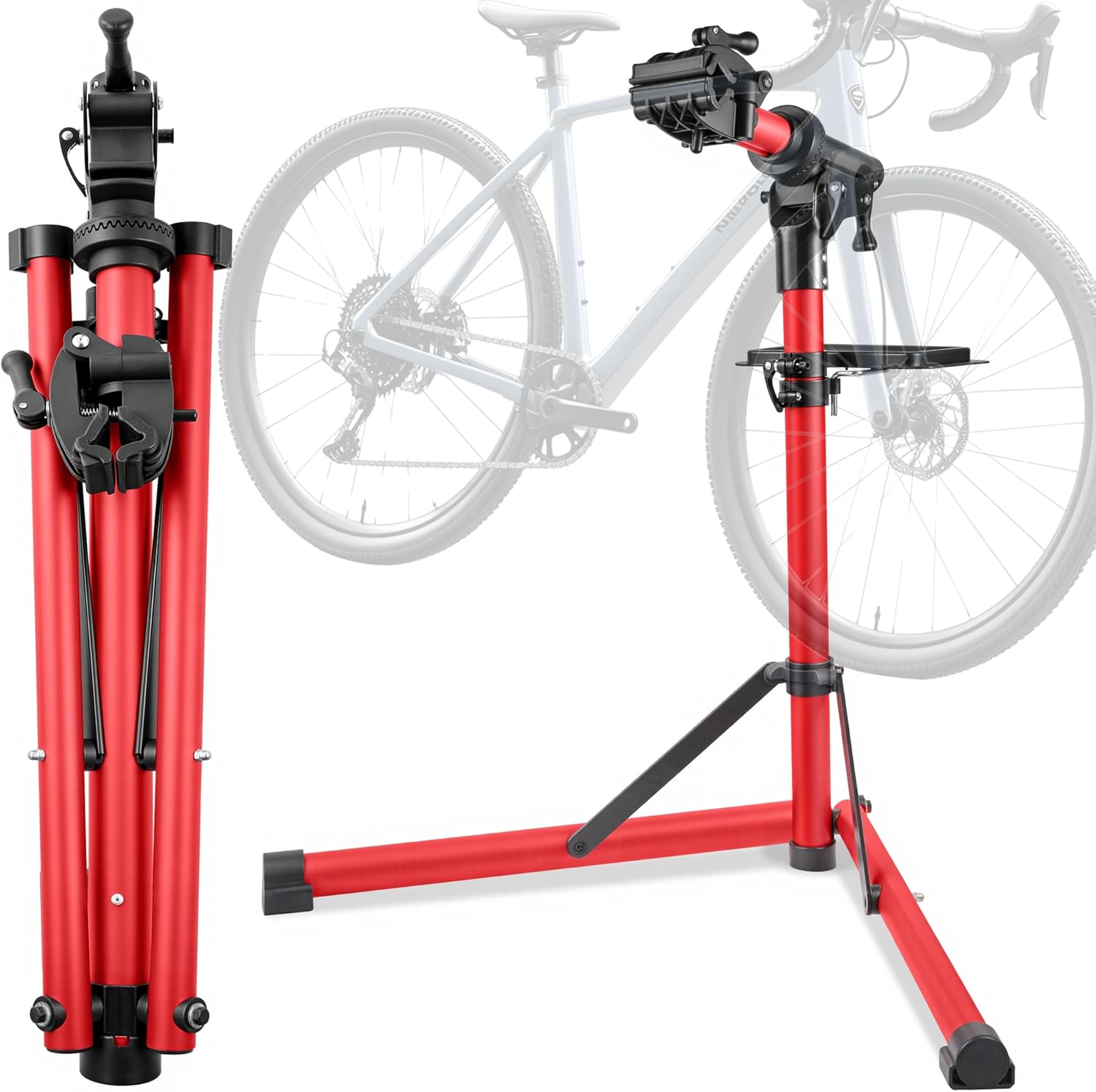 Visit on Amazon → Visit on Amazon →GOEHNER's Upgrade 2.0 Bike Repair Stand |
Portable aluminum workstand, 110 lb max, 360 degree clamp head, folding legs | Jaw padding, even clamp closure, leg splay on an uneven floor, e-bike weight | $139.70 |
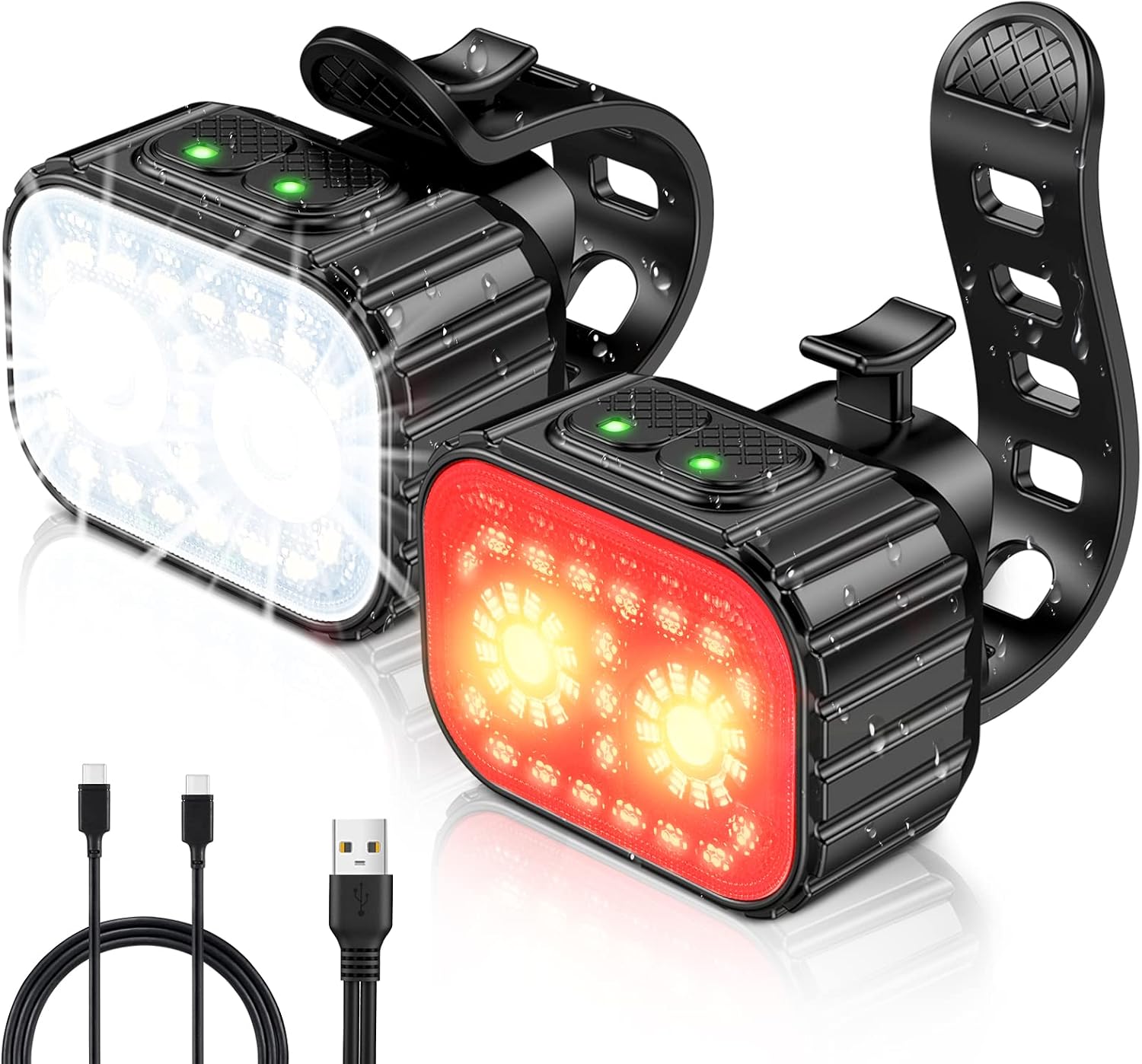 Visit on Amazon → Visit on Amazon →Cuvccn Bike Lights |
Rechargeable front and rear set, multiple modes, reflectors included | Bracket material and clamp, charge port seal, side visibility on the rear, sealed battery | $16.99 |
| <img src="/images/products/B0CZTYYP5K.jpg" alt="Tackform Chrome Motorcycle Perch/Brake/Clutch Reservoir Drink Holder - Fits Bottles and Cans up to 3.25” in Diameter | Metal Enclosure with Rubber Net | Long Reach Arm" width="340" style="border-radius:8px;max-width:340px;width:340px;height:auto;max-height:420px;object-fit:contain"> Tackform Chrome Perch Drink Holder |
Metal enclosure with rubber net, long reach arm, bottles and cans up to 3.25 inches |
Two notes on the table. The stand column is about stability, because a workstand that moves while you torque a crank is worse than no stand. The lights column is about the mount, because the mount is what fails first. If you only remember one thing from this page, remember that.
Should you buy the GOEHNER's Upgrade 2.0 Bike Repair Stand?
Yes, if you do your own maintenance or you want to start. The 110 lb rating covers e-bikes and loaded commuters, the 360 degree clamp head lets you index the bike to the job instead of working around it, and the folding aluminum frame means it stores small enough to actually come out. The caveats are the ones that apply to every stand: pad the jaws, clamp the seatpost or seat tube and never a carbon top tube, and torque the clamp rather than leaning on it. Buy this and your chain gets checked on schedule, which is the cheapest drivetrain insurance there is.
Should you buy the Cuvccn Bike Lights?
Yes, as a value set for commuting and mixed riding. A rechargeable front and rear with multiple modes, a waterproof claim, and reflectors in the box is a sensible starting point, and a second set that lives on the bike is the best defense against the dead-battery ride home. Check the bracket before you trust it, look at the charge port seal rather than the waterproof badge, and go in knowing the sealed battery sets an expiration date you do not control.
Should you buy the Tackform Chrome Perch Drink Holder?
It depends entirely on your cockpit. The metal enclosure, the rubber net, and the long reach arm are a genuinely useful combination, and the 3.25 inch opening swallows bottles and cans with room to spare. But the long arm is a fit question, not a quality question. Measure the clearance from your brake lever through its travel, check the cable housing when the bars turn, and pull the net to confirm it has tension. If it fits, it earns its place on a long day. If it does not, no amount of chrome fixes an interference problem.
One last thing, and it is the thing I say most often at the counter. Measure before you buy, install to spec once you own it, and re-check the bolts after the first hundred kilometers. Gear does not fail because it was cheap. It fails because nobody looked at it.