Twelve years as a mechanic and five as a service manager taught me that the same three questions walk through the door every week: how do I see where I'm going, how do I keep riding when the weather turns, and why doesn't my bike stop the way it used to. This comparison covers bike light and trainer upgrades that answer the first two, plus one brake part that answers the third for a lot less money than most people expect. Four products, one table, and the shop-floor notes I'd give you if your bike were upside down on my stand right now.
For most riders, the short answer is this: the CECO-USA set is the one I'd put on a bike that sees real dark, the Ascher set is the right call for a commuter, a kid's bike, or a spare, the Alpcour stand is for indoor miles without a smart trainer's price tag, and the Tektro caliper is the quiet upgrade that fixes braking on a mechanical disc road bike. Everything below is judged the way I judge anything that rolls into the shop: what it claims, what it's made of, how it installs, and what breaks first.
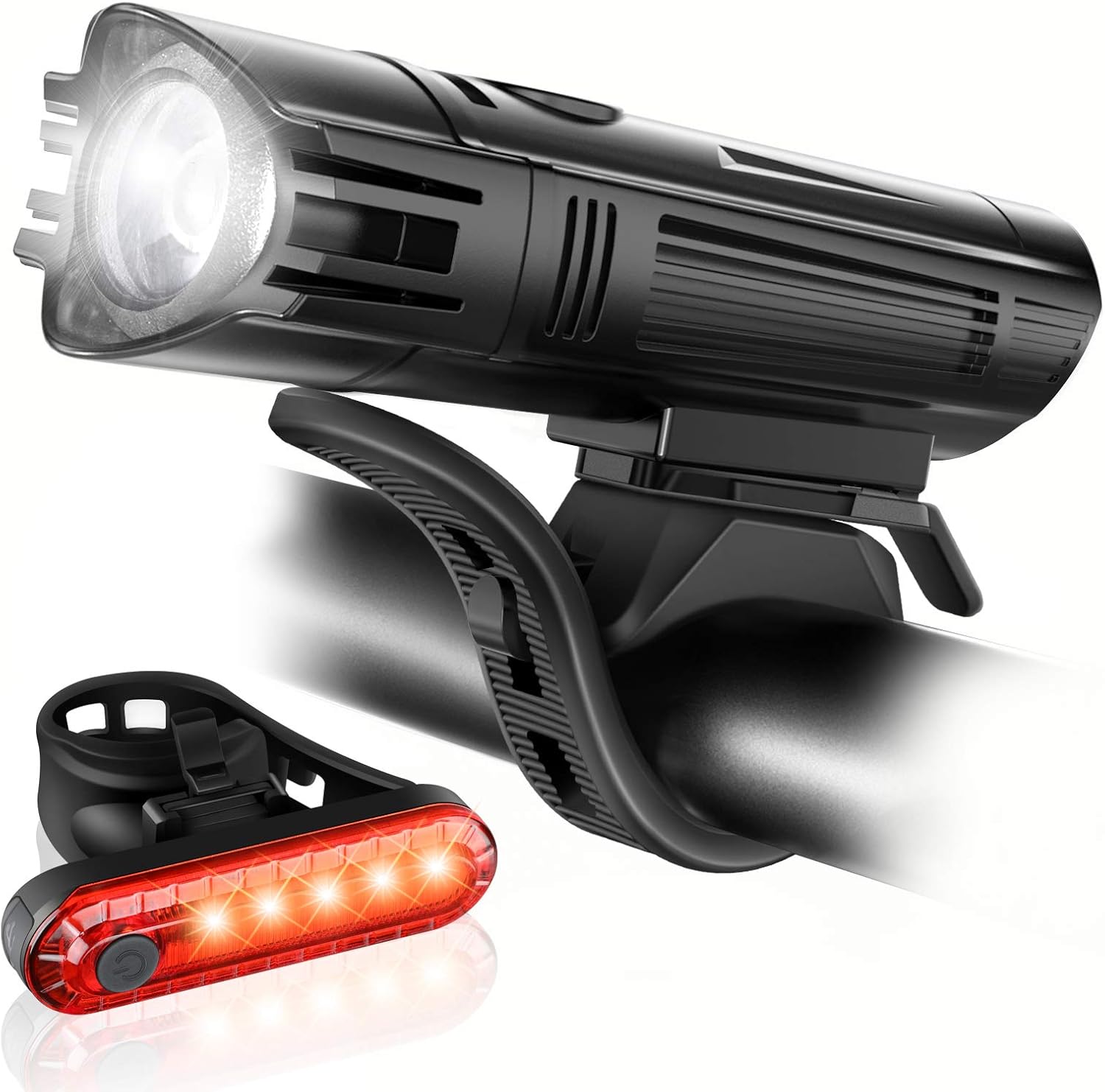
Ascher Ultra Bright USB Rechargeable Bike Light Set, Powerful Bicycle Front Headlight and Back Taillight, 4 Light Modes, Easy to Install for Men Women Kids Road Mountain Cycling
Front and rear in one box, four modes, USB charging, and a tool-free install that takes less time than finding your hex keys
Commuter-length run times, not all-night ones, and the bracket is the part I'd watch on a bike that lives outside

CECO-USA: 1000 Lumen Headlight & 80 Lumen COB LED Tail Light for Cyclists who Want to See far & to be seen from Super Wide Angle. Brightest USB Rechargeable Bike Light Set Available for All Cyclists
The only set here built around seeing the road, not just being seen, with a wide-angle COB taillight that reads from the side
Costs several times what the Ascher set does, and every lumen number on the box is a claim until something measures it
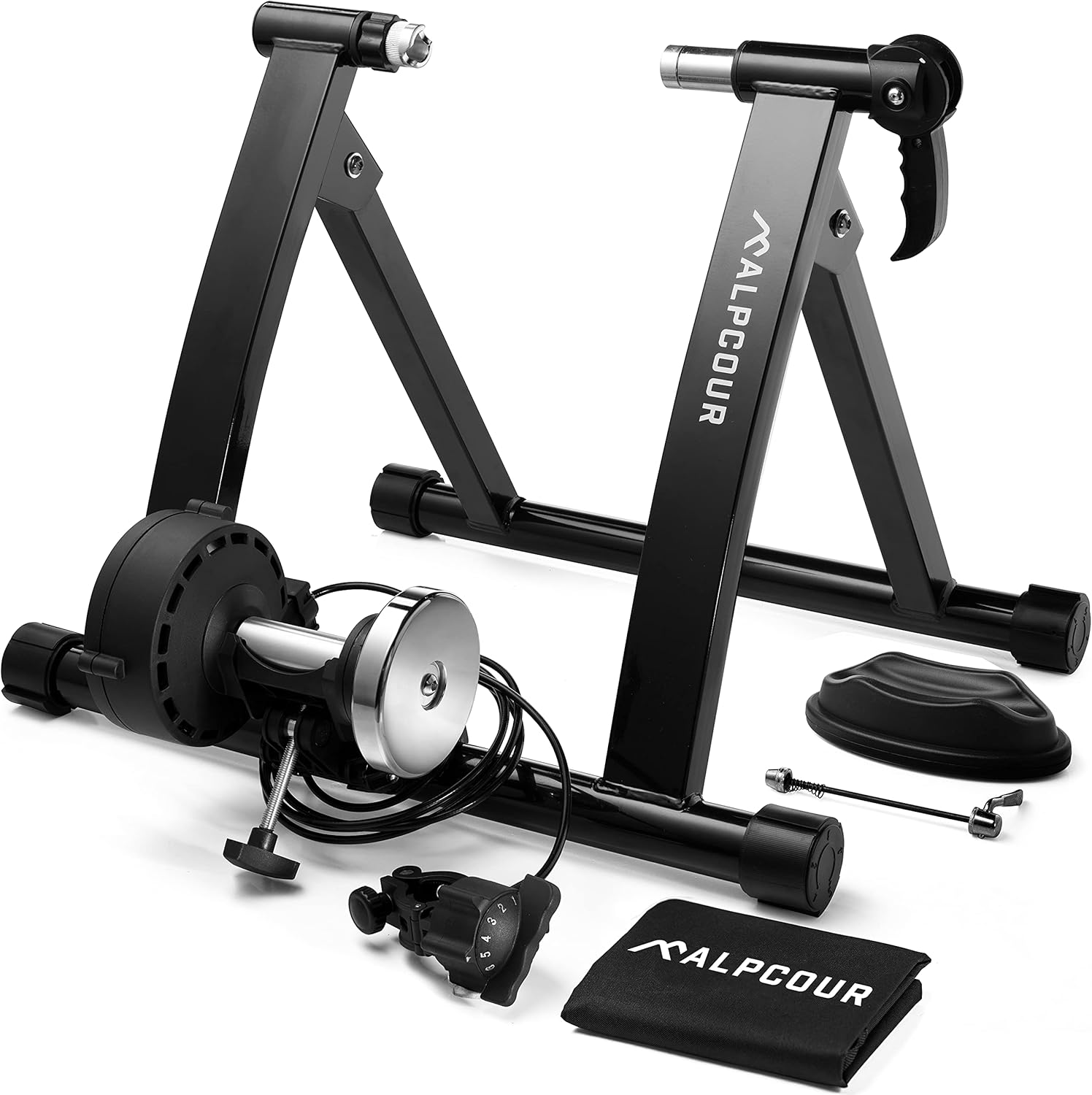
Alpcour Bike Trainer Stand for Indoor Riding, Portable Foldable Magnetic Stainless Steel Indoor Trainer, Noise Reduction, 6 Resistance Settings & Bag, Stationary Exercise for Road & Mountain Bikes
Six magnetic resistance settings, folds flat, ships with a bag, and noise reduction is the whole design brief for apartment riders
Wheel-on trainers wear your rear tire and clamp a quick-release skewer, and it is not a smart trainer, so it won't drive Zwift

Tektro MD-C550 Dual-Piston Cable Actuated Mechanical Flat Mount Disc Caliper for Road Short-Pull Levers, Black
Dual-piston and cable actuated, so it works with the short-pull road levers you already own and stays serviceable
It's a part, not a product: cable routing, pad clearance, and bed-in make it a real job with real shop time
Prices and availability were captured from Amazon Creators API and may change.
How I judge gear like this
I don't hand out a recommendation because a box looked good. Everything that earns a spot in a customer's build has to survive a few questions first. Can I measure the claim? The bucket settles lumen arguments in about ten seconds. Does the claim survive the first 100 km? The first hundred kilometers tell you whether a product works; the next ten thousand tell you whether it was worth buying. What breaks at 5,000 km, and can I buy a spare part for it? And how many shop-rate hours does installation eat, because a $40 part that needs an hour of fiddling isn't a $40 part.
Two disclosures before we go further. First, where I quote a lumen number below, that's the manufacturer talking, not my test bench. I repeat claims as claims. Second, this is a comparison of four very different jobs: being seen, seeing the road, riding indoors, and stopping. You probably don't need all four, and the point of the table is to help you pick the one your riding actually requires.
The two light sets: box claims versus beam reality
Amazon is full of mystery-brand lights, and my rule of thumb has held for years: the lumen claim is usually the price divided by ten. That doesn't make every inexpensive light bad. It makes the cheap ones commuter lights, and the honest ones know it. The two sets here sit at opposite ends of that spectrum, and both have a place.
Ascher Ultra Bright USB Rechargeable Bike Light Set
The Ascher set is the definition of a starter kit done right. You get a front headlight and a rear taillight in one box, both USB rechargeable, with four light modes to cycle through. It's aimed at road, mountain, and casual riding, and the install is genuinely tool-free, which matters more than people think. I've watched customers abandon a light purchase at the kitchen table because the bracket needed a manual and a prayer.
Where it earns its place is on the bike that isn't your race bike. The kid's bike, the commuter you lock at the train station, the spare set in the saddlebag for the ride that runs long. It's also the cheapest way to stop being invisible, and being invisible is how most of the near-misses I hear about actually start.
Where it gives ground is run time and hardware. A light at this size and price is built around a commute, not a double century, and the mount is the part I'd keep an eye on if the bike lives outside in the weather. The battery is sealed into the housing, which means the light has an expiration date, and the schedule isn't yours. That's the trade you're making at this price, and it's a fair one.
CECO-USA 1000 Lumen Headlight and 80 Lumen COB Taillight
This is the set for the rider who actually rides in the dark, not the rider who occasionally gets caught out. The headlight is claimed at 1,000 lumens with an 80-lumen COB taillight, and the wide-angle tail is the detail I care about most. A narrow taillight is a taillight. A wide one is what a driver sees when they're angling in behind you at an intersection, and intersections are where the right hook happens.
The price gap between this set and the Ascher set is real, and so is what you're buying with it: more light on the road ahead, a beam designed for seeing rather than being seen, and a rear light that reads from the side. If your riding happens before 7 a.m. or after 6 p.m. for most of the year, that gap buys you something a cheaper set can't.
Two honest caveats. Big lumen numbers and usable beam patterns are not the same thing, and I've measured plenty of lights that hit their number and still threw a beam shaped like a bad idea. And any claim is a claim. The set is rechargeable, which keeps it out of the disposable category, but until a light goes through the bucket I treat its number as marketing with a decimal point.
The indoor trainer stand: winter miles without the noise complaint
The Alpcour Bike Trainer Stand is a wheel-on magnetic trainer. That sentence tells you almost everything you need to know about who it's for. Your rear wheel spins against a resistance unit, six settings let you change how hard that is, and the whole thing folds flat and ships with a bag, which makes it a piece of gear you can put in a closet rather than a permanent piece of furniture in the living room.
The magnetic resistance is the practical choice at this price point. It's simple, it doesn't need a power cord, and the six settings give you a range from easy spin to something that will make you breathe hard. Noise reduction is the other headline feature, and it's the one to take seriously if you live above a neighbor. A wheel-on trainer's noise comes from tire against roller, and a smooth roller plus a trainer tire helps more than any marketing copy will admit.
The checks I'd make before ordering are the ones that come back as returns. This style of trainer clamps your rear axle with a quick-release skewer, so if your bike uses a thru-axle, verify compatibility and adapters before you buy, not after. Wheel-on trainers also wear rear tires, so a dedicated trainer tire is money well spent if you're going to put real hours on it. And be clear about what this is: it is not a smart trainer. It won't control resistance from an app, and it won't report watts to Zwift.
That's not a flaw, it's a category. If you want to spin indoors through February without spending smart-trainer money, this does the job. If you want structured training with power accuracy, the step up is a direct-drive unit, and that's a different budget and a different article.
The brake caliper: the upgrade nobody markets
The Tektro MD-C550 is a dual-piston, cable-actuated mechanical flat mount disc caliper built for road short-pull levers. Decoded: it's the part that lets a road bike with mechanical disc brakes stop better without converting anything to hydraulics.
Cable actuated is the key phrase. Your existing levers, your existing cables, your existing housing. You are not buying new brifters, you are not bleeding a system, and you are not paying for a hydraulic conversion. For a rider on a mechanical disc road bike who is tired of a spongy, uneven-feeling brake, that is the whole appeal.
Dual piston is the second key phrase. Two pistons pushing the pads means more even pad wear and more consistent contact than a single-piston caliper, and even pad wear is the difference between a brake that feels the same in month six as it did in week one and one that starts dragging on one side. Flat mount is the current road standard, so this is the modern fitment rather than an adapter puzzle.
The catch is that it's a part, not a product. Installing a caliper is a genuine job: routing and setting cable tension, aligning the caliper to the rotor so it doesn't rub, setting pad clearance, then bedding the pads in properly. Torque to spec on the mounting bolts, always, because a caliper that moves under braking is a caliper that's about to ruin your day. If you do your own work, budget an evening. If you don't, budget a shop visit and ask what it costs before you order.
What each one costs you in shop-rate hours
This is the column most reviews leave out, and it's the one that changes the math.
The Ascher set is a two-minute job. Clamp the bracket, thread the strap, done. No cable, no tools beyond your fingers on the thumb screw.
The CECO-USA set is a slightly longer version of the same job, and the only thing to slow down for is positioning the wide-angle taillight so it's actually visible and not hidden behind a saddle bag.
The Alpcour stand is a first-time setup job. Unfold it, set the resistance unit against the rear wheel, adjust the clamping so the tire contacts the roller correctly. Once it's dialed, it's a thirty-second job every time after that. Getting it dialed the first time is where the patience goes.
The Tektro caliper is the only one on this list that's a work order. Cable work, alignment, bed-in, and a test ride. If you're paying a shop, that's real money on top of the part, and you should know it before you click.
The trade-offs, stated plainly
Buy the Ascher set and you get two lights, four modes, and a price that makes it an easy yes, and you accept commuter run times, a sealed battery, and a bracket that won't love a life outdoors.
Buy the CECO-USA set and you get genuine road-visible light and a wide-angle tail, and you pay several times more for it and you still take the lumen claim on faith until someone measures it.
Buy the Alpcour stand and you get quiet, foldable indoor miles with six resistance settings, and you accept tire wear, a quick-release fitment check, and no smart features, no app, no watts.
Buy the Tektro caliper and you get better braking on the bike you already own with the levers you already have, and you accept that it's a job, not a bolt-on, and that it won't turn a mechanical bike hydraulic.
Which one for which rider
If you commute, ride a kid's bike, or want a spare set in the bag, the Ascher set is the sensible spend. It's the cheapest insurance against being invisible.
If your rides start in the dark and end in the dark, spend the money on the CECO-USA set. Seeing the road is a different requirement than being seen, and the wide-angle taillight is the part that keeps you out of an intersection argument.
If your problem is February and not traffic, the Alpcour stand is the answer. Six magnetic settings, a folding frame, and a bag that lets it live in a closet instead of your living room.
If your problem is that the bike doesn't stop the way it should, the Tektro caliper is the fix, and it's the cheapest meaningful brake upgrade for a mechanical disc road bike.
The short version
None of these four is a replacement for the others, and that's the point of putting them side by side. A light, a trainer, and a caliper solve three separate problems, and the right purchase is the one that matches the problem you actually have. Match the part to the job, torque it to spec, and measure the claim before you believe it. That's the whole method, and it's saved me more money than any sale ever has.