Related: Chain Wear: The Measurement That Saves a Drivetrain
Four things sit on the shelf by the shop door, and they're the same four things riders ask about most: lights, a computer, somewhere to put a tube, and brakes that stop in the rain. That's my whole list of commuter cycling gear essentials. Everything past it is preference wearing a necessity costume.
Ascher's USB rechargeable set covers front and back in one box. CYCPLUS puts a GPS head unit on your bar for the weight of a gel. Topeak's Aero Wedge Pack carries the flat kit. TRP's Spyre is the mechanical disc caliper I point people toward when they want to stop on purpose and fix it themselves.
That's the short version. The longer version is the part that matters, because every one of these categories has a failure mode that shows up around kilometer 300, and it's cheaper to know about it now than to learn it on the shoulder.
Best Overall: Ascher USB Rechargeable Bike Light Set
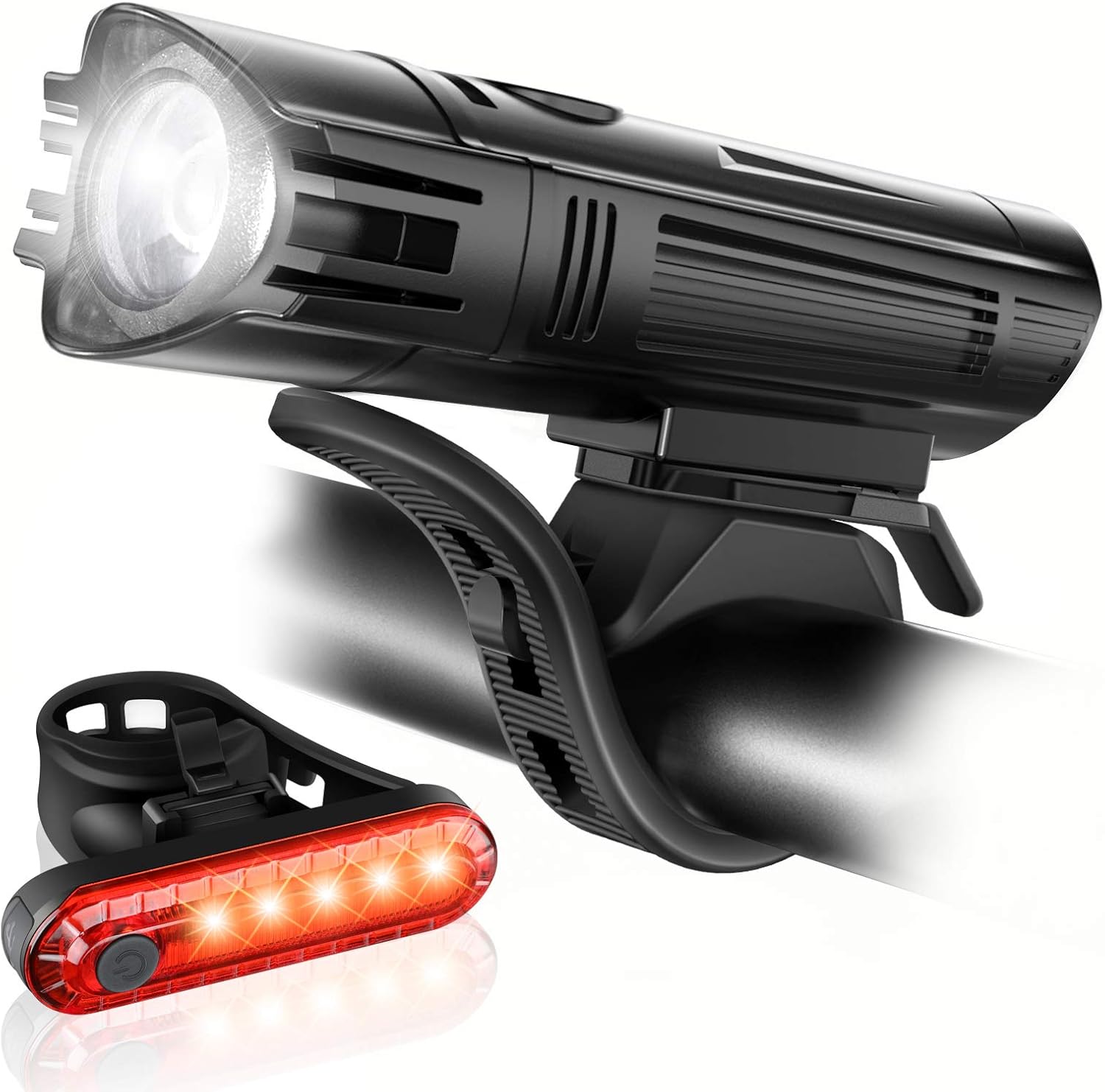
A front headlight, a taillight, USB charging, four modes, and mounting that needs no tools. This takes the top spot for a reason that has nothing to do with the number printed on the box: a rider with a dead light isn't riding, and two lights sharing the cable you already own are two lights that stay charged.
Three things decide whether a light set earns its bar space.
The mount. I've serviced enough light brackets to know the bracket fails first. Plastic that flexes is fine. Plastic that strips is not. A light that rattles loose on a washboard descent is worse than no light, because you ride like it's still there.
The beam. A tight hot spot throws light thirty feet down the road and lights nothing at the edges. You want a pattern that puts light where your front wheel is actually going, plus enough spill to be seen from the side at a driveway.
Battery discipline. Charge it when you get home, not when you need it. Rechargeable means a routine, and a routine beats a spare pack of cells you'll never remember to buy.
Four modes is the right number. Steady for the road, flash for daylight, a low setting for the ride home through the neighborhood. Everything past that is a menu you'll scroll through at a stoplight with cold hands.
Best Value: Topeak Aero Wedge Pack with Strap Mount, Large
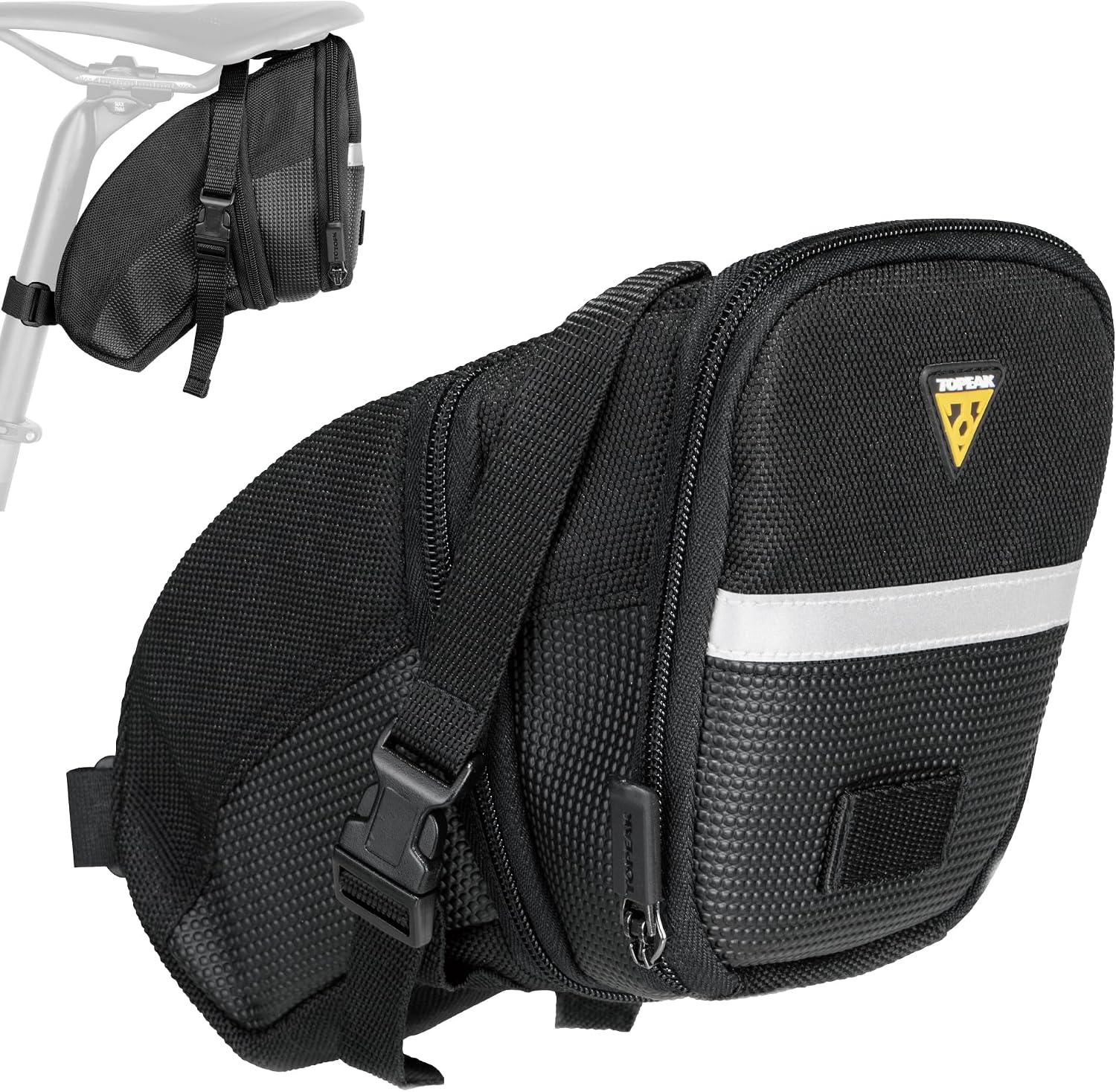
Every flat kit needs a home, and the home decides whether you carry it. The wedge straps under the saddle with no rack, no bracket, and no hardware. That's the entire argument: setup costs zero tools and zero shop-rate hours, which is not true of most bags.
Here's what goes in the Large, in this order. One tube. Two tire levers. A multi-tool with a chain breaker that doesn't bend the first time you use it. A patch kit. A valve extender if you run deep rims. Your keys. That fills it. A phone fits if you don't want it in a jersey pocket, but I'd rather keep the flat kit in the bag and the phone where you can reach it at a light.
Two checks before you commit. Zipper: a sticky zipper is a bag you stop opening, and a bag you stop opening is a bag you stop filling. Strap: it is the whole mount, so look at how it meets the rail, pull it snug before the first ride, and check it again after.
Strap versus quick-release bracket is a real decision, not a preference. Brackets look cleaner and add one more part to break. Straps are quieter and stay put when the bike sits in a parking lot.
CYCPLUS Wireless GPS Bike Computer G1
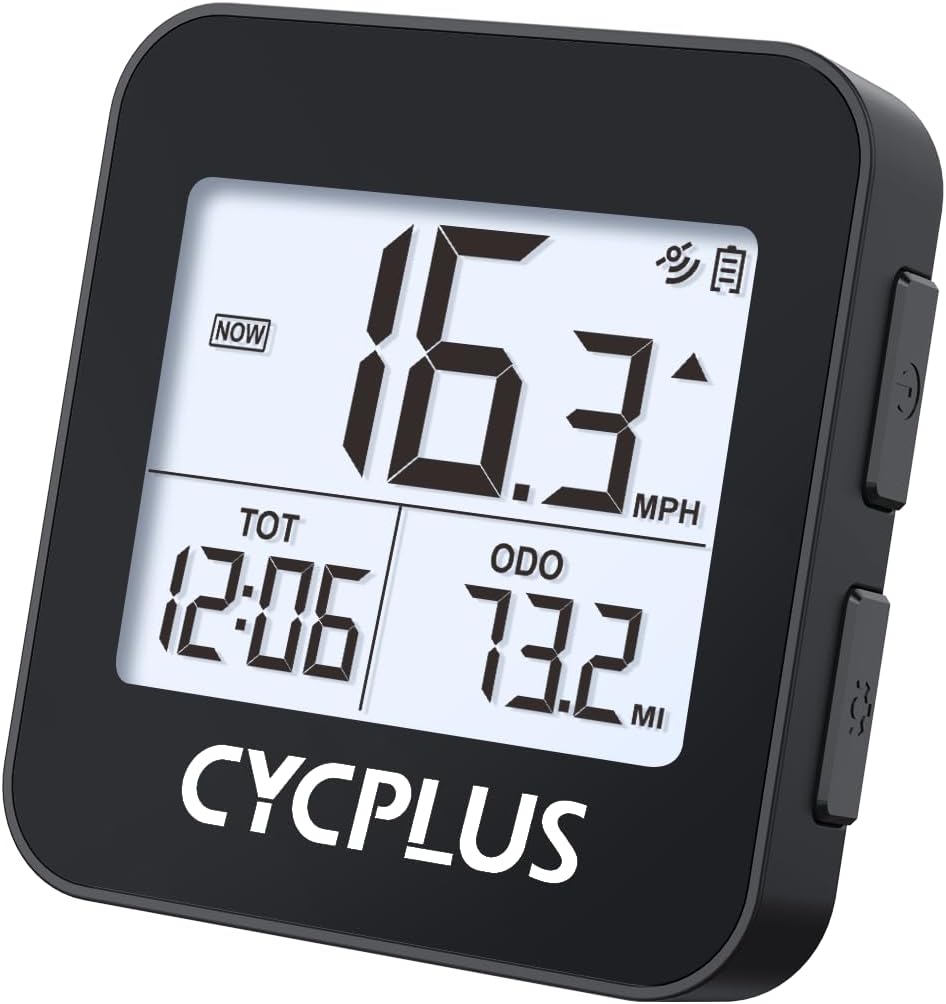
Seventy grams, a 2.0-inch screen, IPX6, and a 1200mAh battery. That's a head unit doing the job a head unit is for: speed, distance, time, elevation, and a ride file you can upload, without strapping a phone to the bar where vibration, sun, and battery life all hate you.
GPS accuracy is a chip-and-sky problem. Trees, buildings, canyons, and a wet sleeve over the unit all cost signal, and no logo on the case changes the physics. So distance gets checked against a known course, never against the number on the screen. My loop is surveyed at 16.2 miles with a wheel. When a computer comes back at 16.4 on a clear day, that gap tells me how the unit smooths its data, and smoothing is the difference between a ride file you trust and one you don't.
IPX6 is the right rating for a bike. It means rain and road spray, not submersion, and rain is what actually happens. Charge it every third ride and it won't surprise you. Two inches is my floor for screen size. Anything smaller and you're squinting at a number instead of reading it, and you already own a phone for maps.
TRP Spyre Mechanical Disc Brake Caliper
Dual-piston actuation and a flat mount. The dual-piston part is the good part. Most mechanical calipers push one pad and bend the rotor into the other, which is how you end up with a rub you cannot dial out. The Spyre moves both pads, so the rotor stays where it belongs and the gap stays even as the pads wear.
Mechanical isn't a downgrade, it's a different trade. You give up some lever feel and a little bite at the top of the stroke. You get back a cable you can tension at the barrel adjuster, pads you swap with one hex key, and no bleed kit in your life. For a commuter or a loaded tourer, that's the better end of the deal.
Three install notes, because this is where people get into trouble.
- Flat mount is not universal. Confirm your frame and fork standard and the rotor size the caliper is built for before you order. It's in the manual. Read it.
- Bed the pads in. New pads on a new rotor need a handful of hard stops from speed to transfer material evenly. Skip that and you'll blame the brake for the noise.
- Torque to spec. Caliper bolts have a number and it's printed in the manual. Hand tight is how expensive things get loose, and a caliper that shifts under braking will sing at you for a thousand miles.
How I tested
Same standard for everything on this page. Lights go in the bucket, a five-gallon pail painted flat white inside with a meter in the lid, because a lumen claim is a marketing number until something measures it. GPS units run the loop, 16.2 miles surveyed with a wheel, back to back against a wheel sensor, because distance is the one thing a computer can't fake and the one thing a rider notices.
Hardware gets the stand and the torque wrench. I look at what the bolts are made of, what threads they go into, and whether the part can be serviced or only replaced. A caliper you can rebuild is a caliper you keep. A light with a sealed battery has an expiration date, and the date isn't yours.
Then the part nobody puts in a review: 500 km minimum before I'll call a product good. The first 100 km tell you if it works. The next 400 tell you what it's going to do for the next 10,000. Installation counts too. A product that eats an hour of fiddling isn't the sticker price, it's that price plus an hour of shop rate.
Analysis and test results
Four categories, four different failure modes.
Lights fail at the mount and the battery, in that order. The bucket settles the output question. The mount settles everything else. A USB set is the right answer for most riders, because the alternative is a drawer of half-dead cells and a light that lives on the bench instead of the bike.
Computers fail at the file and the battery. A head unit that drops your ride because it lost signal in a canyon is a head unit you stop trusting, and trust is the entire product. The thing nobody mentions: a big screen with a small battery is a phone with fewer features. A 70-gram unit with a 2.0-inch screen and a 1200mAh cell sits on the right side of that line, because it isn't pretending to be a mapping device.
Saddle bags fail at the zipper and the strap. There's not much else to break. Buy the size that holds your flat kit plus one thing, and no more, or you'll carry a bag you resent.
Mechanical disc brakes fail at setup, not at the part. Nine of ten mechanical brake complaints I hear are a pad worn past the spring, a cable that stretched, or a caliper that was never centered. Dual-piston actuation removes one of those three before you touch a tool.
The measurable list: output for lights, distance for computers, pad wear and rotor thickness for brakes, strap condition for bags. The unmeasurable list has one item, which is whether you'll still be carrying it in March. That answer takes a winter.
The commuter cycling gear reference table
Same four products, sorted by the problem each one solves. Prices live on the product pages, because I don't print numbers that change weekly.
| Product | What it solves | Where it fits | Verdict |
|---|---|---|---|
 Visit on Amazon → Visit on Amazon →Ascher USB rechargeable light set |
Being seen and seeing | Every bike, every season | Front and rear in one box, tool-free mount. Check current Amazon price |
 Visit on Amazon → Visit on Amazon →CYCPLUS G1 GPS computer |
Speed, distance, ride files | Road, gravel, commute | 70 g, 2.0-inch screen, IPX6, 1200mAh. Check current Amazon price |
 Visit on Amazon → Visit on Amazon →Topeak Aero Wedge Pack, Large |
Flat kit storage | Under every saddle | Strap mount, no hardware, no tools. Check current Amazon price |
 Visit on Amazon → Visit on Amazon →TRP Spyre caliper |
Stopping, field-serviceable | Flat mount frames, mechanical levers | Dual-piston, cable actuated, rebuildable. Check current Amazon price |
Read the table by the middle column. If your problem isn't in it, you don't need the product yet.
Should you buy the Ascher USB Rechargeable Bike Light Set?
Yes, if your bike currently has one light or none. Two lights sharing a charge cable, mounting without tools, and putting a usable pattern on the road do more for you than a brighter single unit you leave home because the bracket wiggles. Watch the straps, keep it on a charging routine, and put a set on the bike you ride less often too. It's the cheapest safety upgrade on this page and the one with the shortest path from box to bar.
Should you buy the Topeak Aero Wedge Pack?
Buy the Large if you carry a tube, levers, and a multi-tool, and buy the strap mount if you don't want another bracket bolted to your post. It's the least exciting product here and the one that pays for itself the first time you flat six miles from the car with a tube full of nothing.
Should you buy the CYCPLUS G1?
If you want numbers on the bar and your phone in your pocket, yes. Seventy grams, IPX6, and a 1200mAh battery is the correct shape for that job, and it runs on the loop without drama. If you need turn-by-turn navigation on the device itself, this isn't your unit and no firmware update will make it one. Buy a phone mount instead.
Should you buy the TRP Spyre?
If you run mechanical levers on a flat mount frame, this is the caliper to put on it. Dual-piston actuation means less rub and easier centering, and cable actuation means you fix it yourself in the garage with one hex key and no fluid on the floor. Confirm your mount standard and rotor size first, then torque to spec. Yes, even those bolts. Especially those.