Related: Best Insulated Bottles and Cages for Long Summer Rides
I spend more hours behind a work stand than in the saddle some weeks, and the pattern never changes. Riders will spend four figures on a frame and then show up to the Tuesday worlds in a cotton t-shirt with no way to fix a flat. The gear that decides whether a ride is good is boring gear: something to carry your stuff, something to get you home when the tire goes down, and something to drink that is not bathwater by mile twenty. So this is my working list for a men's cycling jersey and patch kit setup, plus the bottle that lives in my cage.
I judge everything the way I judge anything that rolls through the shop. Can I replace the part that wears out? Does the claim survive a real ride? Does it need an hour of fiddling I should warn you about before you buy? The first 100 km tells you whether something works. The next 10,000 tells you whether it was worth the money.
I do not repeat a number I have not measured, and I do not call something durable because the packaging says so. What I can do is tell you what to look at, what fails first, and which of these four earns its place in a jersey pocket or a bottle cage.
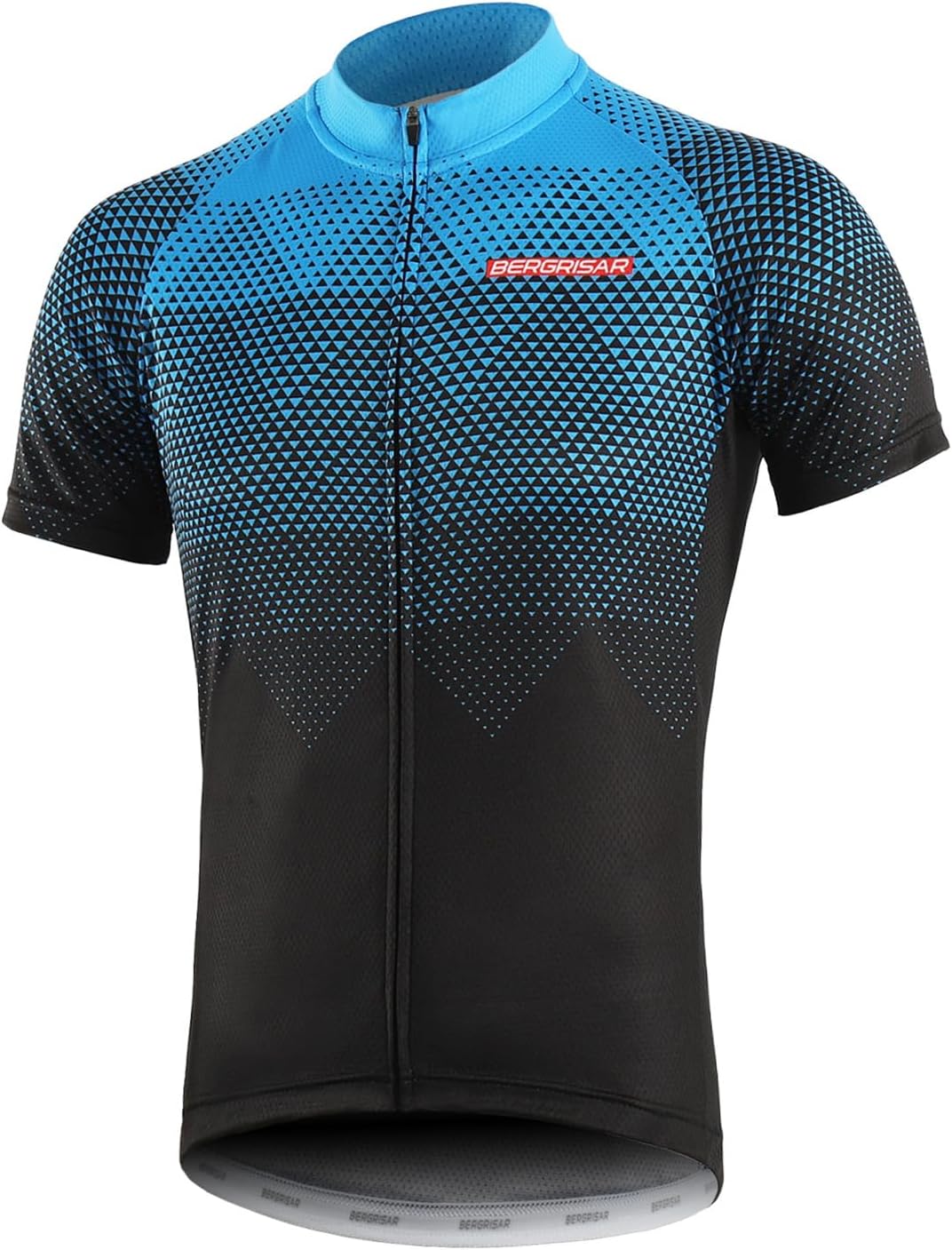
The value jersey: BERGRISAR Men's Cycling Jerseys Short Sleeves Bike Shirt
Every shop has this conversation. A new rider walks in wearing a jersey that cost more than their helmet, and I have to explain that a jersey is equipment with three jobs: move sweat, hold your stuff, and stay where you put it. The BERGRISAR short sleeve jersey is what I point at when somebody needs a second or third jersey in the rotation without turning it into a spreadsheet exercise.
What I look at on any short sleeve jersey, this one included:
- The zipper. A zip that catches, or one that will not stay put at the top, is the thing that annoys you at kilometer 40.
- The rear hem. If there is no gripper, the jersey climbs your back the moment you get into the drops.
- The pockets. Load them before you decide. A phone, a pump, and two gels will tell you more than the tag does.
- Fabric weight. A jersey that is right in July is a jersey you will not touch in April.
Value is not the same thing as cheap. This is the jersey you can own three of, and three jerseys matter more than most riders admit, because a clean dry one on day two beats a fancy one sitting in the laundry basket. If you ride four days a week, buy two of these before you buy one of anything else.
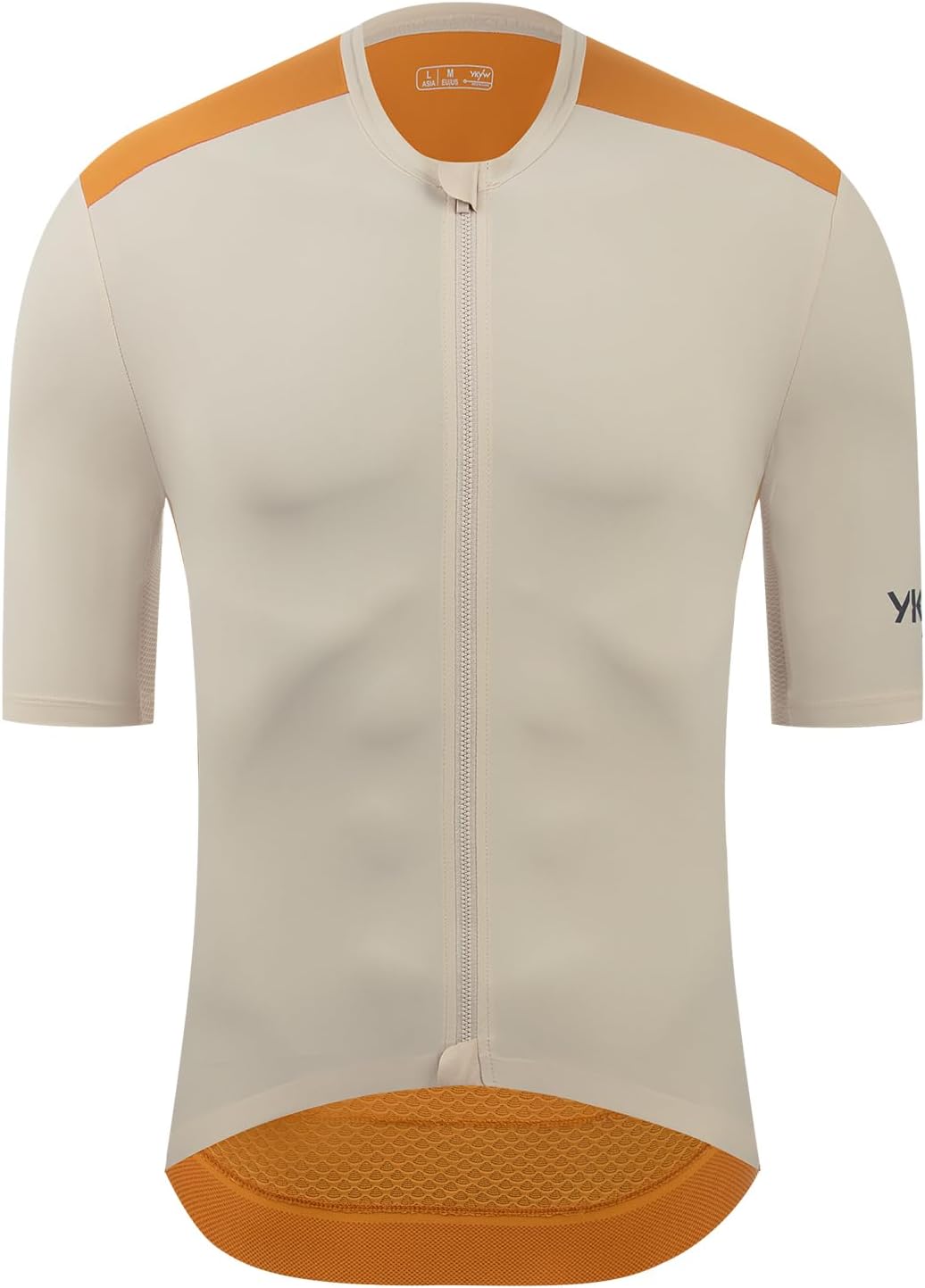
The jersey that carries the load: YKYWBIKE Cycling Jersey Men with Pockets
The YKYWBIKE jersey is for riders who treat the jersey as the bag. The product name puts the feature right there: pockets. That is the entire reason a cycling jersey exists instead of a t-shirt, and it is where I would spend the extra money if I were choosing between these two.
It is listed for road and MTB use, and the MTB part matters, because a mountain biker's jersey gets loaded heavier and snagged more often than a road rider's. Whatever you ride, check these before you commit:
- Pocket depth. Shallow pockets spit a gel onto the road at the first expansion joint.
- The opening height. Too tall and a bottle launches out on a descent. Too short and you need two hands to get a bar out.
- The rear hem gripper. With the pockets loaded, the gripper is doing real work, not decoration.
- Sleeve and shoulder fit. A jersey that binds across the shoulders is a jersey you will not wear on a long day.
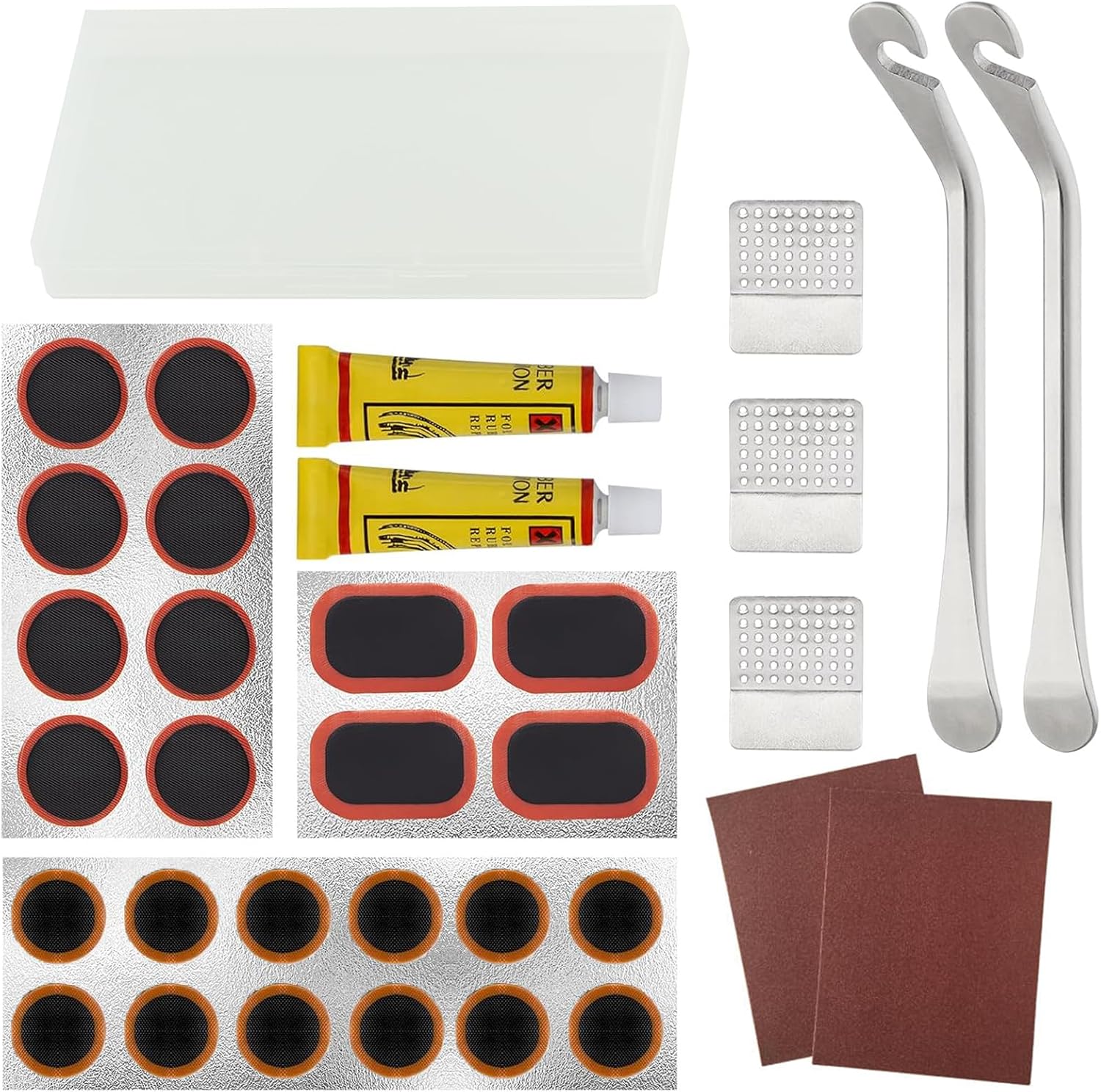
The flat kit: Bike Inner Tire Patch Repair Kit
This is the one nobody wants to spend money on, and it is the one that decides whether a ride ends at the trailhead or in the passenger seat of a stranger's truck. The Bike Inner Tire Patch Repair Kit carries 24 vulcanizing patches, a metal rasp, two premium metal tire levers, and a small storage box to keep the whole thing in one place.
Three things matter in a patch kit, and this one lists all three:
- Vulcanizing patches, not peel-and-stick. The stick-on kind are a temporary fix that you will remember as permanent right up until heat and pressure disagree with you.
- Metal levers. The plastic levers that come free in cheap kits are the reason so many riders are scared of their own tires. Metal levers do not fold in half at the worst moment.
- A rasp. You cannot bond a tube you have not roughed up first. The rasp is not a bonus item, and kits that skip it are kits that fail.
Buy it, put it in the saddle bag or a jersey pocket, and then open it once a season. A patch kit you have never touched is a kit you do not actually know how to use, and 6 a.m. in February is not the time to learn. Practice on an old tube at home with the lights on.
The bottle: HydraPak Polar Surge Insulated Bike Water Bottle (24oz, Ascent Black)
Insulated bottles are the upgrade riders resist and then never give back. The HydraPak Polar Surge is a 24-ounce insulated bottle, which is the size I would pick for anything longer than an hour, and the insulated wall is the difference between drinking on the second half of a ride and carrying warm water you avoid.
What to check on any bottle:
- The valve, one-handed. You should be able to drink without looking down and without letting go of the bar. If it takes two hands, you will drink less, and that is the whole problem.
- Cage fit. Bottles and cages are a matched pair, and a bottle that rattles out on gravel is worse than no bottle at all.
- Whether the cap and valve can be cleaned, and ideally replaced. A bottle that tastes like last week's sports drink goes in the bin, and that is a hydration problem wearing a cleaning problem's clothes.
- Finish, honestly. Ascent Black hides road grit that a white bottle advertises to everyone behind you.
Cold water in July is not a luxury. Under-drinking is the most common mistake I see on long rides, and a bottle that is pleasant to drink from is the cheapest performance upgrade on this page.
How I judge gear like this
Every product that earns a mention here passes the same short list:
- Can I verify the part of the claim that matters? Patch material, lever construction, bottle volume, hem gripper. Those are facts you can check with your hands in a shop aisle.
- Does it survive the first 100 km? Nothing gets judged on the unboxing.
- What wears out, and can I buy the replacement part? A bottle with a serviceable valve is a five-year bottle. A jersey with a zipper that fails is a rag.
- Does it need shop-rate hours? Anything that eats an hour of fiddling is not a $10 product, it is a $10 product plus an hour of your Saturday.
- Would I put it on my own bike and ride it at 6 a.m. in the dark? That filter kills more products than the first four combined.
Analysis: where riders get this category wrong
The jersey is where riders overspend on looks and underspend on function. I have watched people buy a race cut two sizes too small because it looked fast on the hanger, then spend the whole ride tugging the hem down. Pockets, zipper, and hem gripper are the entire product. Everything else is graphics.
The patch kit is where riders under-buy and then improvise. A tube patched with a stick-on patch in the rain is a tube that fails again 20 miles later, usually somewhere with no cell signal. Twenty-four vulcanizing patches, a rasp, and metal levers in a box covers a whole season of bad luck.
The bottle is where riders grab the cheapest thing on the shelf and then wonder why they get headaches at hour four. Drink temperature changes how much you drink. That is not a preference, it is behavior, and behavior is what gets you to the last hour of a long ride still pedaling.
In Boulder I ride before 7 a.m. and after 6 p.m. through the summer, and I still carry an insulated bottle for anything over two hours. On a hot exposed climb, a bottle that is still cold at hour three earns its few extra dollars and its few extra grams.
The quick reference table
| Item | Where it earns its place | What to check | Notes |
|---|---|---|---|
 Visit on Amazon → BERGRISAR Men's Cycling Jerseys Short Sleeves Bike Shirt |
Second and third jersey in the rotation | Zipper action, rear hem gripper, pocket sag | Buy two before you buy one expensive one |
 Visit on Amazon → YKYWBIKE Cycling Jersey Men with Pockets |
Riders who carry everything in the jersey | Pocket depth, opening height, shoulder fit | Listed for road and MTB use |
 Visit on Amazon → Bike Inner Tire Patch Repair Kit |
Saddle bag, every single ride | Vulcanizing patches, metal levers, rasp | 24 patches and a storage box |
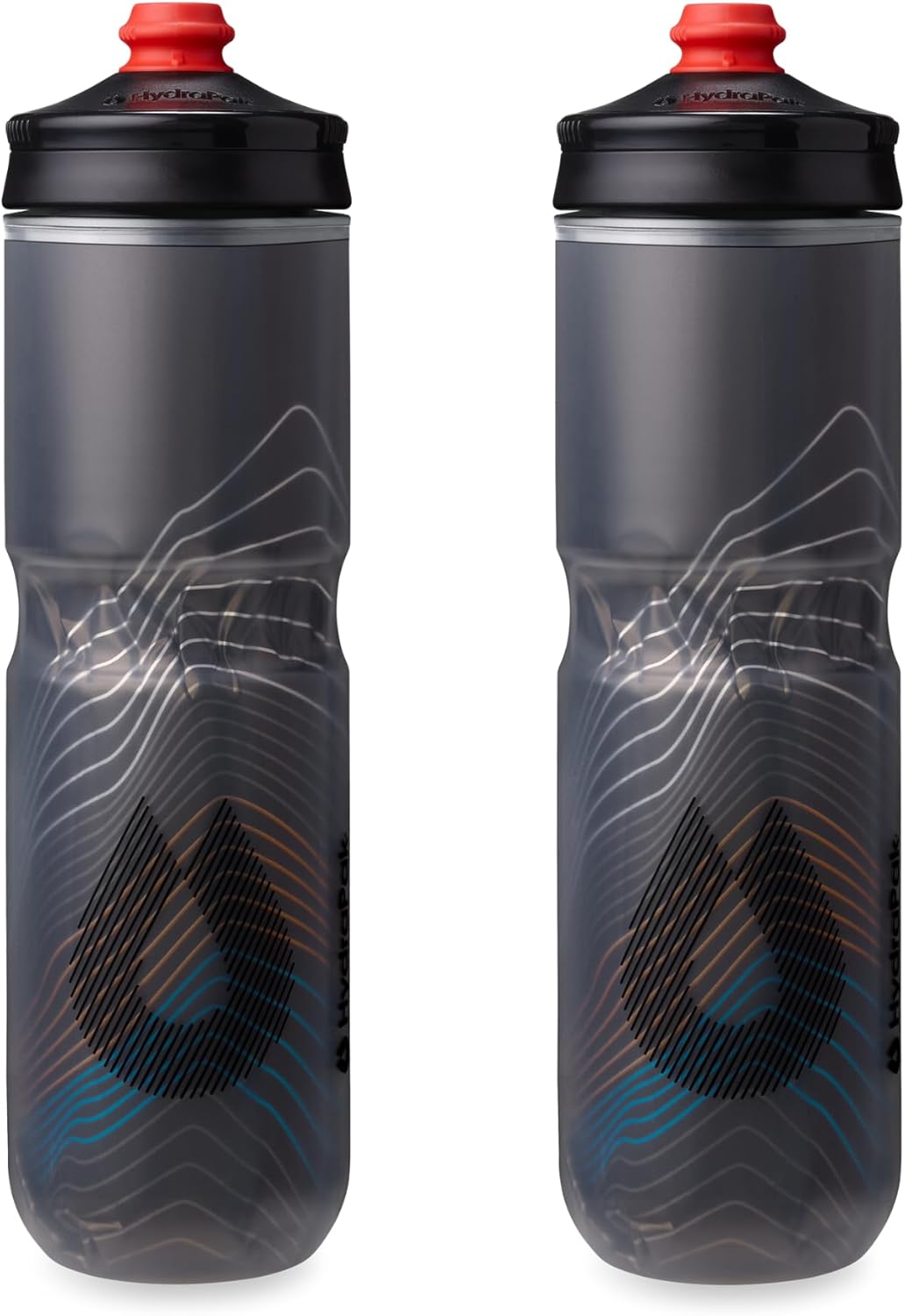 Visit on Amazon → HydraPak Polar Surge Insulated Bike Water Bottle (24oz, Ascent Black) |
Rides over an hour, hot days | One-handed valve, cage fit, cleanable cap | 24 oz, insulated |
The order I would buy these in
The patch kit first. It costs less than a saddle bag and it is the difference between a bad hour and a bad day. Then the bottle, because hydration is the cheapest performance gain available to you. Then one jersey, worn twice a week, and a second jersey once you are tired of doing laundry on Tuesday night. The order matters more than the brand names.
Should you buy the BERGRISAR jersey?
Yes, if you need a second or third jersey rather than a statement piece. It is a short sleeve jersey at the value end of the shelf, and the case for it is rotation, not glamour. Check the zipper, the rear hem gripper, and how the pockets behave when they are loaded. If those three hold up on your first ride, buy another one and stop thinking about jerseys for a season.
Should you buy the YKYWBIKE jersey?
Yes, if you ride with your pockets full. The pockets are the point, and the product is listed for both road and MTB use. Pay attention to pocket depth and shoulder fit before you decide, because those are the two things that turn a good jersey into one that stays in the drawer. If you already own a plain training jersey, this is the one that takes over your long rides.
Should you buy the patch kit?
Yes. It is the least exciting purchase on this page and the one most likely to save a ride. Vulcanizing patches, a rasp, and two metal levers in a storage box, and it lives in the saddle bag until the day you need it. Spend an evening learning to patch a tube at home. That skill weighs nothing and it never expires.
Should you buy the HydraPak Polar Surge bottle?
Yes, if you ride more than an hour at a time or ride in heat. It is a 24-ounce insulated bottle in Ascent Black, and the insulated wall keeps the drink cold long enough that you keep drinking. Confirm the valve works one-handed and that it sits in your cage without rattling. Cold water is not a treat on a long ride. It is the reason you finish the ride.