The first thing I tell anyone building a night riding kit is that you are not buying brightness. You are buying the difference between being seen and being a silhouette. This comparison covers four cheap additions to night riding safety gear: a rechargeable front and rear light set, a MIPS helmet with a rear LED, a molle pouch, and a pair of height-boosting insoles. Two of these belong on the bike, one is a maybe, and one I would argue with you about at the counter. I would rather tell you which is which than pretend all four are equal.
The links below are Amazon affiliate links, and this site earns a small commission if you buy through them. Nobody pays for a verdict here. Prices move constantly, so the table says "Check current Amazon price" instead of quoting a number that was true last Tuesday.
If you buy one thing from this list, buy the light set. The helmet is the smart second purchase, and the pouch and the insoles are comfort and convenience items that solve problems the bike does not actually have.
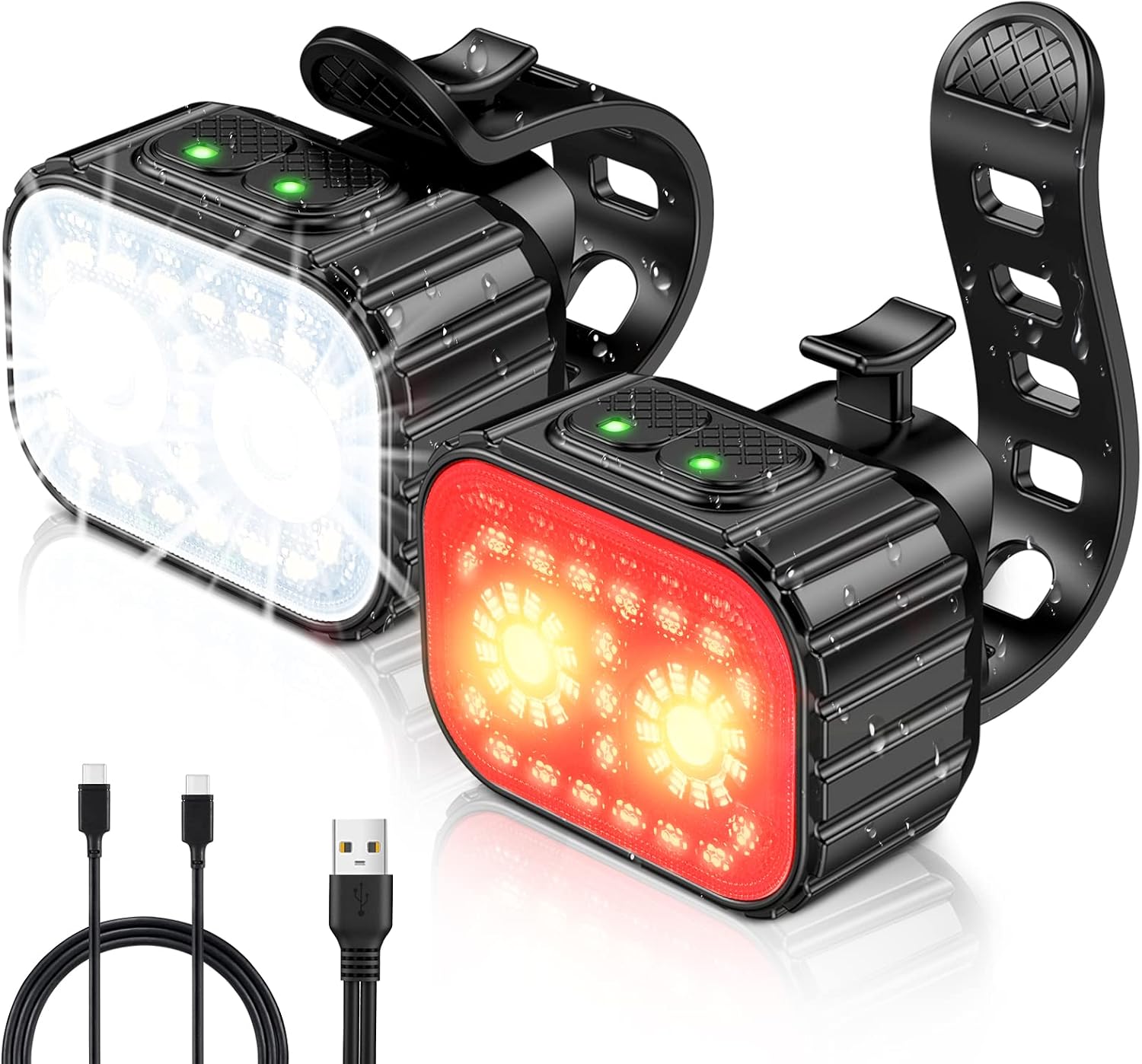
Cuvccn Bike Lights Super Bright Rechargeable Set
Front and rear in one box, USB rechargeable, multiple modes, waterproof claim, reflectors included
Mystery-brand lumen claims are the most optimistic numbers in cycling, and a sealed battery gives the set an expiration date
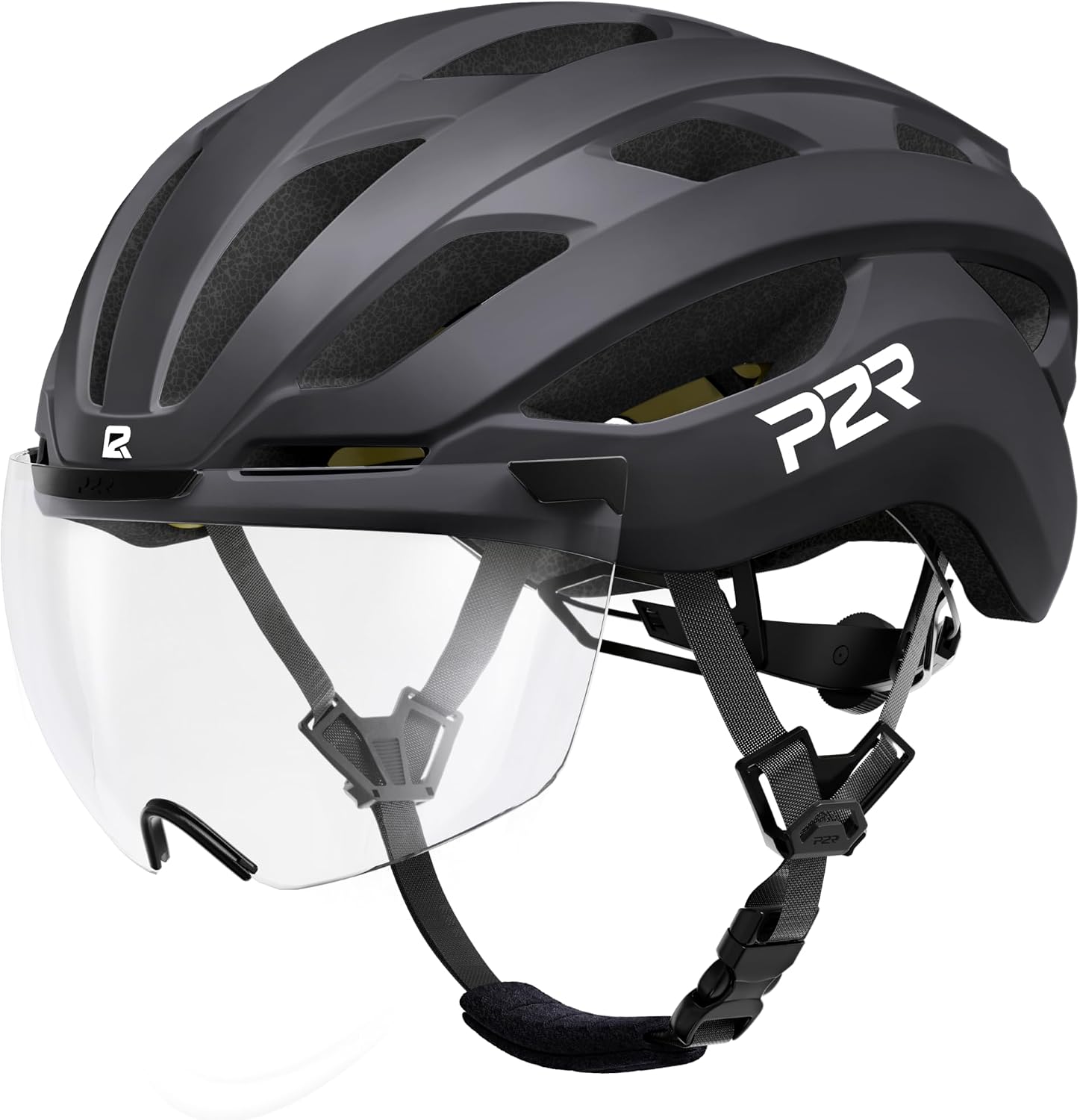
P2R A20 MIPS Bike Helmet with Rear LED Light
MIPS liner plus a rear LED, so your head is also a taillight, and the light moves with your eyeline
The LED runs on its own sealed battery, and no helmet light replaces a proper taillight
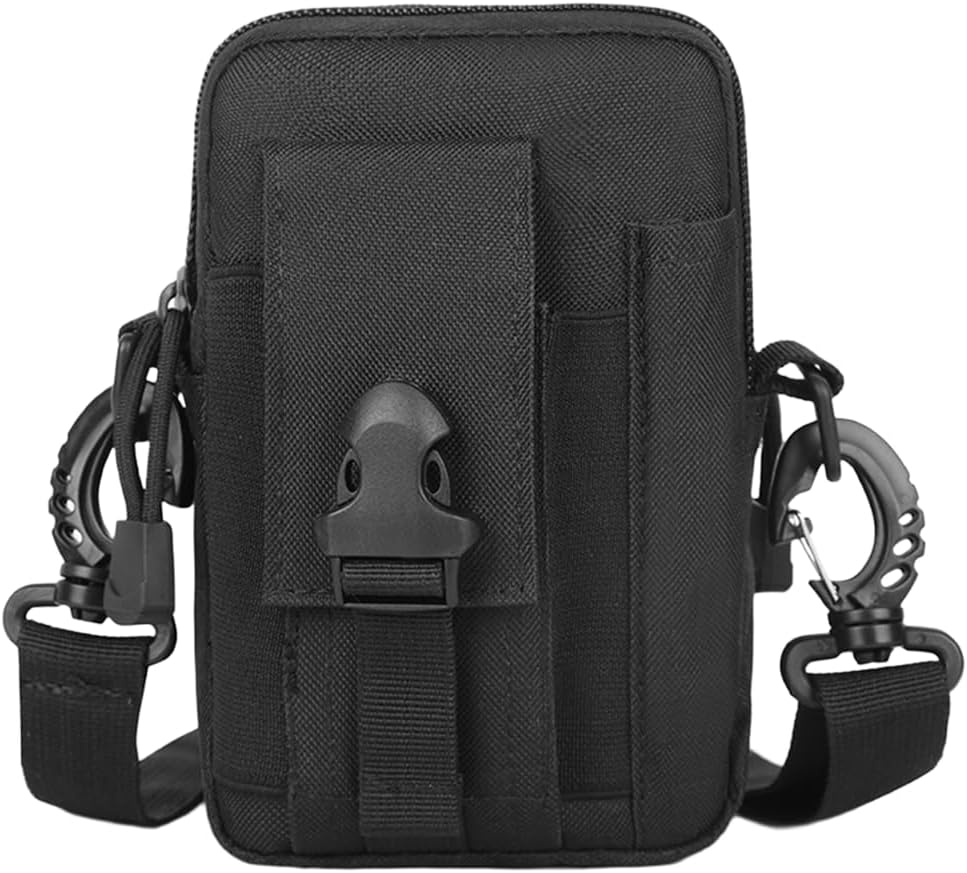
Tactical Molle Pouch Outdoor Sports Waist Bag
Water-resistant fabric, cheap, holds a phone, keys, a multitool, and a snack
It is not a bike bag: no mount, no shape that stays put, and a jersey pocket is free
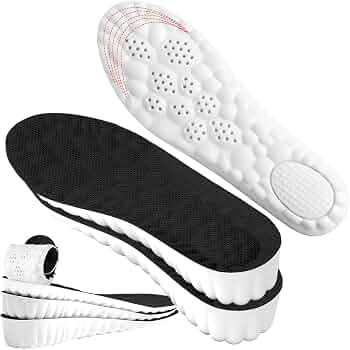
Height Increase Insoles for Men, 4D Memory Foam
Shock-absorbing memory foam that trims to fit, real cushioning for standing and walking
A 1.4 inch stack changes shoe volume, heel position, and your pedal stroke
Prices and availability were captured from Amazon Creators API and may change.
How I judge gear that has to work after dark
Every product that ends up in a recommendation here has to clear three gates. First, can I measure the claim? Lumens go in the bucket, distance goes on the surveyed loop, and if I cannot measure something, I write down that I could not. Second, does the claim survive the first 100 km? Almost everything works on day one, and the interesting failures show up after a few hundred. Third, what breaks at 5,000 km, and can I buy the part? A bracket that strips, a port cover that tears, a battery that stops holding charge: those are the real review.
That third gate is where cheap gear dies on my bench. If a light has a sealed battery, it is not a permanent object. It is a consumable with a countdown, and the countdown is not printed on the box. That does not make it a bad buy at the right price. It changes how I talk about it, which is the whole point of comparing four products instead of reading you four product pages with extra steps.
The light set: check the mount, the port, and the low mode
The Cuvccn set is the classic shape of this category. A front light, a rear light, a charging cable, multiple modes, a waterproof claim, and reflectors, all in one box for less than most single lights. For a commuter who currently runs no lights at all, that is a genuine upgrade over nothing, and it is the one item here I would put on a bike tonight.
What to verify before you trust it is the mount, the port, and the runtime. The bracket is where cheap light sets fail, because the plastic clamping the bar is the part taking every pothole. Torque matters, but so does the material, and a bracket that flexes will eventually spit the light onto the road. Check the USB port cover, because "waterproof" on a light usually describes the housing, not the charging port, and the port is what dies in a drizzle.
Lumen claims deserve their own paragraph. The pattern I have seen over years of putting lights in the bucket is consistent: the cheaper the light, the further the printed number sits from the measured one. I have never had a mystery-brand light beat its own box. That does not make it useless. It means you judge it by whether it makes you visible at 30 feet, not by the number on the packaging.
Runtime needs a cold-weather reality check too. Battery capacity at 20 degrees Fahrenheit is not the same story as capacity at room temperature, and a light rated for hours at moderate output may not finish a January commute on high. Buy for the low mode and treat the high mode as a bonus.
The helmet: MIPS plus a rear LED
The P2R A20 is the item I would recommend to most people from this list after the lights. MIPS is a slip-plane liner designed to reduce rotational forces in an angled impact, and it is the one helmet feature I will not talk a customer out of. The rear LED is the second thing. A helmet light sits higher than a seatpost light, which puts it in a driver's eyeline sooner, and it moves with your head, which means it points where you look. At a junction, that is genuinely useful.
The trade-offs are the usual ones. A helmet with an integrated light is a helmet with a battery, and the battery will not outlast the shell. Treat it as an expiration date rather than a lifetime feature, and charge it on a schedule instead of the night before you need it. Fit matters more than the LED. Retention dial snug, no pressure points, front edge about two fingers above the eyebrows.
One line I repeat to every commuter: a helmet LED is a supplement, not a substitute. The driver glancing at a phone at 6:15 p.m. is not scanning your helmet for a blinking dot. Run a real taillight, keep a rear reflector, and treat the helmet light as the second layer of a system.
The pouch: a good object in search of a bike
The molle pouch is well made for what it is. Water-resistant fabric, a waist belt, webbing, and room for a phone, keys, a multitool, and a snack. On a hike or a trip through an airport, it makes sense. On a bike it has no mounting story: no bracket, no strap designed for a bar or a frame, and no shape that stays put when you stand on the pedals.
If you commute with a rear rack, a pouch like this can live in a pannier or a basket, and then it is a cheap organizer, which is fine. If you ride with a jersey, your pockets are already a better version of it, and they do not swing.
Here is what I would tell a customer. Buy it if you need a phone pouch for walking, hiking, or travel, and it happens to be water-resistant enough for a commute. Do not buy it expecting a bike bag, because you will spend shop-rate hours strapping it to a frame and the strap will still move. The measurement is simple: put your phone in it, put it on your belt, and ride around the block. If it slaps your thigh, that is your answer.
The insoles: the one I would argue with you about
Now the argument. The height increase insole is a memory foam insert with a 1.4 inch stack that you trim to fit your shoe. As a cushioning layer for standing and walking, it is a legitimate product, and if your feet hurt at work, it might be money well spent.
On a bike, the math gets complicated. Raising your heel inside the shoe changes how the shoe fits, which changes how your foot loads the pedal, which changes the effective saddle height and the angle at your knee. If you have knee pain, that is not a small variable. Cycling shoes are also built with limited volume on purpose, and a thick insole can push your foot up into the upper, which is how you get numb toes and hot spots on a two-hour ride.
If your real problem is foot discomfort on the bike, the order of operations is shoe fit first, then insole, then everything else. Measure your foot, check cleat position, and only then consider a thicker insert. If your real problem is that you want to stand taller at a party, this is a cheap way to do it and I have no argument with that at all.
The trade-offs, stated plainly
The light set wins on function and loses on longevity, because the battery is sealed and the lumen number is marketing. The helmet wins on protection and visibility and loses on the same battery problem, plus the fact that a helmet is a wear item with a replacement date regardless of the LED. The pouch wins on price and loses on purpose, because it was designed for a belt, not a bicycle. The insoles win on cushioning and lose on fit, because they change the geometry of the shoe and the pedal stroke.
None of that is a scandal. It is just the honest shape of four inexpensive products. What matters is matching the product to the problem, and the problem for night riding is almost always visibility, not storage and not heel height.
Installation is part of the price
Light set: ten minutes, plus checking bracket torque and the port cover. Helmet: five minutes to dial the retention, plus building a charging habit. Pouch: five minutes if you have a rack, an hour of swearing if you do not. Insoles: trim, test, trim again, then discover they do not fit the cycling shoe you actually ride.
A product that needs an hour of fiddling is not the price on the tag. It is the price plus an hour, and that hour is the part nobody puts in the review. Torque to spec on every bracket, by the way. Hand tight is how expensive things get loose.
What I would buy first, and what I would skip
Lights first, helmet second, and nothing else on this list for the bike. If you want to spend a little more, spend it on a better taillight or a radar light rather than a second pouch. The cheapest safety upgrade available is not a product at all: reflectors, a front light aimed at the road instead of the trees, and a route with fewer right hooks.
Skip the pouch for cycling unless you already have a rack to put it in. Skip the insoles for cycling unless a fitter has told you that stack height is your problem. Buy both for the other parts of your life if they fit those jobs.
The 100 km rule
Almost everything works on the first ride. The test is whether it still works at 100 km and whether you can still get parts for it at 5,000. That is why the light set and the helmet win this comparison, and why the pouch and the insoles are answers to different questions than the one a bike at dusk is asking. Buy for the ride you actually do, at the hour you actually do it, and measure the rest.