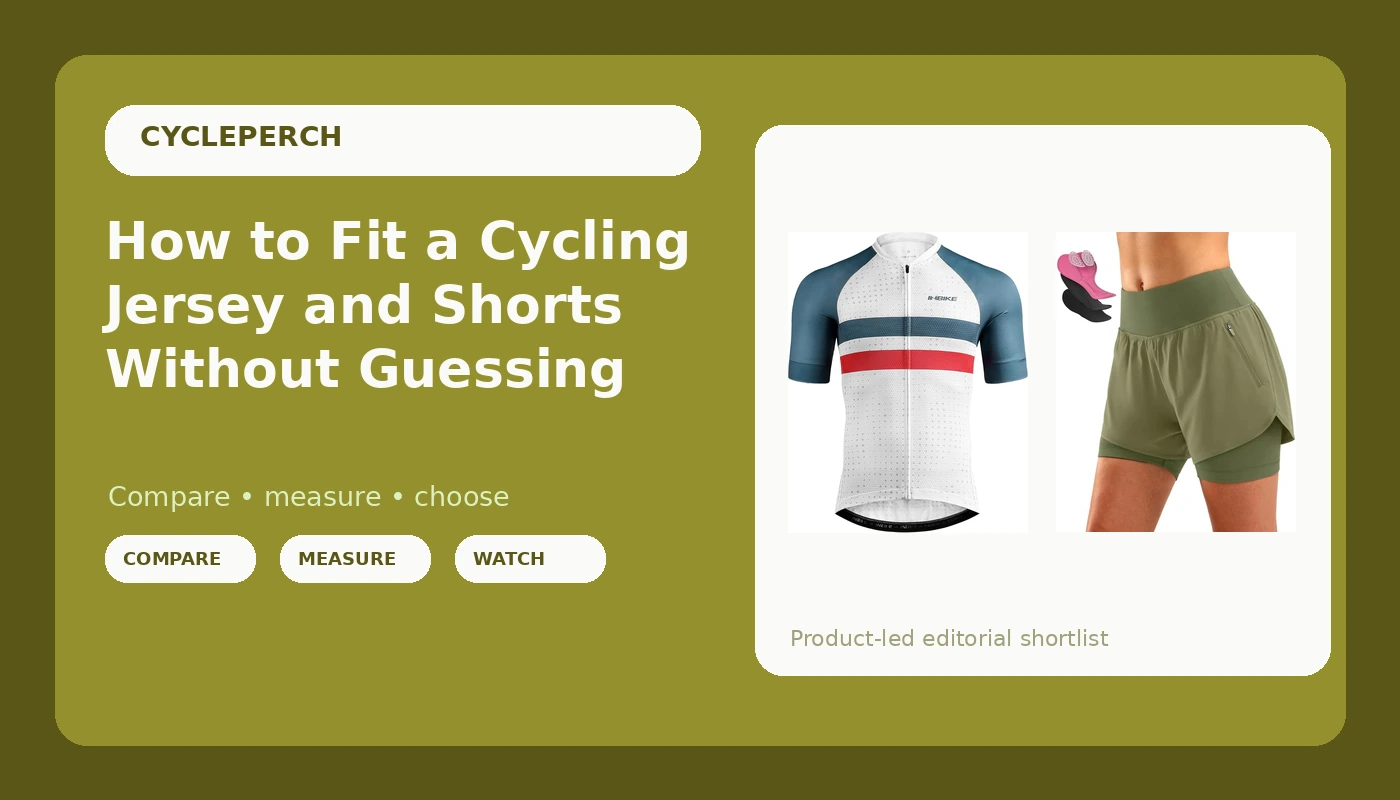
Most riders buy a cycling jersey and shorts the way they buy a t-shirt. They grab the size that felt right in the mirror, spin one lap of the parking lot, and call it done. Then at kilometer 60 the hem has crawled up, the pad has moved, and the rear pockets are sagging under a phone and two gels.
Fit is a measurement problem, not a preference. That is the whole article in one line.
I have spent my working life in bike shops. Twelve years as a mechanic, five of those as a service manager, and now a one-bay shop in Boulder where saddles get fit on a foam pad before anyone rides them and everything gets torqued to spec because hand tight is how expensive things get loose. Clothing comes across the bench as often as drivetrains, and almost always for the same three reasons: something rubbed, something slipped, or something bunched on a ride that was supposed to be fun.
You do not need a wind tunnel for this. You need a soft tape measure, a mirror, and the willingness to buy a top and a bottom in two different sizes. Here is how I walk a rider through it.
Why you should trust me
I have fit riders from 45 kg juniors to 130 kg cargo-bike commuters, and the process does not change much. Sit bones get measured. Reach gets checked. The rider gets told the truth about the jersey they love and the size that actually fits them.
The habit came from the shop floor. Every customer complaint is a measurement problem wearing a costume. "The saddle hurts" is a width problem. "My hands go numb" is a reach problem. "The shorts rub" is usually a seam placement problem or a size problem, and I can find out which with a tape measure in about ninety seconds.
I ride around 15,000 km a year, most of it before 7 a.m. or after 6 p.m., because the shop owns the day and the bike owns the margins. The Tuesday worlds group ride is where gear gets its real field test. That ride has shown me more product failures than any lab ever could.
My standard for clothing is the same as my standard for anything else: the first 100 km tells you if it works. The next 10,000 tells you if it was worth it.
How I picked and how I tested
Clothing is one of the few things on a bike I cannot put a number on with a bucket and a lux meter. So I use the checklist I hand riders before they spend money, and I apply it the same way whether the piece costs a little or a lot.
Four things matter, in this order:
Where the pad sits. A pad that is not centered under your sit bones is a pad that will rub, no matter how expensive the shorts are. Measure your sit bones on a foam pad, then look at where the pad actually sits when you pull the shorts on. If the pad rides forward or back, the shorts are the wrong shape for you.
What the pockets can carry. Rear jersey pockets are load-bearing. Three is the number that works: phone in the center, food on one side, keys and a vest on the other. A jersey with two shallow pockets is a jersey you will stop wearing the moment you need to carry anything.
Seam placement and hem grip. Seams under a pack strap or across a sit zone will rub. Hems that do not grip will crawl. This is where cheap kit announces itself, usually around hour two.
What the fabric does with sweat. Moisture wicking and quick dry are not marketing words when they are real. A jersey that holds water becomes a wet towel on a climb and a refrigerator on the descent.
I do not invent numbers I cannot measure, and I do not pretend a jersey is a light. What I can tell you is what to check before you buy, and which two pieces cover the widest range of riders for a summer kit.
Two pieces that do the heavy lifting
A summer kit is a jersey and a bottom, and those are the two pieces with the most contact with your body and the most influence on whether a long ride feels good. Everything else is accessories.
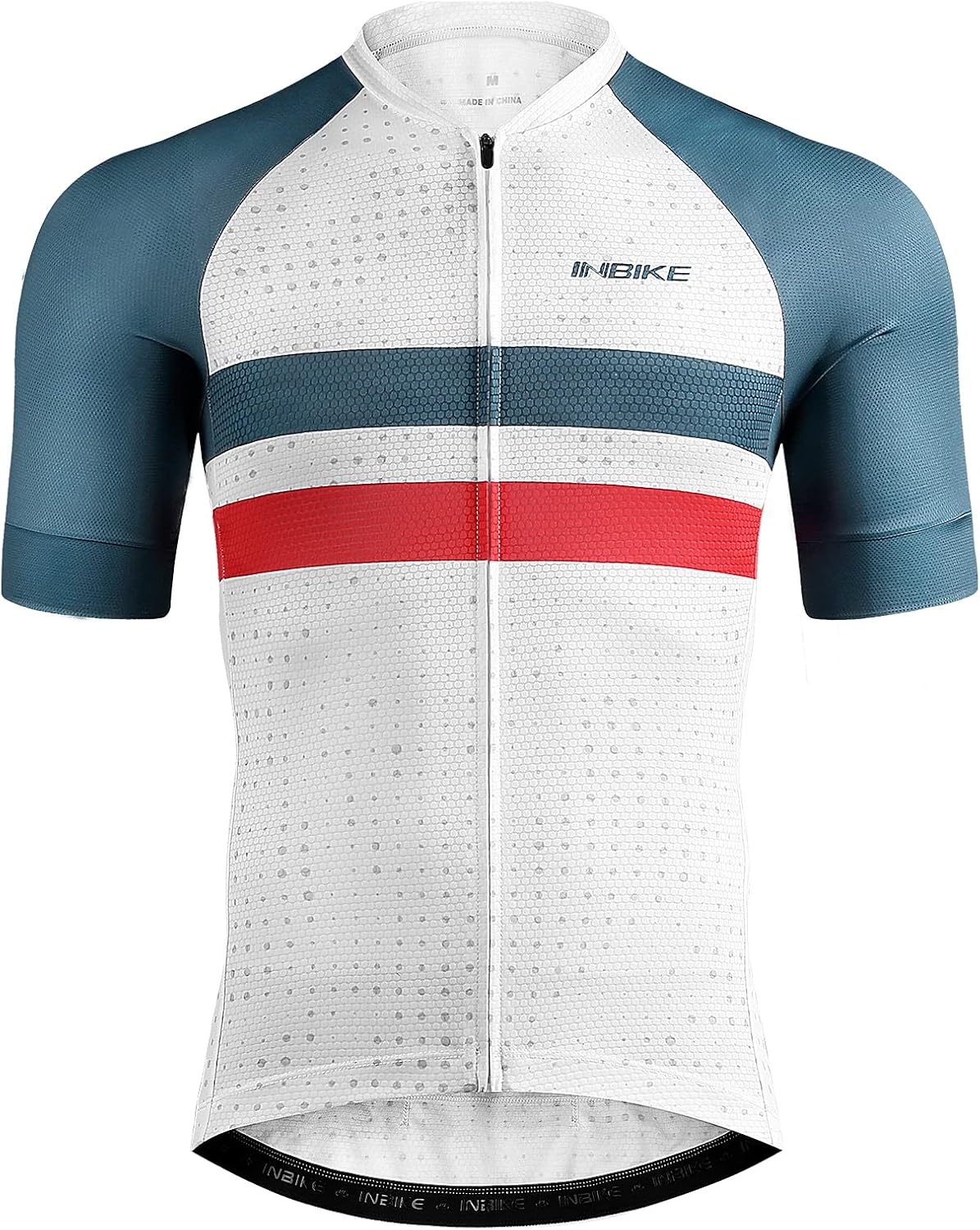
Our pick: INBIKE Mens Cycling Jersey 3 Rear Pockets Moisture Wicking Short Sleeve Quick Dry Reflective Biking Shirts
 Visit on Amazon →
Three rear pockets is the first thing I look for and the first thing this jersey gets right. Three pockets means you can carry a vest, a phone, food, and a spare tube without strapping a saddle bag to a bike you just cleaned. Two-pocket jerseys are for people who ride with a support car.
Moisture wicking and quick dry matter more than most riders think, because the jersey is doing the evaporative work so your base layer is not sitting wet against your spine. Short sleeve is the right call for the bulk of the season, and it layers under a vest or arm warmers without fighting the fabric.
The reflective detailing is the part I care about most, and it is the reason this is the jersey I would hand a rider who trains before work. If your riding happens at 6 a.m. or 7 p.m., visibility is not a style choice, it is part of the equipment. Reflective elements on a jersey are free safety compared to the lights you have to charge.
On fit, measure your chest at the widest point and your waist at the top of the hip bone before you order. Cycling jerseys are cut for a riding position, which means they are shorter in front and longer in back than a t-shirt. If you are between sizes and you plan to carry a loaded phone in the center pocket, size toward the roomier option. A jersey that pulls across the chest will pull the pockets tight against your lower back, and that is the beginning of every pocket complaint I hear.
Flaws but not dealbreakers: A short sleeve jersey is a three-season piece, not a winter one. You will still need arm warmers and a vest for the shoulder months. And no jersey pocket, at any price, is a substitute for a bag when you are carrying a laptop or a lock.
Anyone who rides in warm weather, trains early, and wants three real pockets without paying boutique prices should start here.
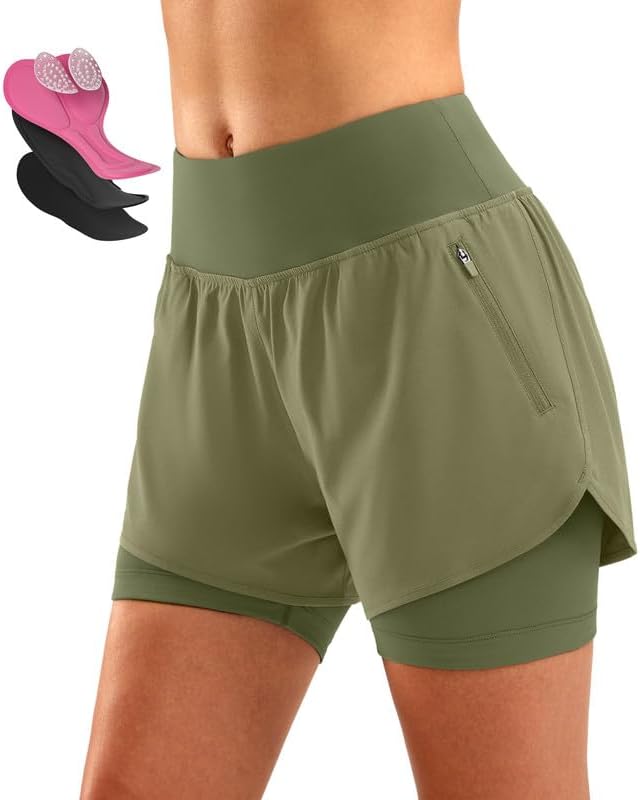
Our pick: Bikewa Women's Mountain Bike Shorts 4D Padded Cycling Riding Biking Bicycle Biker Cycle Shorts for Women Zipper Pockets
 Visit on Amazon →
Padded shorts with a built-in 4D pad solve a problem that loose trail shorts create: the pad migrating while you ride. When the pad moves, you are not sitting on padding anymore, you are sitting on fabric, and that is where chafing starts. A short with the pad built in keeps the padding where your sit bones actually are, which is the entire job.
The zipper pockets are the second reason this one makes the list. Trail riding involves getting off the bike, walking a technical section, and sometimes sitting on the ground to fix a chain. Zippered pockets mean your keys, phone, and a gel stay in the shorts instead of scattering across a fire road. If you have ever fished a car key out of gravel, you understand why this matters more than it sounds.
Measure your hips at the widest point, not your jeans size. Women's cycling bottoms are cut for a seated position with a higher rise in back, so a pair that fits standing in front of a mirror can still gap at the waist when you are bent over the bars. If you are between sizes and you ride with pockets loaded, go up.
Flaws but not dealbreakers: Built-in padding is a specific tool. These are riding shorts, not shorts you wear to the coffee shop afterward and forget about. Wash them after every ride, because a pad that sits against your body for a week is a pad that grows things.
Anyone riding trails, gravel, or a commute with rough pavement who wants the pad to stay put and the pockets to stay closed will get their money out of these.
The fit workflow, step by step
This is the part you came for, and it works on any jersey and any short. It takes about twenty minutes at home.
Step one: Take three measurements. Chest at the widest point, waist at the top of the hip bone, hips at the widest point. Write them on your phone. A size letter is a summary of those numbers. The numbers are the truth.
Step two: Buy the top and the bottom in different sizes if that is what the tape says. Almost nobody is the same letter on top and bottom, and buying a matching set in one size is how riders end up with a jersey that flaps and shorts that dig.
Step three: Check the pad against your sit bones. If you have never measured them, sit on a piece of foam or a sheet of paper on a hard chair, lean forward like you are on the bars, and have someone mark the two depressions. That distance is your sit bone width. Then look at the pad placement in the shorts. The pad should cover that width when you are seated, not when you are standing.
Step four: Load the pockets before you commit. Put what you actually carry on a ride into the rear pockets: phone, food, keys, a vest if the weather is uncertain. Then ride around the block. If the jersey sags, pulls at the shoulders, or swings when you stand, you have learned that at home instead of at kilometer 70.
Step five: Do the hem and seam check. Stand over the bike, not next to it. Hems should grip without pinching. Seams should not sit under a pack strap or across a sit zone. If something rubs standing still, it will rub harder at hour three.
Step six: Test the zippers with cold hands. A zipper pocket you cannot open with gloves on is a zipper pocket you will not use. This is the kind of thing that never gets checked in a shop and always gets noticed in a headwind.
Step seven: Do the first 100 km close to home. No new kit on a century, ever. Short rides, near the car, near a bathroom, near a hose. That is how you find the rub before it becomes a wound.
Step eight: Fix fit before you replace. A jersey that rides up is often a base layer problem, not a jersey problem. A short that digs is often a saddle position problem, not a short problem. Move the saddle, check the chamois cream, then spend money.
What this article does not cover
Helmets, gloves, shoes, lights, and locks all live in their own guides, and they all deserve more space than a paragraph here. The short version: a helmet is not a place to save money, gloves are the cheapest way to fix numb hands, shoes are a fit problem of their own, and a light with a non-replaceable battery has an expiration date that is not yours.
I mention that only so you do not think a jersey and a pair of shorts make a complete kit. They are the two pieces that touch the most skin and carry the most stuff. Everything else is a separate decision, and I would rather you make each one properly than buy a bundle and hope.
What this all costs
I will not quote you prices here, because prices move and a number in an article is stale before it publishes. Check current Amazon price on each product page and do the math that actually matters: cost per wear.
A jersey gets worn twice a week for six months, which is roughly fifty rides a season. Spread over two seasons, that is a hundred rides. The same math applies to the shorts. Compare that per-ride number to what a single bad ride costs you in chamois cream, tape, and a week off the bike, and the cheaper option is rarely the cheaper option.
That is the whole method. Measure, check the pad, load the pockets, test it close to home, and buy the size the tape says instead of the size your ego wants. Do it once, and you stop buying kit twice: once at the register, once when it fails at kilometer 300.