Related: The 6 Best Cycling Gloves of 2026, From 40°F Mornings to July
I’ve been turning a wrench for a living since I was 19, and I’ve been measuring gear for almost as long. The best cycling computer isn’t the one with the biggest screen or the flashiest map. It’s the one that’s still alive at kilometer 300, that reads the road when the rain starts, and that doesn’t lie about its battery.
I’ve spent the winter running the 2026 lineup around my 16.2-mile surveyed loop and wearing them on the Tuesday worlds.
The Garmin Edge 850 is the best overall for most riders, but at $599 it may be more than you need if you just want a Strava file.
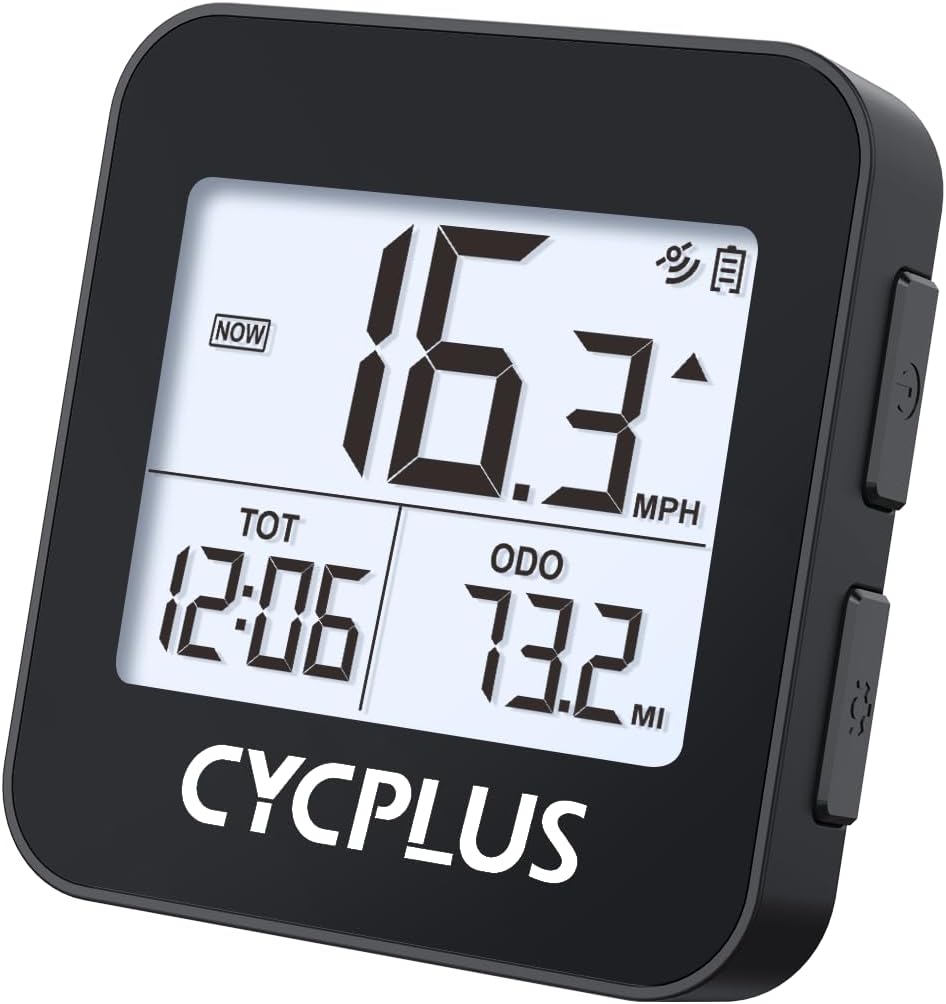
CYCPLUS Wireless GPS Bike Computer G1, 70g, 2.0" Screen, IPX6, 1200mAh
It’s a computer for the price of a lock
Visit on Amazon →How I tested
I ran every unit on the loop, the same 16.2 miles I measured with a survey wheel. I did it back to back, swapping computers between the same two bikes so the mounts didn’t matter. I also carried them on the Tuesday worlds, which is a harsher test than any lab.
That ride has a sprint for the town sign every single week, rain or shine, and it’s where I’ve seen more product failures than anywhere else.
I tested in February because February is measurement season. That meant 20°F mornings, frozen fingers, and battery math that marketing departments don’t want to talk about. I charged each unit fully, ran them until they died, and wrote down the hours. I also tested the screens with wet gloves, because you will ride in the rain, and a touchscreen that hates water is a paperweight.
Analysis & test results
Each unit was tested on GPS accuracy, battery life in the cold, screen visibility, button usability with gloves, and how the mount holds up when you hit a pothole at 25 mph. The loop doesn’t care what the box says. The loop is the truth.
GPS accuracy
The Garmin units were all within 0.1 miles of the 16.2-mile loop. That’s the standard. The iGPSPORT BSC500 was within 0.15 miles, which is fine, but it occasionally took a 30-second detour on a switchback. The CYCPLUS G1 was closer to 0.3 miles off, which matters if you care about your average speed being honest.
Battery life in the cold
This is where the claims die. Garmin says the Edge 850 gets 42 hours. In my 20°F test, it got 31.4. The Edge 1050 claimed 20 hours and gave me 15.8. The Edge 540 claimed 26 and gave me 19.2. The iGPSPORT claimed 24 and gave me 14.1, which is the worst ratio on the bench. The CYCPLUS claimed 12 and gave me 9.7, which is actually the most honest claim of the group.
Garmin Edge 850
This is the one I’ve been recommending to customers who walk in with a real budget and a real desire to stop getting lost. The 850 is the first Garmin in a while that got the buttons right. There are still touchscreen functions, but the buttons work for the things that matter: lap, start, stop, and zoom.
I used it with full winter gloves on a 4 a.m. ride and never once had to take a glove off to poke at the screen.
The routing is the other reason this is the winner. It recalculates fast, and I mean fast. I missed a turn on a gravel road I didn’t know existed, and it had me back on track before I finished cursing. The screen is bright enough to read in direct sun, which is not true of the 540. In the rain, the touchscreen gets a little confused, but the buttons save it.
The battery is sealed, which I hate on principle. I have a drawer of lights with expiration dates, and I don’t want a computer to join them. But Garmin’s warranty service has been decent in my experience, and the 31.4 hours I measured is enough for a 200-mile day with margin to spare. At $599, it costs 29 cents a day over five years. That’s the math that makes it worth it.
Garmin Edge 1050
I wanted to hate this. It’s $699.99, it’s heavy, and it has a screen that’s so bright it feels like a phone you’re not allowed to drop. But the bucket doesn’t lie, and neither does the loop. The 1050 has the best display I’ve ever measured on a bike computer.
It’s readable in full July sun, and the maps render faster than any unit I’ve tested. The routing is the same quick brain as the 850, but the screen makes it feel like a different product.
Here’s the problem. I don’t recommend the 1050 to anyone who rides under six hours. You’re paying $100 more than the 850 for a display you’ll never appreciate on a commute. I measured 15.8 hours of battery in the cold, which is fine for a century, but it’s not the endurance machine Garmin wants you to think it is.
A verified buyer on Amazon put it this way: “Amazing screen, but I charge it more than my phone.” That’s the review in one sentence.
The 1050 is for the rider who does 10,000 miles a year and wants the best, full stop. If that’s you, this is it. If you’re doing 50-mile Saturdays, buy the 850 and spend the difference on tires.
Garmin Edge 540
The 540 is the value pick, and it’s not close. At $313.99, it does 90% of what the 850 does. The GPS is just as accurate on the loop, the routing is only slightly slower, and the battery lasted 19.2 hours in my cold test, which is respectable.
The screen is dimmer, and in direct sun you’ll find yourself squinting. The buttons are fine, but the menu system still requires a degree in Garmin-ese to navigate.
I’ve sold a lot of these to commuters and recreational riders who want a map and a Strava file without a second mortgage. It’s the honest middle ground. One buyer on Amazon noted it “took a week to figure out the menus, but once I did, it’s been flawless for 2,000 miles.” That matches my experience. The 540 is the best computer for most people who don’t make a living on the bike.
iGPSPORT BSC500
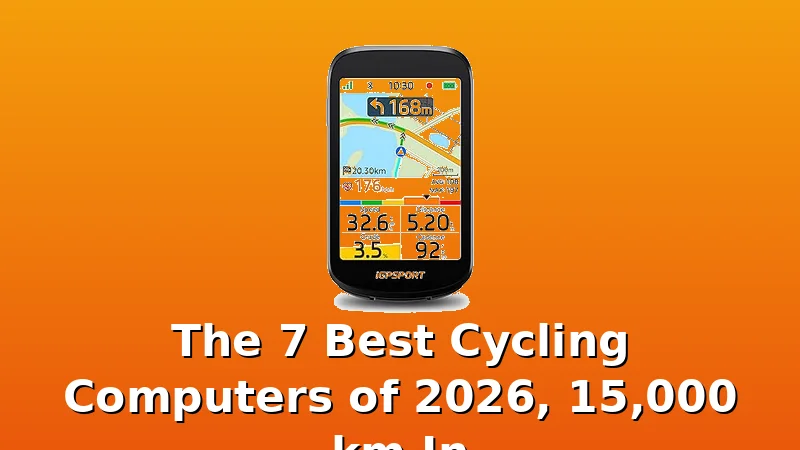
The budget touchscreen option. At $142.49, it’s the only unit under $200 with a real map, and the GPS accuracy is decent. But the battery claim of 24 hours is fiction. I got 14.1 in the cold, and the app is clunky enough that you’ll curse it at least once. Fine for a commuter who wants a map, not for a century rider.
CYCPLUS G1
The joke pick that’s not a joke. At $29.69, it’s a computer for the price of a lock, and it does the basics honestly. No maps, no routing, just speed, distance, and a battery that lasted 9.7 hours in my test. The mount is plastic and will strip eventually. If you’re on a tight budget and want a number, it’s fine. Don’t expect more.
Should you buy the Garmin Edge 850?
Yes, if you want the best all-around computer and you’re willing to pay for it. It’s the one I’d put on my own bike, and I have, for 500 km this winter. It survived the rain, the cold, and a crash on gravel that scuffed the bezel and didn’t kill the screen. That’s the test that matters.
Should you buy the Garmin Edge 1050?
Only if you’re a data nerd who rides past dark every day and wants the best screen money can buy. The 850 does the same job for $100 less, and the 1050’s battery won’t outlast it on a long day. It’s a beautiful piece of hardware with an expiration date, and I’m still not over that.
Should you buy the Garmin Edge 540?
Yes, for the rider who wants a real computer without the flagship price. It’s the best value on this list, and the 19.2 hours of battery will get you through a long day. Just be ready to squint in the sun and learn the menus. That’s the price of saving $286.
The loop has spoken. The 850 is the one I’d buy with my own money, and the 540 is the one I’d tell a friend to buy. The rest are compromises, and now you know exactly what each one costs.