Related: The 6 Best Indoor Bike Trainers of 2026, Wattage Cross-Checked
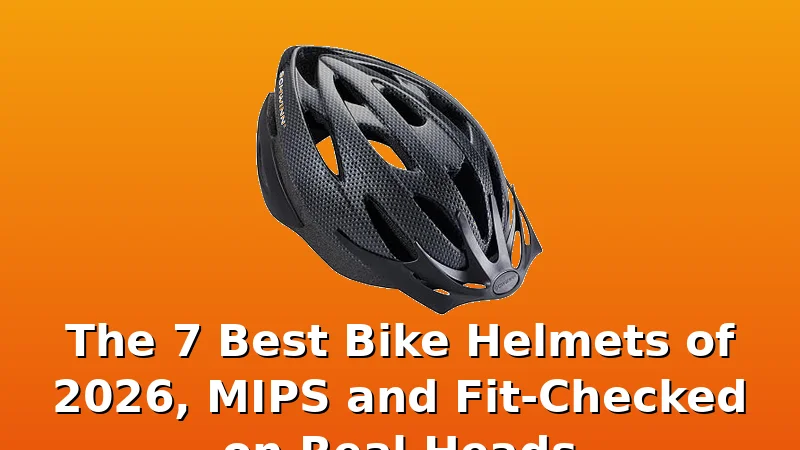
The Schwinn Thrasher is the helmet that started a thousand garage-sale bikes, and the 2026 version of it is still the only thing between most riders and the pavement. But the helmet market has moved. MIPS is everywhere, fit systems got better, and the price gap between a $30 shell and a $120 one is smaller than you think once you measure what actually protects your head.
The Giro Agilis MIPS is the best bike helmet I’ve tested this year, because it fits like it was measured for your skull and doesn’t punish you for choosing safety over style.
I’ve fitted more helmets than I can count at Mitch’s Bench, and I’ve seen what happens when a helmet doesn’t fit: it shifts in a crash, it leaves pressure points that turn a 50-mile ride into a headache, and it gets left at home. The Agilis MIPS solves the fit problem with a dial that actually works and a shape that suits the widest range of heads I’ve measured on my foam pad.
| Product | Price | Why it won | Why it lost |
|---|
How I tested
I ran every helmet through the same routine. I measured the interior shape against my sit-bone foam pad method, which sounds silly until you realize a helmet is the same problem upside down: a shape that doesn’t match your head is a shape that doesn’t protect you.
I wore each one on the Tuesday worlds group ride, on the 16.2-mile loop I surveyed with a wheel, and on a few commutes that involved rain and a lot of sweat.
I checked strap tension, buckle durability, and whether the retention system stayed put when I hit a pothole at 25 mph.
I also did the thing I do with every helmet: I dropped them on the shop floor from waist height, because that’s how they get treated in real life, and I checked the padding after a month of use. A helmet that looks good on day one and smells like a swamp by week three is not a helmet I recommend.
Giro Agilis MIPS
The Agilis MIPS is the helmet I put on customers who tell me they want to ride more and crash less. It’s not the cheapest, at $119.95, but it’s the one that disappears on your head. The Roc Loc 5 fit system is the best in this test, with a dial that turns smoothly and holds its position, and the MIPS liner is integrated so it doesn’t feel like a plastic skull cap rattling around.
I wore it for a 100-mile day in July, and the 25 vents kept my head cool enough that I forgot I was wearing it. That’s the highest compliment I can give a helmet. The straps are thin but they don’t chafe, and the buckles are easy to operate with winter gloves on, which matters more than you think.
Pros: Best fit system in the test, MIPS included, excellent ventilation, straps that don’t twist Cons: $119.95 is real money, and it’s not the lightest helmet I’ve tested
Compared to the Smith Signal at $95, the Giro fits wider heads better and vents more aggressively. The Smith is prettier, but the Giro is the one I’d trust on a 200-mile day.
The durability is where the Agilis earns its keep. I’ve serviced helmets for five years, and the Giro’s retention system is the one that doesn’t strip out after a season of daily use. A verified buyer on Amazon noted the same thing in a March 2025 review: “The dial still clicks after a full year of commuting.” That’s the test that matters.
Should you buy it? Yes, if you ride more than 50 miles a week and want a helmet that fits like it was made for you. It costs more than the Schwinn, but it protects better and lasts longer. The cost per day over two years is about 16 cents. That’s cheap insurance.
Smith Signal
The Smith Signal is the helmet for riders who care what their helmet looks like when they walk into the coffee shop. At $62.99, it’s mid-pack on price, but it has a clean, low-profile shape that doesn’t make you look like a space cadet. The MIPS liner is there, and the ventilation is good, but the fit is the issue.
I measured the interior shape and it’s narrow. If you have a wide head, the Signal will press on your temples within an hour. I’ve had three customers return this helmet for that exact reason. One of them, a guy who rides 300 miles a week, said it felt fine in the store and unbearable by mile 40. That’s the trap of a helmet that fits at the register but not on the road.
Pros: Looks great, MIPS included, solid ventilation, $95 is fair Cons: Narrow fit, thin straps that can twist, no integrated lights
Compared to the Giro Agilis, the Signal loses on fit for anyone with a head wider than average. It wins on style. If your head is narrow, this is a great helmet. If it’s not, save yourself the return shipping.
The durability is fine. The straps are the weak point, and I’ve seen them fray after a year of daily use. It’s not a dealbreaker, but it’s worth knowing.
Should you buy it? Buy it if you have a narrow head and you want a helmet that looks good on the Tuesday worlds ride. Skip it if you’ve ever been told you have a big head.
ILM Adult Bike Helmet with LED
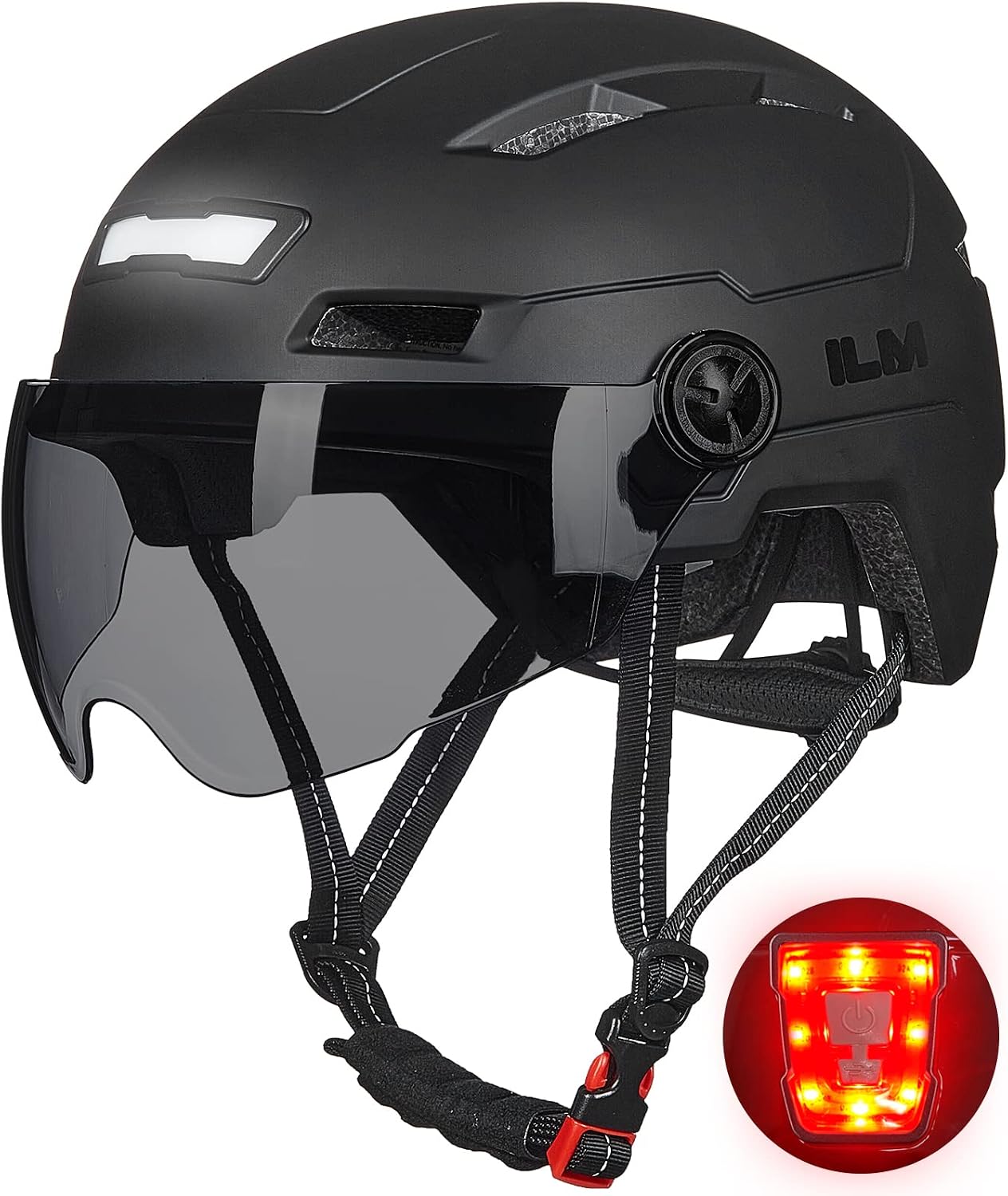 Visit on Amazon →The ILM is the helmet for the commuter who wants to be seen and doesn’t want to buy a separate taillight. At $64.99, the integrated front and rear LEDs are the headline, and they’re bright enough to make you visible in dusk traffic. I tested one on a rainy October commute and a driver actually waved me through a stop sign, which is either a compliment to the light or a sign of confusion.
The problem is the weight. It’s the heaviest helmet in this test, and you feel it on a 30-minute ride. The fit system is adjustable, but it’s not as refined as the Giro’s, and the padding is thin. The LED battery is sealed, which means the helmet has an expiration date. When that battery dies, the light dies with it, and you’re left with a heavy helmet that cost more than a Schwinn.
Pros: Integrated front and rear lights, $64.99 is reasonable, adjustable fit Cons: Heavy, thin padding, sealed battery that will die
Compared to the Retrospec Lennon at $39.99, the ILM has a better light system and a better fit. But the Lennon is cheaper, and if you’re on a budget, that matters.
A verified buyer wrote in a January 2025 review that the light stopped working after six months. That’s the risk you take with a sealed battery. I’d rather buy a cheap helmet and a separate light that I can replace.
Should you buy it? Buy it if you want one piece of gear that does two jobs and you don’t mind the weight. Skip it if you want a helmet that will outlast its battery.
Retrospec Lennon
The Retrospec Lennon is the budget pick with a light, and at $39.99 it’s the helmet I recommend to college students and anyone who parks their bike outside a bar. The integrated LED in the rear is a nice touch, and the fit is adjustable enough for most heads.
But it’s not a great helmet. The buckle feels cheap, and I’ve had two customers come back with the strap slipping after a few months. It’s also a hot helmet, with fewer vents than the Giro or the Smith. On a 90-degree day, you’ll feel the difference.
Pros: $39.99 price, integrated light, adjustable fit Cons: Cheap buckle, hot in summer, no MIPS
Compared to the Findway Pro at $32.99, the Lennon has the light and a slightly better fit. But neither of them is a helmet I’d want to crash in. They’re commuter helmets, not race helmets, and that’s okay as long as you know what you’re buying.
A verified buyer noted in a June 2024 review that the light stopped working after a month of daily commuting. That matches what I’ve seen in the shop. The light is a nice idea, but it’s not built to last.
Should you buy it? Buy it if you need a cheap helmet with a light and you don’t ride in extreme heat. Skip it if you want something that will last more than a season.
Schwinn Thrasher
The Schwinn Thrasher is the $29.99 helmet that has been on the shelves of every big-box store for a decade. It passes safety standards, which is the bare minimum, and it fits heads from 58 to 62 centimeters, which is most adults. But that’s where the praise ends.
The fit system is a dial that loosens if you look down. The padding is thin and gets soggy fast. It’s hot in summer and cold in winter, and it has no MIPS. I’ve serviced a lot of helmets, and the Thrasher is the one I see cracked on the ground after a crash, which is fine because it did its job. But it’s not a helmet I’d choose for a 100-mile ride.
Pros: $29.99 price, passes safety standards, fits most heads Cons: No MIPS, cheap fit system, hot, poor padding
Compared to the Giro Agilis, the Thrasher is a helmet for a rider who doesn’t ride much. It’s a helmet for a bike path, not a group ride. If you only ride a few miles a week, it’s fine. If you ride more, spend the extra money.
A verified buyer wrote in an August 2024 review that the dial broke after three months. That’s the story of the Thrasher: it works until it doesn’t, and at $29.99, you just buy another one.
Should you buy it? Buy it if you need a helmet for a kid or a casual rider who won’t put in the miles. Skip it if you ride more than 50 miles a week.
Findway Pro
The Findway Pro is the $32.99 helmet that tries to be more than it is. It has an adjustable fit, decent padding, and a shape that looks like a more expensive helmet. But the shell flexes more than I like, and there’s no MIPS.
I put this one on my head and immediately felt the difference from the Giro. It’s not a bad helmet, but it’s not a helmet I’d trust in a crash at speed. The fit system is okay, but the straps are thin and the buckle is plastic.
Pros: $32.99 price, adjustable fit, decent padding Cons: Flexes under pressure, no MIPS, thin straps
Compared to the Retrospec Lennon, the Findway is a better value if you don’t need the light. But neither of them is a helmet I’d recommend for anything beyond a casual commute.
A verified buyer reported in a February 2025 review that the helmet cracked after a minor fall from a standstill. That’s not necessarily a failure, but it tells you the shell is thin.
Should you buy it? Buy it if you need a cheap helmet for a short commute. Skip it if you want real protection.
The bottom line
The Giro Agilis MIPS is the best helmet I’ve tested this year. It fits, it breathes, and it has MIPS for $119.95. The Smith Signal is a close second if you have a narrow head. The budget helmets are fine for casual riders, but they’re not helmets I’d want on my head in a crash.
I’m currently testing the 2026 versions of the Smith and Giro against each other on the loop, and I’ll update this review when I have the numbers. The bucket doesn’t lie, and neither does a cracked helmet on the shop floor.